

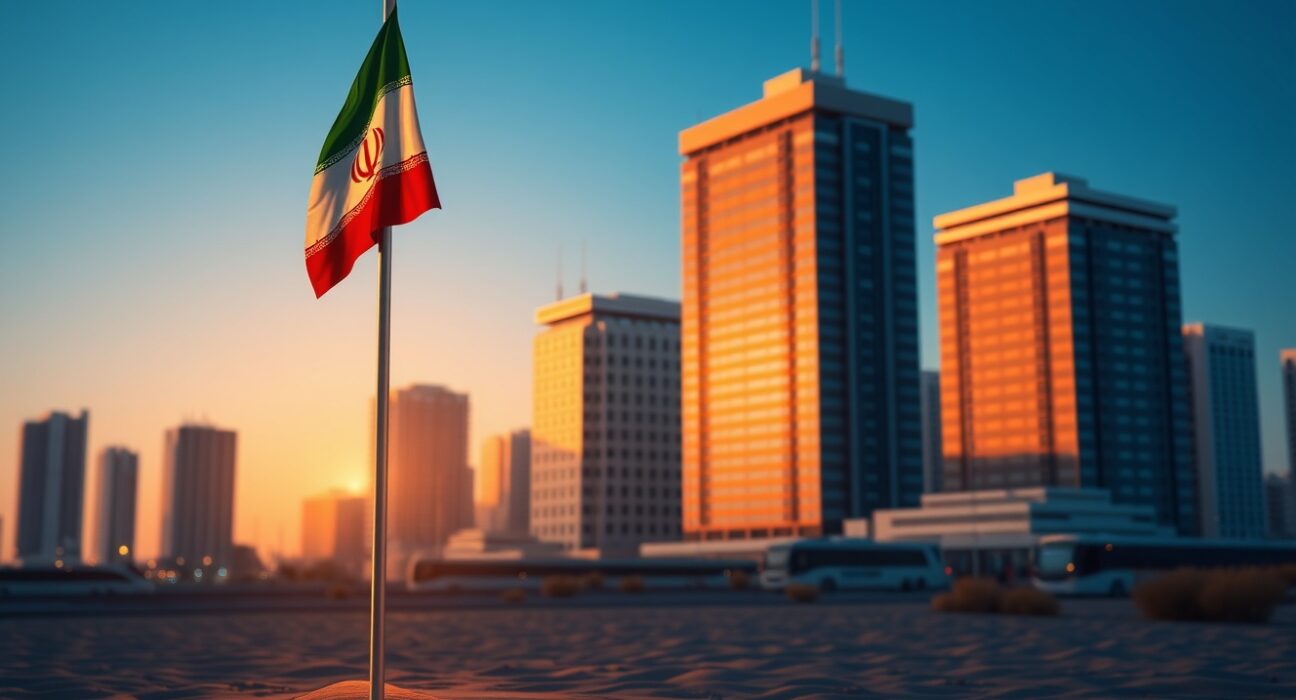
TEHRAN, Iran – March 25, 2025: In a significant escalation of regional hostilities, Iran’s Islamic Revolutionary Guard Corps (IRGC) has declared its intention to target American commercial interests across the Middle East, with operations slated to commence on April 1. This alarming announcement, first reported by several state-aligned Iranian media outlets, frames the action as a direct retaliatory measure for recent United States airstrikes. Consequently, this development threatens to destabilize an already volatile security landscape and jeopardizes billions in foreign investment.
Iran’s Revolutionary Guard Announces Retaliatory Campaign
The IRGC’s statement represents a stark shift in tactics. Historically, the powerful military and economic force has focused its activities on state actors and proxy engagements. Now, it explicitly names U.S. corporate entities as legitimate targets. Analysts immediately noted the strategic timing of the April 1 start date. This deadline provides a narrow window for diplomatic de-escalation while simultaneously applying maximum pressure on Washington and its regional allies. The IRGC controls vast economic networks within Iran and possesses significant intelligence and operational capabilities abroad, making this threat particularly credible.
Furthermore, the Middle East hosts a dense network of American corporate assets. These range from energy giants operating oil fields to technology firms and defense contractors supporting regional militaries. A sustained campaign against these interests could manifest in various forms. Potential actions include cyber-attacks on corporate infrastructure, supply chain disruptions, protests at facilities, or more direct physical threats to personnel and property. The ambiguity of the statement intentionally creates a climate of uncertainty, which itself can deter business operations and investment.
Context of US-Iran Tensions and Recent Strikes
This new threat did not emerge in a vacuum. It follows a series of recent U.S. airstrikes, which American officials characterized as defensive responses to attacks on U.S. forces in Iraq and Syria. The Biden administration authorized these strikes targeting IRGC-linked facilities and Iranian-backed militia positions. Washington consistently maintains that its military actions aim to protect American personnel and uphold regional stability. However, Tehran views these operations as acts of aggression and violations of sovereignty, necessitating a proportional response.
The decades-long adversarial relationship between the U.S. and Iran provides essential context. Key friction points include:
- The Nuclear Deal (JCPOA): The 2018 U.S. withdrawal and subsequent stalled negotiations.
- Regional Proxy Influence: Iranian support for groups like Hezbollah and Houthi rebels.
- Maritime Security: Confrontations in the Strait of Hormuz and Gulf waters.
- Sanctions Regime: Extensive U.S. economic sanctions targeting Iran’s oil and financial sectors.
This latest move by the IRGC effectively opens a new, economic front in this long-standing conflict. It signals a willingness to expand the battlefield beyond traditional military and diplomatic spheres, directly impacting global commerce.
Expert Analysis on Strategic Implications
Security analysts specializing in the Middle East express deep concern. “Targeting commercial entities represents a dangerous normalization of economic warfare,” notes Dr. Leila Hassan, a senior fellow at the Center for Strategic Gulf Studies. “It blurs the line between state conflict and private enterprise, potentially drawing thousands of civilians and non-combatant assets into the crosshairs. The ripple effects on global energy markets and supply chains could be immediate and severe.”
Corporate security firms have already begun issuing advisories to clients with exposure in the region. Recommended precautions include enhancing physical security perimeters, conducting rigorous cybersecurity audits, and reviewing evacuation protocols for staff. The potential impact varies by sector and location, as illustrated below:
| Sector | Primary Risk Type | Potential Impact |
|---|---|---|
| Energy (Oil & Gas) | Physical sabotage, Supply chain disruption | Global oil price volatility, Production delays |
| Finance & Banking | Cyber-attacks, Financial sanctions compliance | Transaction delays, Data breaches, Regulatory penalties |
| Logistics & Shipping | Maritime harassment, Port access issues | Increased insurance costs, Delivery delays |
| Technology & Defense | Espionage, Intellectual property theft | Loss of proprietary data, Contractual breaches |
Potential Impacts on Regional Stability and Global Markets
The IRGC’s announcement injects profound uncertainty into the Middle Eastern business environment. Gulf Cooperation Council (GCC) nations, many of which host major U.S. corporate regional headquarters, now face a complex dilemma. They must balance their vital security partnerships with Washington against the imperative to protect their own economies from becoming collateral damage. A sustained campaign could accelerate a trend of “de-risking,” where multinational corporations diversify operations away from the region to mitigate exposure.
Global markets reacted swiftly to the news. Brent crude futures experienced a sharp uptick, reflecting trader anxieties over potential disruptions to Middle Eastern energy exports. Similarly, shares in major U.S. corporations with significant regional footprints saw early declines. The threat also complicates ongoing diplomatic efforts. For instance, negotiations aimed at de-escalating conflicts in Yemen or stabilizing Iraq may now be overshadowed by this new commercial-security crisis. Regional governments are likely to increase security spending and reassess their risk profiles, potentially diverting resources from other domestic priorities.
Historical Precedents and Legal Considerations
While unprecedented in its explicit framing, the concept of targeting economic interests has historical parallels. Nations have long used blockades, sanctions, and asset freezes as tools of statecraft. However, a declared military campaign against another nation’s private companies in third countries presents novel legal and ethical challenges. Under international law, specifically the laws of armed conflict, attacks must distinguish between military and civilian objects. Civilian infrastructure, including commercial facilities, loses its protected status only if it makes an effective contribution to military action. Blanket threats against an entire category of commercial entities likely fail this test, potentially constituting violations of international humanitarian law.
Moreover, the United States possesses formidable retaliatory options. These could include further tightening the expansive sanctions regime, designating additional IRGC-linked entities, or providing enhanced military and intelligence support to regional partners to protect commercial assets. The situation creates a precarious cycle of action and counter-action, where miscalculation by either side could trigger a broader military confrontation.
Conclusion
The IRGC’s declaration to target US companies in the Middle East from April 1 marks a perilous new chapter in Iran-US relations. It strategically exploits economic vulnerabilities to retaliate for military actions, thereby raising the stakes for all parties involved. The immediate consequences include heightened security risks for businesses, market volatility, and increased strain on diplomatic channels. Ultimately, the coming days will be critical. The world will watch to see if the April 1 deadline passes with concrete action, or if behind-the-scenes diplomacy can avert a further escalation that would harm regional stability, global commerce, and innocent civilian workers. The situation underscores the intricate and often dangerous linkage between geopolitics and the global economy.
FAQs
Q1: What exactly did Iran’s Revolutionary Guard announce?
The Islamic Revolutionary Guard Corps (IRGC) stated through Iranian media that it will begin targeting American companies operating throughout the Middle East starting April 1, 2025. It describes this as retaliation for recent U.S. airstrikes.
Q2: Which US companies are most at risk?
Companies in sectors like energy (oil and gas), defense contracting, finance, logistics, and technology with physical assets, operations, or personnel in the Middle East are considered most exposed. The threat appears broad, not limited to specific firms.
Q3: How might the IRGC carry out these threats?
Potential methods could include cyber-attacks on corporate networks, disruptive protests at facilities, supply chain interference, espionage, or more direct forms of sabotage and intimidation. The vague nature of the threat is part of its psychological impact.
Q4: What has been the international reaction?
While formal government statements are still emerging, security analysts and corporate risk advisors have expressed serious concern. Gulf Arab states hosting US businesses are likely intensifying security consultations with Washington and reviewing their own protective measures.
Q5: Can this situation be de-escalated before April 1?
Diplomatic channels between the US, Iran, and intermediary nations are likely active. The late-March announcement creates a deliberate pressure window. De-escalation is possible but would require diplomatic concessions or confidence-building measures from either or both sides to alter the current trajectory.
Disclaimer: The information provided is not trading advice, Bitcoinworld.co.in holds no liability for any investments made based on the information provided on this page. We strongly recommend independent research and/or consultation with a qualified professional before making any investment decisions.
