

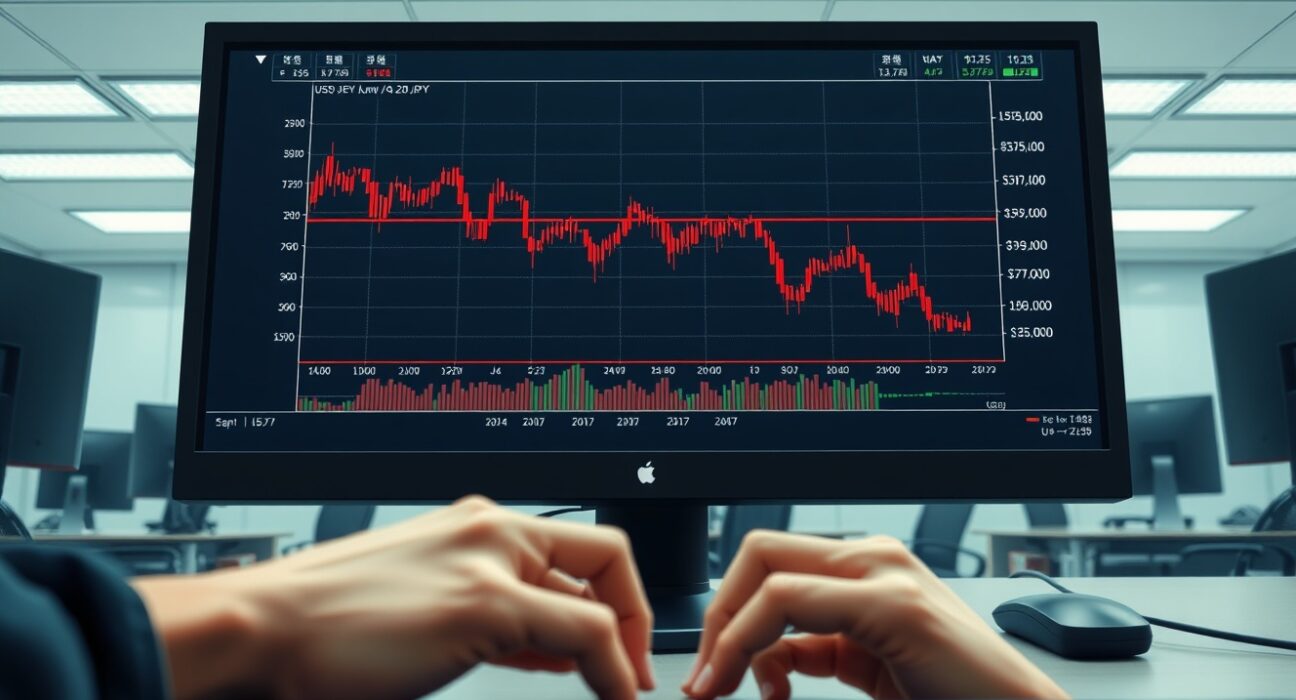
TOKYO, June 2025 – The USD/JPY currency pair plunged decisively below the critical 159.00 support level in Asian trading today. This significant move reflects mounting pressure on the US Dollar as diplomatic progress toward a peace agreement between Iran and Western powers accelerates. Consequently, market participants are rapidly reassessing the global risk landscape and its implications for Federal Reserve monetary policy.
USD/JPY Breakdown: Analyzing the Technical and Fundamental Drivers
The breach of the 159.00 handle marks a pivotal technical event for the currency pair. Previously, this level acted as a strong support zone throughout May. Market analysts cite a confluence of factors driving the sell-off. Primarily, reports of a potential framework for de-escalation in the Middle East have reduced demand for the US Dollar as a traditional safe-haven asset. Furthermore, shifting expectations for interest rate differentials between the Federal Reserve and the Bank of Japan are applying sustained pressure.
Recent statements from Federal Reserve officials have adopted a notably more dovish tone. They now emphasize data dependency over previous hawkish guidance. In contrast, the Bank of Japan continues its cautious approach toward policy normalization. This dynamic is narrowing the yield advantage that has supported the Dollar for months. The following table summarizes key recent data points influencing the pair:
| Factor | Impact on USD | Impact on JPY |
|---|---|---|
| Iran Peace Negotiations | Negative (Reduces safe-haven demand) | Positive (Improves regional stability) |
| US CPI (Latest Print) | Neutral to Negative (Cooling inflation) | N/A |
| BOJ Summary of Opinions | N/A | Positive (Hints at future policy review) |
| US Treasury Yield (10-Year) | Negative (Declining) | Positive (Widening relative appeal) |
Geopolitical Shifts and Their Direct Impact on Currency Valuation
The prospect of a durable peace agreement between Iran and a coalition including the United States represents a major geopolitical realignment. Historically, tensions in the Middle East have bolstered the US Dollar. Traders sought its liquidity and perceived safety during periods of global uncertainty. Therefore, a credible de-escalation pathway triggers an immediate reversal of those flows. Capital is now rotating out of Dollar-denominated assets and into higher-risk or growth-sensitive currencies.
Simultaneously, a more stable Middle East reduces perceived risks for energy-importing nations like Japan. This stability lessens one of the structural headwinds facing the Japanese Yen. Additionally, it may ease global inflationary pressures linked to oil prices. Consequently, it allows central banks like the Fed more flexibility to consider rate cuts without stoking inflation fears.
Expert Analysis: Interpreting Central Bank Signals
Financial strategists point to a nuanced shift in communication from major institutions. “The market is pricing in a fundamental repricing of global risk,” notes a senior currency analyst at a major Tokyo bank. “The Fed’s recent minutes highlighted concerns about the lagged effects of previous hikes. When combined with a positive geopolitical development, it creates a powerful recipe for Dollar weakness.” Experts also highlight that the Bank of Japan’s incremental moves toward ending yield curve control are gaining more market attention. This shift occurs as other global central banks pause their tightening cycles.
Market participants are now closely monitoring several key indicators:
- US Non-Farm Payrolls data for signs of labor market cooling.
- Japanese wage growth figures as a precursor to BOJ action.
- Diplomatic statements from Vienna, where Iran talks are hosted.
- US Treasury auction demand as a gauge for long-term Dollar appetite.
Conclusion
The USD/JPY slide below 159.00 underscores a market in transition. Geopolitical optimism regarding Iran is catalyzing a broad-based reassessment of the US Dollar’s near-term trajectory. This move, coupled with evolving central bank policies, suggests increased volatility ahead for the currency pair. Traders will need to navigate a landscape where traditional safe-haven flows diminish and interest rate differentials continue to compress. The path for USD/JPY will likely hinge on the concrete outcomes of peace talks and the next set of pivotal economic data from both the United States and Japan.
FAQs
Q1: Why does hope for peace in Iran cause the US Dollar to fall?
The US Dollar often strengthens during global geopolitical tensions as investors seek a safe, liquid asset. Positive developments reduce this ‘safe-haven’ demand, leading to selling pressure.
Q2: What is the significance of the USD/JPY breaking 159.00?
159.00 was a major psychological and technical support level. A sustained break below it can trigger automated selling and signal a deeper corrective trend for the pair.
Q3: How does this affect the Federal Reserve’s decision on interest rates?
A weaker Dollar and reduced geopolitical risk can ease inflationary pressures. This potentially gives the Fed more room to consider interest rate cuts without worrying about imported inflation.
Q4: Could the Japanese Yen continue to strengthen from here?
Further Yen strength depends on continued Dollar weakness and/or a more hawkish shift from the Bank of Japan. The BOJ’s commitment to ultra-loose policy remains a limiting factor.
Q5: What other currency pairs are most affected by Middle East peace hopes?
Pairs like EUR/USD and GBP/USD typically rise on Dollar weakness. Commodity-linked currencies like the Australian Dollar (AUD) may also benefit from improved global growth prospects.
Q6: Is this a long-term trend or a short-term market reaction?
While the initial move is a reaction to headlines, its longevity will depend on the signing of an actual peace deal and subsequent shifts in macroeconomic data and central bank policy.
Disclaimer: The information provided is not trading advice, Bitcoinworld.co.in holds no liability for any investments made based on the information provided on this page. We strongly recommend independent research and/or consultation with a qualified professional before making any investment decisions.
