

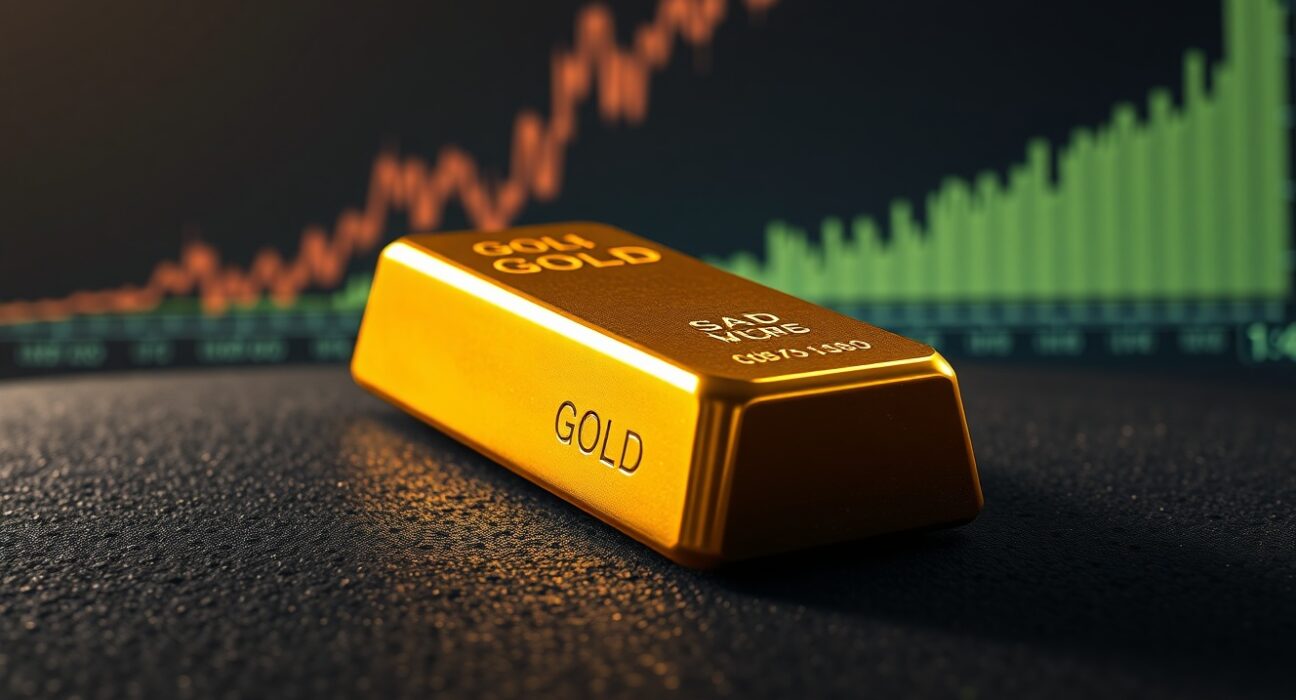
Global gold markets witnessed a significant surge on Thursday, with spot prices extending gains to touch their highest level in over two weeks. This decisive move, clearly illustrated in recent market charts, stems primarily from escalating geopolitical friction between the United States and Iran, driving investors toward traditional safe-haven assets. Analysts point to a sharp increase in trading volume and bullish chart patterns as evidence of renewed institutional interest in the precious metal.
Gold Price Momentum Builds on Geopolitical Uncertainty
Market charts from major trading hubs like London and New York show a consistent upward trajectory for gold this week. Consequently, the precious metal broke through key technical resistance levels, a move that often signals sustained buying pressure. This price action directly correlates with diplomatic statements and military posturing from Washington and Tehran. Furthermore, the volatility in equity markets has provided an additional tailwind for bullion. Historical data consistently shows that gold performs well during periods of international strife.
Financial institutions have increased their long positions on gold futures, according to the latest Commitments of Traders reports. This institutional flow provides fundamental support behind the technical breakout seen on daily and weekly charts. The market is now closely watching the $2,400 per ounce level as the next major psychological and technical barrier.
Analyzing the Safe-Haven Surge in Commodity Markets
The flight to safety is not isolated to gold. Other haven assets, including the Swiss Franc and US Treasury bonds, have also seen increased demand. However, gold’s unique status as a non-yielding, tangible asset often makes it the preferred choice during currency or geopolitical crises. The current chart patterns suggest this rally has more room to run, especially if diplomatic channels fail to de-escalate tensions.
Expert Insight on Market Psychology and Charts
“The charts are telling a clear story of risk aversion,” notes Dr. Anya Sharma, Chief Commodity Strategist at Global Markets Insight. “When you see gold decouple from a strong US Dollar and rally alongside bonds, it’s a classic signal of geopolitical premium being priced in. The breakout above the 50-day moving average, confirmed by high volume, is technically very significant.” Sharma references similar chart formations observed during the initial phases of the Russia-Ukraine conflict, where gold embarked on a prolonged uptrend.
The following table compares key market indicators from one week ago to current levels, highlighting the shift:
| Indicator | Level (One Week Ago) | Current Level | Change |
|---|---|---|---|
| Spot Gold (USD/oz) | $2,315 | $2,382 | +2.9% |
| Gold Futures Volume | Average | Elevated (+35%) | Significant Increase |
| VIX Fear Index | 15.2 | 22.8 | +50% |
| US 10-Year Yield | 4.45% | 4.32% | Decrease |
The Broader Impact on Global Finance and Trade
Rising gold prices have immediate implications for central bank reserves, mining equities, and consumer markets. Many central banks, particularly in emerging economies, have been net buyers of gold for years to diversify away from the US Dollar. A higher gold price strengthens their balance sheets. Meanwhile, major mining companies see their revenue projections improve, which typically boosts their stock prices.
For traders and portfolio managers, the current environment necessitates a review of asset allocation. Key considerations now include:
- Hedging Strategies: Increasing portfolio allocation to physical gold or gold-backed ETFs as a hedge against geopolitical shocks.
- Currency Exposure: Monitoring the US Dollar’s response, as a sharp dollar rally can sometimes cap gold’s gains.
- Technical Levels: Watching for a consolidation phase above the new support level near $2,360, which would confirm a healthy uptrend.
Ultimately, the price of gold acts as a global barometer for fear and uncertainty. The clear message from the charts is that the market is pricing in a higher risk of conflict, which could disrupt oil supplies and broader Middle Eastern stability. This has triggered a fundamental reassessment of risk across all asset classes.
Conclusion
The gold price rally to two-week highs is a direct and measurable response to heightened US-Iran tensions. Market charts provide undeniable evidence of a strong safe-haven bid, supported by technical breakouts and rising volume. While the trajectory of geopolitical events remains uncertain, the market’s initial reaction has been to seek safety in bullion. This movement underscores gold’s enduring role as a financial sanctuary during times of international crisis, a trend that will likely persist until a clear path to de-escalation emerges.
FAQs
Q1: Why does gold go up when there is geopolitical tension?
A1: Gold is considered a ‘safe-haven’ asset because it is a physical store of value, not tied to any government or currency. During crises, investors move money out of risky assets like stocks and into gold to preserve capital, driving up its price.
Q2: How high could the gold price go if US-Iran tensions worsen?
A2: While precise predictions are impossible, analysts look at previous geopolitical spikes. During major escalations, gold has seen gains of 10-20% over a short period. The price would likely test all-time highs if a direct military conflict seemed imminent.
Q3: Does this affect the price of jewelry and retail gold?
A3: Yes, but with a lag. The spot price of bullion is the primary input cost for jewelry and retail bars/coins. A sustained high price will eventually translate to higher costs for consumers, though local demand and premiums also play a role.
Q4: Are there other assets that benefit from this situation?
A4: Yes. Other traditional safe havens include US Treasury bonds, the Swiss Franc, and the Japanese Yen. Within commodities, oil prices often rise due to supply disruption fears, and defense sector stocks may also see increased interest.
Q5: What would cause the gold price to fall back down?
A5: A decisive de-escalation of tensions through successful diplomacy would be the primary catalyst. Additionally, a much stronger US Dollar or a significant rise in interest rates could reduce gold’s attractiveness, as it pays no yield.
Disclaimer: The information provided is not trading advice, Bitcoinworld.co.in holds no liability for any investments made based on the information provided on this page. We strongly recommend independent research and/or consultation with a qualified professional before making any investment decisions.
