

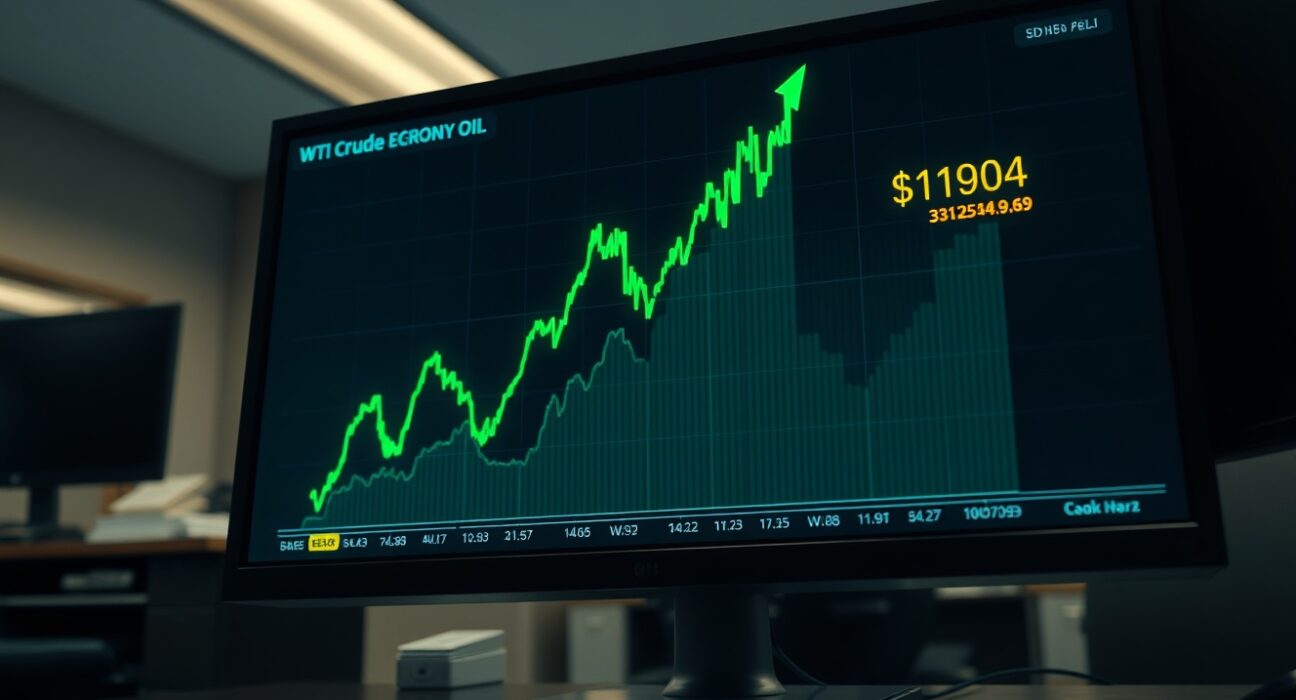
Global energy markets experienced a seismic shift today as WTI crude oil prices surged a staggering 10% in intraday trading, decisively breaking through the $109 per barrel threshold. This dramatic move, recorded on April 10, 2025, sent shockwaves through financial centers from New York to Singapore. Consequently, Brent crude, the international benchmark, also posted a substantial 8.8% gain. This abrupt price acceleration represents one of the most significant single-day movements in the commodity’s recent history, immediately raising questions about supply stability and inflationary pressures worldwide.
WTI Crude Oil Price Surge: Analyzing the Intraday Spike
The WTI crude oil price surge from approximately $99 to over $109 per barrel occurred within a compressed trading session. Market data reveals a rapid, almost vertical ascent on price charts, indicating intense buying pressure. Typically, such a pronounced intraday gain suggests a confluence of several powerful catalysts acting simultaneously. For context, a 10% single-day move in a major benchmark like West Texas Intermediate is a rare event that historically correlates with major geopolitical disruptions or unexpected supply shocks. Meanwhile, the nearly 9% rise in Brent crude confirms the move is a broad-based energy market phenomenon, not isolated to U.S. trading hubs.
Analysts immediately scrutinized trading volumes, which reportedly spiked well above the 30-day average. This volume confirmation signals that the move was driven by substantial capital flows, not merely speculative noise. Furthermore, the price action breached several key technical resistance levels that had contained the market for weeks. The breach of these levels likely triggered automated algorithmic buying, thereby exacerbating the upward momentum. Market structure data, including the futures curve, also showed signs of tightening, a condition known as backwardation, which typically indicates immediate physical supply concerns.
Key Drivers Behind the Historic Oil Price Increase
Several interrelated factors converged to propel the historic oil price surge. Primarily, reports of a significant disruption to crude exports from a major producing nation served as the initial catalyst. Concurrently, data from the U.S. Energy Information Administration (EIA) showed a larger-than-expected drawdown in national crude inventories, suggesting stronger-than-anticipated domestic demand. Additionally, the U.S. Dollar Index (DXY) weakened slightly during the session; since crude is priced in dollars, a weaker dollar makes oil cheaper for holders of other currencies, thus stimulating international demand.
- Geopolitical Supply Shock: An unexpected outage at a critical export terminal halted shipments.
- Inventory Data: EIA reported a draw of 6.5 million barrels versus an expected 1.5 million barrel draw.
- Currency Dynamics: A 0.5% drop in the DXY provided ancillary support for prices.
- Refinery Demand: Seasonal refinery maintenance concluded, leading to a surge in crude processing rates.
Expert Analysis on Market Fundamentals
Dr. Anya Sharma, Lead Commodities Strategist at Global Markets Insight, provided context based on decades of energy market analysis. “While today’s WTI crude oil move is extreme, it reflects underlying market tightness that has been building for quarters,” Sharma stated. “Global inventories have been trending below the five-year average. Furthermore, sustained underinvestment in new production capacity over recent years has eroded the global spare capacity cushion. Today’s event was the spark, but the tinder was already dry.” This expert perspective underscores that the intraday spike, while dramatic, may be amplifying a longer-term structural deficit in global supply versus demand.
Immediate Economic and Consumer Impact
The immediate repercussions of prices topping $109 per barrel are multifaceted and far-reaching. Firstly, gasoline and diesel futures prices rallied in lockstep with crude, presaging higher prices at the pump for consumers within days. Secondly, transportation and logistics companies, which operate on thin margins, face immediate pressure on operating costs. Airlines often hedge fuel costs, but a sustained spike can negatively impact earnings forecasts. Thirdly, the move reignites concerns about persistent inflation, potentially influencing central bank monetary policy decisions. For instance, the Federal Reserve may view rising energy costs as a threat to its inflation targets, possibly affecting the timeline for future interest rate adjustments.
The table below illustrates the scale of the move compared to recent averages:
| Metric | Previous Close | Intraday High (April 10, 2025) | Change |
|---|---|---|---|
| WTI Crude Price | $99.13/barrel | $109.04/barrel | +10.0% |
| Brent Crude Price | $103.45/barrel | $112.67/barrel | +8.8% |
| U.S. RBOB Gasoline Futures | $3.15/gallon | $3.48/gallon | +10.5% |
Historical Context and Market Sentiment
Placing today’s crude oil intraday gain in historical context is crucial for understanding its significance. A 10% single-day gain has occurred only a handful of times in the past two decades, often during periods of acute crisis such as the onset of major conflicts or catastrophic supply failures. Market sentiment, as measured by the CBOE Crude Oil Volatility Index (OVX), spiked dramatically, indicating elevated trader anxiety and expectations for continued price swings. Moreover, open interest in futures contracts increased, suggesting new money entering the market rather than just short-covering. This combination of high volume, high volatility, and rising open interest typically signifies a trend-confirming event, not a temporary aberration.
Conclusion
The unprecedented 10% intraday surge in WTI crude oil to over $109 per barrel marks a pivotal moment for global energy markets. This dramatic price action stems from a potent mix of acute supply disruptions and chronic structural deficits. The move immediately pressures consumer fuel costs, corporate profits, and central bank inflation outlooks. While the intensity of the single-day spike may moderate, the fundamental drivers suggest a higher price floor for crude may now be established. Market participants, from traders to policymakers, will now closely monitor the durability of this price level and its cascading effects on the broader global economy.
FAQs
Q1: What caused WTI crude oil to surge 10% in one day?
The surge was triggered by a combination of a sudden geopolitical supply disruption, a larger-than-expected draw in U.S. crude inventories, and supportive currency movements, all against a backdrop of already tight global supplies.
Q2: How does a $109 per barrel oil price affect gasoline prices?
Gasoline futures prices typically move in correlation with crude. A sustained oil price at this level translates to significantly higher prices at the pump, often within a 1-2 week lag, impacting consumer spending.
Q3: What is the difference between WTI and Brent crude oil?
WTI (West Texas Intermediate) is a U.S. benchmark priced in Cushing, Oklahoma, often seen as slightly lighter and sweeter. Brent is an international benchmark sourced from the North Sea. Both surged, with WTI up 10% and Brent up 8.8%.
Q4: Could this oil price spike lead to a recession?
While a single-day spike is not a direct predictor, sustained high oil prices act as a tax on consumers and businesses, slowing economic growth. Historically, sharp, sustained increases in energy costs have contributed to economic downturns.
Q5: What does ‘intraday’ trading mean in this context?
Intraday refers to price movements that occur within a single trading session, from market open to close. The 10% gain for WTI happened during the day’s trading on April 10, 2025, not as a gap from the previous day’s close.
Disclaimer: The information provided is not trading advice, Bitcoinworld.co.in holds no liability for any investments made based on the information provided on this page. We strongly recommend independent research and/or consultation with a qualified professional before making any investment decisions.
