

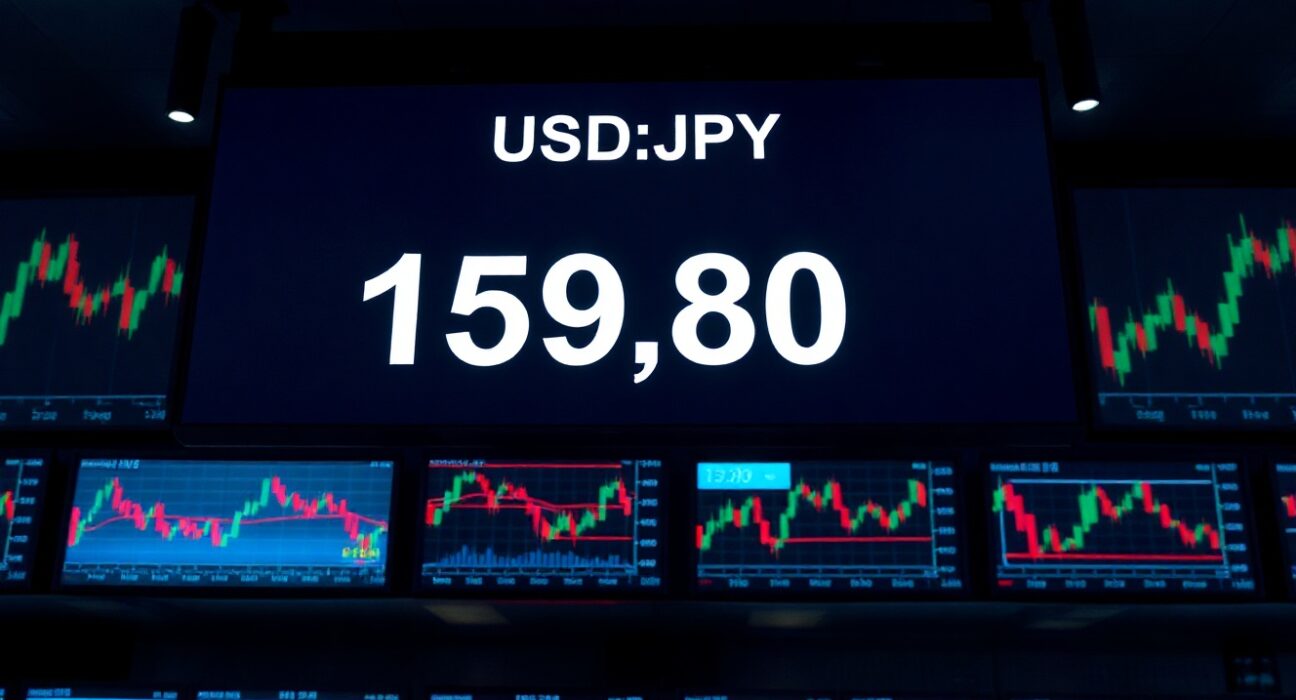
The USD/JPY currency pair is pressing toward the psychologically significant 160.00 level during Wednesday’s Asian session, as persistent yen weakness continues to outweigh a modest pullback in the US Dollar. The pair currently trades around 159.80, reflecting ongoing market dynamics that favor the dollar despite a slight softening in the broader USD index.
Yen Remains Under Pressure
The Japanese yen has struggled to gain traction even as the US Dollar Index (DXY) retreats from recent highs. Market participants point to the Bank of Japan’s (BoJ) cautious monetary policy stance as a primary factor weighing on the currency. Despite earlier speculation about a potential policy shift, the BoJ has maintained its ultra-loose yield curve control framework, leaving the yen vulnerable to carry trade flows and higher US yields.
Investors are closely watching for any intervention signals from Japanese authorities. The 160.00 level is widely seen as a potential trigger point for verbal or direct market intervention, similar to actions taken in late 2022 when USD/JPY briefly exceeded 151.00. Finance Minister Shunichi Suzuki has reiterated that authorities are watching currency moves with a high sense of urgency, though no concrete action has been taken yet.
US Dollar Softens on Mixed Data
The US Dollar has eased slightly following the release of mixed economic data. While the labor market remains resilient, softer-than-expected manufacturing figures and slightly dovish comments from Federal Reserve officials have tempered rate hike expectations. The Fed’s preferred inflation gauge, the PCE price index, remains above target but is showing signs of moderation.
Market pricing currently suggests the Fed may hold rates steady at its next meeting, with a potential cut pushed into late 2024. This outlook has capped the dollar’s upside but has not been enough to reverse the yen’s broader downtrend.
What This Means for Traders and the Broader Market
The approach toward 160.00 carries significant implications. For Japanese importers and businesses, a weaker yen increases the cost of raw materials and energy imports, adding to inflationary pressures. For global forex markets, a break above 160.00 could trigger a wave of stop-loss orders and accelerate the pair’s move higher, potentially prompting official intervention.
From a risk perspective, sustained yen weakness may also impact Asian equity markets and carry trade strategies, where investors borrow cheap yen to invest in higher-yielding assets. A sudden reversal, whether from intervention or shifting rate expectations, could lead to sharp volatility.
Conclusion
The USD/JPY pair remains in a well-defined uptrend, with the 160.00 level acting as both a technical and psychological barrier. The yen’s inability to rally despite a softer dollar underscores the fundamental divergence between BoJ and Fed policy. Traders should monitor for intervention risk and upcoming US labor market data, which could provide the next directional catalyst. The coming sessions will be critical in determining whether the pair breaks through or faces renewed resistance.
FAQs
Q1: Why is the yen weakening despite a softer US dollar?
The yen’s weakness is primarily driven by the Bank of Japan’s continued ultra-loose monetary policy, which contrasts with higher interest rates in the US. This interest rate differential encourages investors to sell yen and buy dollars, keeping the pair elevated.
Q2: What happens if USD/JPY breaks above 160.00?
A break above 160.00 could trigger further technical buying and stop-loss activations, potentially accelerating the move higher. It also raises the risk of verbal or direct intervention from Japanese authorities, who have previously stepped in to curb excessive yen depreciation.
Q3: Could the Bank of Japan intervene to support the yen?
Yes, Japanese officials have a history of intervening in forex markets when they view currency moves as speculative or disorderly. The 160.00 level is widely watched as a potential intervention threshold, though authorities may first use verbal warnings before taking direct action.
Disclaimer: The information provided is not trading advice, Bitcoinworld.co.in holds no liability for any investments made based on the information provided on this page. We strongly recommend independent research and/or consultation with a qualified professional before making any investment decisions.
