

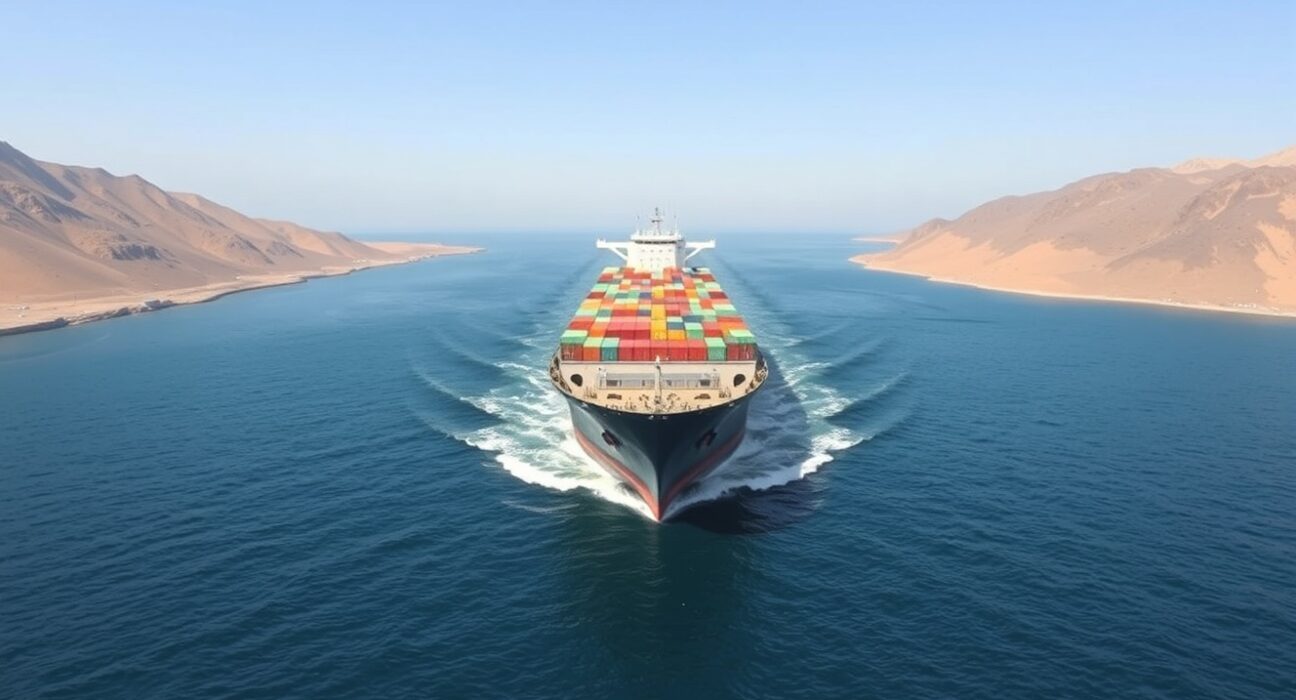
In a move that sent immediate shockwaves through global maritime and energy sectors, Iran’s deputy foreign minister announced on March 15, 2025, that the Islamic Republic will impose mandatory tolls on commercial vessels transiting the strategic Strait of Hormuz, a decision with profound implications for world trade and geopolitical stability.
Iran’s Strait of Hormuz Toll Announcement and Immediate Reactions
Deputy Foreign Minister Ali Bagheri Kani formally declared the new policy from Tehran. Consequently, the international shipping community reacted with swift concern. Furthermore, this narrow waterway serves as the world’s most important oil transit chokepoint. Specifically, approximately 21 million barrels of oil, representing one-fifth of global petroleum consumption, pass through daily. Therefore, any disruption or added cost creates immediate market volatility. The announcement lacked specific fee structures initially, but Iranian officials suggested costs would vary by vessel size and cargo type. Meanwhile, major shipping associations and flag states began urgent consultations.
Geopolitical Context and Historical Precedents
This decision does not exist in a vacuum. Instead, it follows decades of regional tension over the strait’s legal status. Iran consistently claims authority over parts of the passage based on its territorial waters. However, the United Nations Convention on the Law of the Sea (UNCLOS) guarantees transit passage through such straits. Notably, Iran has not ratified UNCLOS. Previously, Tehran threatened to close the strait during periods of heightened conflict. For instance, similar threats emerged during the 2019 tanker seizures and the 2020 escalation with the United States. Comparatively, imposing a toll represents a more nuanced, yet economically potent, assertion of control.
Expert Analysis on Maritime Law and Sovereignty
Maritime law experts quickly weighed in on the announcement’s legality. Dr. Anya Sharma, a professor of International Maritime Law at the National University of Singapore, provided critical context. “The legal framework governing international straits is deliberately designed to prevent exactly this,” she explained. “The principle of transit passage, enshrined in UNCLOS Article 38, prohibits states bordering straits from hampering or impeding transit. Imposing unilateral tolls could be interpreted as a clear impediment.” She further noted that while states can levy charges for specific services like pilotage or pollution control, a general transit toll lacks clear legal foundation. Consequently, legal challenges at the International Tribunal for the Law of the Sea appear likely.
Potential Impact on Global Shipping and Oil Prices
The economic ramifications are potentially severe. The global shipping industry, already navigating post-pandemic supply chain adjustments and decarbonization costs, faces a new operational expense. Analysts project the following potential impacts based on preliminary modeling:
- Increased Freight Rates: Shipping companies will likely pass toll costs to consumers, raising prices for goods globally.
- Oil Market Volatility: Brent crude futures experienced an immediate 3% spike following the announcement. Sustained premiums are probable.
- Route Diversification: Some carriers may consider longer, costlier alternative routes, such as around the Cape of Good Hope, increasing voyage times and fuel consumption.
- Insurance Premiums: War risk insurance premiums for the region, known as Additional Premiums (AP), are expected to rise sharply.
The table below outlines key transit statistics for the Strait of Hormuz:
| Metric | Volume/Figure | Global Share |
|---|---|---|
| Oil Transit (Daily) | ~21 million barrels | ~21% |
| Liquefied Natural Gas (LNG) Transit | ~20% of global trade | ~20% |
| Total Ship Transits (Annual) | ~30,000 vessels | N/A |
| Width at Narrowest Point | 21 nautical miles | N/A |
Regional Security and International Response
Security analysts highlight the risk of escalation. The United States Fifth Fleet, based in Bahrain, maintains a persistent presence in the area. A U.S. Department of Defense statement reiterated America’s commitment to “freedom of navigation and the free flow of commerce.” Simultaneously, regional Gulf Cooperation Council (GCC) states, including Saudi Arabia and the United Arab Emirates, condemned the move as a violation of international norms. These nations rely heavily on the unimpeded flow of their hydrocarbon exports. European and Asian importers, including China, Japan, and India, expressed deep concern over energy security. Diplomatic channels are now actively engaged to de-escalate the situation.
The Rationale from Tehran: A Strategic Perspective
Iranian state media framed the tolls as a legitimate exercise of sovereignty and a necessary revenue mechanism. Officials cited the costs of maintaining maritime safety, navigational aids, and environmental protection in the busy waterway. Some analysts, however, interpret the move as a strategic bargaining chip. Given ongoing tensions over Iran’s nuclear program and international sanctions, the tolls provide economic leverage and a point of negotiation. The policy also resonates domestically, projecting an image of strength and sovereignty to the Iranian public.
Conclusion
Iran’s decision to impose tolls on ships in the Strait of Hormuz marks a significant escalation in maritime geopolitics. This move directly challenges established international law and threatens to increase costs across the global supply chain. The immediate spike in oil prices underscores the strait’s critical role in energy security. While the full fee structure and enforcement mechanisms remain unclear, the announcement has already altered risk calculations for shippers, insurers, and governments worldwide. The coming weeks will test diplomatic resolve and determine whether this Strait of Hormuz toll becomes a permanent feature of global trade or a contested policy reversed under international pressure. The stability of one of the world’s most vital economic arteries now hangs in the balance.
FAQs
Q1: What is the Strait of Hormuz and why is it so important?
The Strait of Hormuz is a narrow channel between the Gulf of Oman and the Persian Gulf. It is the world’s most critical oil transit chokepoint, with about 21 million barrels of oil passing through daily, supplying markets in Asia, Europe, and beyond.
Q2: Does Iran have the legal right to charge tolls in the strait?
Most maritime law experts argue no. The United Nations Convention on the Law of the Sea (UNCLOS) guarantees ‘transit passage’ through international straits, meaning states cannot impede or suspend passage. Iran’s unilateral toll is widely viewed as a violation of this principle, though Iran itself is not a party to UNCLOS.
Q3: How will this affect gasoline prices for consumers?
If the tolls are implemented and sustained, they will add a cost layer to crude oil transportation. This cost will likely be passed through the supply chain, potentially leading to higher prices for refined products like gasoline and diesel, especially in regions dependent on Gulf oil.
Q4: What can shipping companies do to avoid the toll?
The primary alternative is rerouting vessels around the Cape of Good Hope at the southern tip of Africa. However, this adds approximately 10-14 days to a Middle East-to-Europe voyage, significantly increasing fuel costs, crew wages, and delaying cargo, making it economically unviable for most shipments.
Q5: What has been the international community’s response?
Responses have been uniformly critical. The United States and European allies have condemned the move, Gulf Arab states have rejected it, and major oil-importing nations like China, India, and Japan have expressed serious concern. Diplomatic efforts and potential legal challenges are underway.
Disclaimer: The information provided is not trading advice, Bitcoinworld.co.in holds no liability for any investments made based on the information provided on this page. We strongly recommend independent research and/or consultation with a qualified professional before making any investment decisions.
