

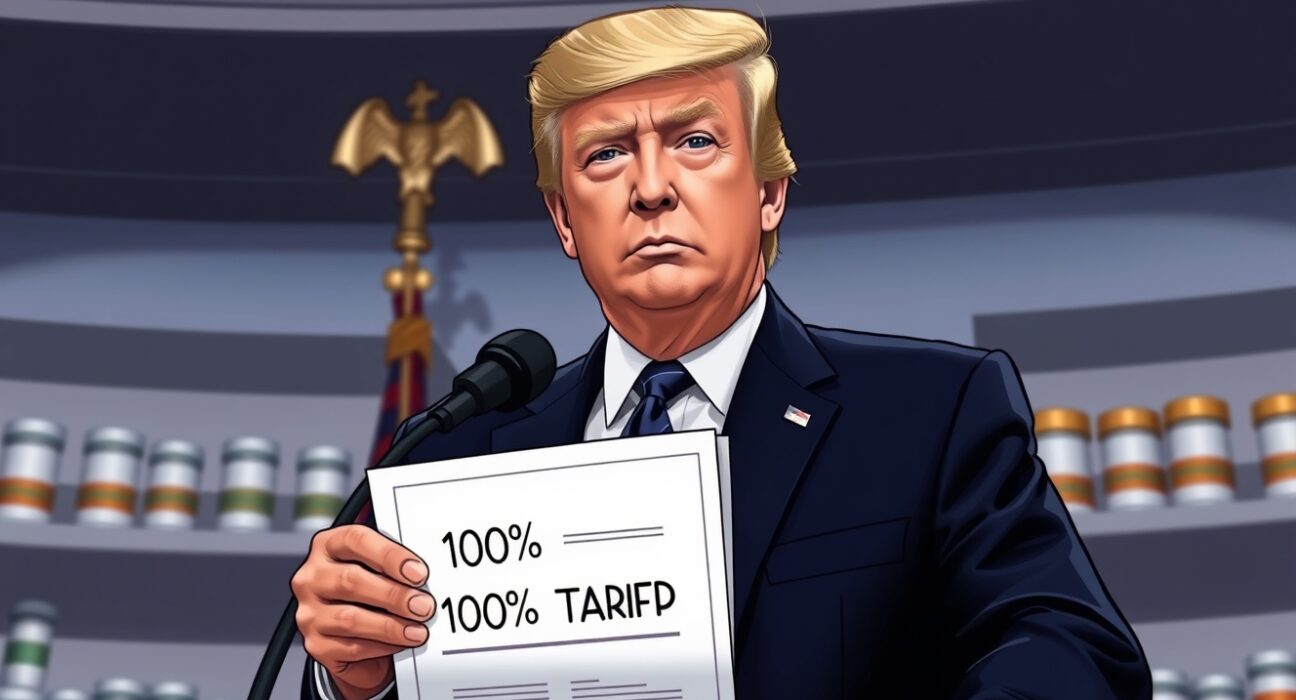
WASHINGTON, D.C. — In a move that could fundamentally reshape pharmaceutical markets, President Donald Trump plans to impose 100% tariffs on select patented drugs, according to exclusive reporting from Bloomberg. This dramatic policy shift targets medications protected by intellectual property rights, potentially affecting millions of American patients and global pharmaceutical companies. The announcement comes amid ongoing debates about drug affordability and trade imbalances, marking one of the most aggressive trade measures specifically targeting the healthcare sector in recent history.
Trump’s Pharmaceutical Tariff Strategy Explained
The proposed tariffs specifically target patented pharmaceutical products, creating a distinction between brand-name medications and their generic counterparts. According to Bloomberg’s sources within the administration, the policy aims to address what President Trump calls “unfair pricing practices” by drug manufacturers. Consequently, imported patented drugs could see their prices double at the border before reaching American consumers. Meanwhile, domestic production of these medications might receive protection from foreign competition.
This policy represents a significant escalation from previous tariff measures. Previously, the administration focused primarily on industrial goods and materials. Now, healthcare products enter the trade war arena. The Office of the United States Trade Representative reportedly began drafting the executive order last month. Additionally, Health and Human Services officials have been consulted about potential healthcare system impacts.
Historical Context of Drug Pricing Debates
President Trump’s tariff proposal emerges from decades of drug pricing controversies. For instance, Americans currently pay significantly more for prescription medications than citizens of other developed nations. According to a 2024 Rand Corporation study, U.S. drug prices average 256% higher than those in 32 comparison countries. Furthermore, patent protections typically grant manufacturers 20 years of market exclusivity. During this period, companies recoup research investments while facing limited competition.
The pharmaceutical industry has consistently defended current pricing structures. Industry representatives argue that high prices fund critical research and development. In fact, the Pharmaceutical Research and Manufacturers of America reports that member companies invested $102 billion in R&D during 2023 alone. However, critics counter that marketing expenditures often exceed research budgets. They also note that many breakthrough discoveries originate from publicly funded academic institutions.
Economic Impacts and Market Reactions
Financial markets reacted immediately to the Bloomberg report. Major pharmaceutical stocks declined by an average of 4.7% in after-hours trading. Conversely, generic drug manufacturers saw modest gains. Analysts from Morgan Stanley published a preliminary assessment within hours. Their report suggests the tariffs could affect approximately $180 billion in annual pharmaceutical imports. Meanwhile, domestic drug production represents about $120 billion in annual output.
The potential consequences extend beyond stock prices. Insurance providers expressed concern about premium adjustments. Pharmacy benefit managers began evaluating formulary changes. Hospital purchasing groups started reviewing contingency plans. European and Asian pharmaceutical associations issued statements opposing the measure. They warned about potential retaliatory actions against American medical exports.
Global Pharmaceutical Trade Dynamics
International drug manufacturing relies on complex global supply chains. Many patented medications contain ingredients from multiple countries. Finished products often cross borders several times during production. For example, a cancer drug might incorporate active ingredients from India, undergo formulation in Ireland, receive packaging in Singapore, and finally reach U.S. distribution centers. Therefore, tariffs could disrupt these intricate networks significantly.
The United States imports pharmaceuticals from numerous trading partners. Consider these key relationships:
- European Union: Supplies 42% of imported patented drugs
- Switzerland: Provides 18% of specialty medications
- Japan: Accounts for 12% of oncology imports
- United Kingdom: Delivers 8% of cardiovascular drugs
These countries have already responded through diplomatic channels. The European Commission announced it will “review all available options” if tariffs proceed. Japanese trade officials requested emergency consultations. Swiss pharmaceutical giants began lobbying their government for intervention.
Legal and Regulatory Considerations
Legal experts identify several potential challenges to the tariff plan. First, existing trade agreements might limit presidential authority. The World Trade Organization’s Agreement on Trade-Related Aspects of Intellectual Property Rights establishes specific rules for patented products. Second, domestic statutes could constrain executive action. The Trade Expansion Act of 1962 requires national security justifications for certain tariffs. Third, judicial review might delay implementation. Previous tariff measures faced multiple court challenges.
The Food and Drug Administration faces additional complications. Currently, the FDA approves drugs regardless of manufacturing location. However, tariffs could create incentives for production shifts. Companies might move operations to avoid import duties. Consequently, the FDA would need to inspect new facilities. This process typically requires months or years. During transitions, drug shortages might occur.
Patient Access and Healthcare System Effects
Healthcare advocates expressed immediate concern about patient access. Many patented drugs lack therapeutic alternatives. Patients with rare diseases often depend on single-source medications. Similarly, advanced cancer treatments frequently have no generic versions. If tariffs increase prices significantly, insurers might impose stricter prior authorization requirements. Some patients could face higher out-of-pocket costs.
Hospital administrators provided specific examples of potential impacts. A major academic medical center reported that 37% of their formulary consists of imported patented drugs. Their chief pharmacist estimated annual cost increases between $8-12 million under the tariff plan. Community health centers serving low-income populations expressed particular alarm. Many operate on fixed budgets with limited flexibility for price increases.
The policy might produce unintended consequences. For instance, some patients might ration medications. Others could abandon treatment regimens entirely. Public health officials warned about potential negative health outcomes. They cited studies showing that medication non-adherence increases hospitalizations. Emergency department visits might rise correspondingly. Ultimately, the healthcare system could face higher costs despite tariff revenues.
Pharmaceutical Industry Response and Alternatives
Industry leaders proposed several alternatives to tariffs. The Biotechnology Innovation Organization suggested enhanced price transparency measures. Pharmaceutical Research and Manufacturers of America recommended voluntary pricing commitments. Generic manufacturers advocated for accelerated approval pathways. All groups emphasized collaboration over confrontation.
Some companies began preparing contingency plans. Several European manufacturers explored U.S. production expansion. Asian companies investigated partnership opportunities. Domestic firms evaluated capacity increases. However, these adjustments require substantial time investments. Building new manufacturing facilities typically takes three to five years. Obtaining regulatory approvals adds additional time.
The administration reportedly considered compromise measures. One option involves tiered tariffs based on drug categories. Another proposal exempts medications for rare diseases. A third approach phases tariffs gradually over several years. Negotiations continue behind closed doors. Congressional leaders from both parties requested briefing sessions. Committee hearings will likely follow the formal announcement.
Conclusion
President Trump’s proposed 100% tariffs on patented drugs represent a watershed moment for pharmaceutical policy. This aggressive approach to drug pricing could reshape global supply chains, affect patient access, and trigger international trade disputes. While aiming to address legitimate concerns about pharmaceutical costs, the tariffs risk creating new challenges for healthcare providers and patients. The coming months will reveal whether this bold strategy achieves its intended effects or produces unintended consequences across the healthcare ecosystem. As stakeholders analyze the full implications, one certainty emerges: the debate about fair drug pricing has entered a dramatically new phase with potentially far-reaching consequences for all involved parties.
FAQs
Q1: Which specific drugs would face the 100% tariffs?
The tariffs would apply to imported patented pharmaceuticals, primarily brand-name medications still under patent protection. The exact list remains under development, but would likely exclude generic drugs, over-the-counter medications, and drugs classified as medically essential by health authorities.
Q2: How would these tariffs affect drug prices for American consumers?
Prices for affected imported patented drugs could potentially double, though the actual impact depends on how manufacturers, distributors, and insurers absorb or pass along the costs. Some analysts predict price increases of 30-60% after accounting for existing margins and potential cost-sharing.
Q3: When would the Trump drug tariffs take effect?
According to Bloomberg’s reporting, the administration aims for implementation within 90 days of an official announcement, though legal challenges and regulatory processes could delay actual implementation. The timeline remains fluid as negotiations continue.
Q4: Could these tariffs cause drug shortages?
Healthcare experts express concern about potential shortages, particularly for medications with complex global supply chains or limited manufacturing alternatives. The FDA maintains a drug shortage monitoring system that would track any emerging availability issues.
Q5: How are other countries responding to this proposed policy?
European, Japanese, and Swiss officials have expressed strong opposition and are considering various responses, including potential retaliatory measures, WTO challenges, and diplomatic negotiations to seek exemptions or modifications to the tariff plan.
Disclaimer: The information provided is not trading advice, Bitcoinworld.co.in holds no liability for any investments made based on the information provided on this page. We strongly recommend independent research and/or consultation with a qualified professional before making any investment decisions.
