

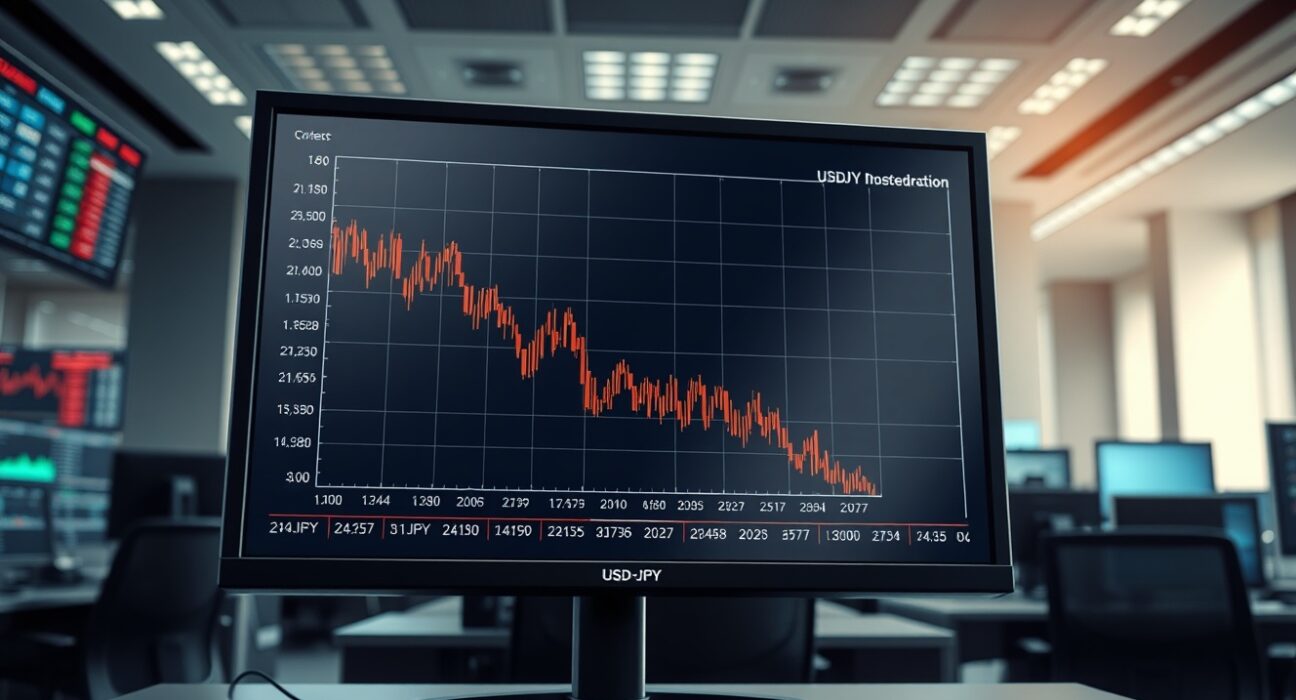
NEW YORK, March 2025 – The USD/JPY currency pair experienced significant downward pressure in early trading today, as two major catalysts converged to weaken the US Dollar. Reports of advancing ceasefire negotiations between the United States and Iran, coupled with a softer-than-expected ISM Purchasing Managers’ Index (PMI), triggered a sharp sell-off in the greenback against the Japanese Yen. This movement highlights the intricate link between geopolitical developments, domestic economic data, and global forex markets.
USD/JPY Technical Breakdown and Immediate Market Reaction
Market data shows the USD/JPY pair fell sharply from an Asian session high near 152.50 to breach the 151.00 support level. Trading volume spiked by over 40% compared to the 30-day average, indicating strong institutional participation in the move. The decline represents the pair’s most significant single-day drop in three weeks. Analysts immediately identified the break below the 50-day moving average as a key technical signal, potentially inviting further bearish momentum. Consequently, stop-loss orders clustered around the 151.20 level accelerated the pair’s descent.
Market sentiment swiftly turned risk-off, benefiting traditional safe-haven assets like the Japanese Yen. The Bank of Japan’s recent policy stance, which remains accommodative but vigilant on currency stability, provided a backdrop for the Yen’s strength. Meanwhile, the US Dollar Index (DXY), which tracks the dollar against a basket of six major currencies, mirrored the weakness, falling 0.6% on the session.
Geopolitical Catalyst: The Weight of US-Iran Ceasefire Talks
The primary driver behind the US Dollar’s weakness stemmed from diplomatic headlines. Senior officials from the United States and Iran reportedly engaged in substantive talks in Oman, aiming to de-escalate regional tensions. Historically, geopolitical instability in the Middle East has bolstered the US Dollar’s status as a global safe haven. Therefore, progress toward peace conversely reduces this premium. The market interpreted the news as reducing immediate global risk, thereby diminishing the dollar’s appeal.
This dynamic is not without precedent. For instance, similar periods of diplomatic thaw in 2021 and 2023 saw temporary dollar softness. The current talks focus on a mutual de-escalation framework, which could lead to a reduction in regional military posturing. Energy markets also reacted, with oil prices dipping on the potential for stabilized supply from the region. Since the US Dollar is often inversely correlated with crude oil prices in such scenarios, this added further downward pressure.
Economic Data Shock: ISM PMI Softens Beyond Forecasts
Concurrently, domestic economic data undermined the dollar’s fundamental support. The Institute for Supply Management’s Manufacturing PMI for February registered at 48.5, missing consensus estimates of 49.8 and declining from January’s 49.1. A reading below 50 indicates contraction in the manufacturing sector. Key sub-components showed particular weakness:
- New Orders Index: Fell to 47.0, signaling weakening demand.
- Employment Index: Dropped to 46.5, pointing to potential job cuts.
- Prices Paid Index: Eased to 55.0, suggesting moderating input inflation.
This report challenged the narrative of resilient US economic exceptionalism, a core pillar of dollar strength throughout 2024. It fueled speculation that the Federal Reserve might adopt a more dovish stance in upcoming meetings to support economic activity, potentially delaying or reducing the scale of future interest rate hikes. Lower interest rate expectations directly reduce the yield advantage of dollar-denominated assets.
Interplay of Forces and Broader Market Impact
The combination of geopolitical and economic forces created a powerful headwind for the USD/JPY. The following table summarizes the immediate impact across related asset classes:
| Asset | Reaction | Primary Driver |
|---|---|---|
| USD/JPY | Sharp Decline (-1.0%) | Combined Effect |
| US Treasury Yields (10-Yr) | Fell 8 basis points | Soft ISM PMI |
| Gold (XAU/USD) | Moderate Gain | Dollar Weakness |
| Nikkei 225 | Mixed (Yen strength weighs) | Currency Effects |
Furthermore, the reaction underscores a shift in market priorities. While inflation data remains crucial, growth indicators like the ISM PMI are regaining prominence as traders assess the sustainability of the economic expansion. The Bank of Japan now faces a complex environment; a stronger yen helps curb import inflation but could hurt the profitability of Japan’s vital export sector.
Expert Analysis and Forward-Looking Scenarios
Market strategists emphasize monitoring the 150.50 support level for USD/JPY. A sustained break below could target the 149.00-149.50 zone. The immediate focus now shifts to upcoming US non-farm payrolls data and Federal Reserve commentary for confirmation of a shifting policy outlook. Regarding geopolitics, analysts caution that ceasefire talks are fragile, and any setback could rapidly reverse the dollar’s losses. The market’s sensitivity to both data and diplomacy is expected to remain elevated in the coming weeks.
Conclusion
The easing of the USD/JPY pair today demonstrates the forex market’s acute sensitivity to a confluence of factors. The potential de-escalation of US-Iran tensions removed a key support pillar for the US Dollar, while a softening ISM PMI reading introduced concerns about domestic economic momentum. This episode serves as a clear reminder that currency valuations are a real-time barometer of both geopolitical risk and economic health. Traders will now scrutinize subsequent data releases and diplomatic developments to determine whether this shift in USD/JPY sentiment marks a short-term correction or the beginning of a more sustained trend.
FAQs
Q1: Why does news of US-Iran peace talks weaken the US Dollar?
Historically, the US Dollar acts as a safe-haven currency during global geopolitical turmoil. Progress toward peace reduces perceived global risk, diminishing the demand for this safe-haven premium and leading to dollar selling.
Q2: What does an ISM PMI below 50 signify?
An ISM Manufacturing PMI reading below 50 indicates that the manufacturing sector is in contraction. This suggests slowing economic activity, which can influence central bank policy and currency valuations.
Q3: How does a weaker US Dollar affect USD/JPY?
USD/JPY measures how many Japanese Yen one US Dollar can buy. A weaker US Dollar directly means each dollar buys fewer yen, causing the USD/JPY exchange rate to fall or “ease.”
Q4: Could the Bank of Japan intervene to stop the Yen’s rise?
The Bank of Japan has a history of intervening in forex markets when it believes rapid, speculative Yen strengthening harms the economy. While possible, intervention typically requires extreme, disorderly moves rather than gradual shifts driven by fundamentals.
Q5: What other economic data points should traders watch after this ISM report?
Traders will closely monitor the US Services PMI, jobless claims, and particularly the monthly Non-Farm Payrolls report and Consumer Price Index (CPI) for a fuller picture of economic strength and inflation, which guide Federal Reserve policy.
Disclaimer: The information provided is not trading advice, Bitcoinworld.co.in holds no liability for any investments made based on the information provided on this page. We strongly recommend independent research and/or consultation with a qualified professional before making any investment decisions.
