

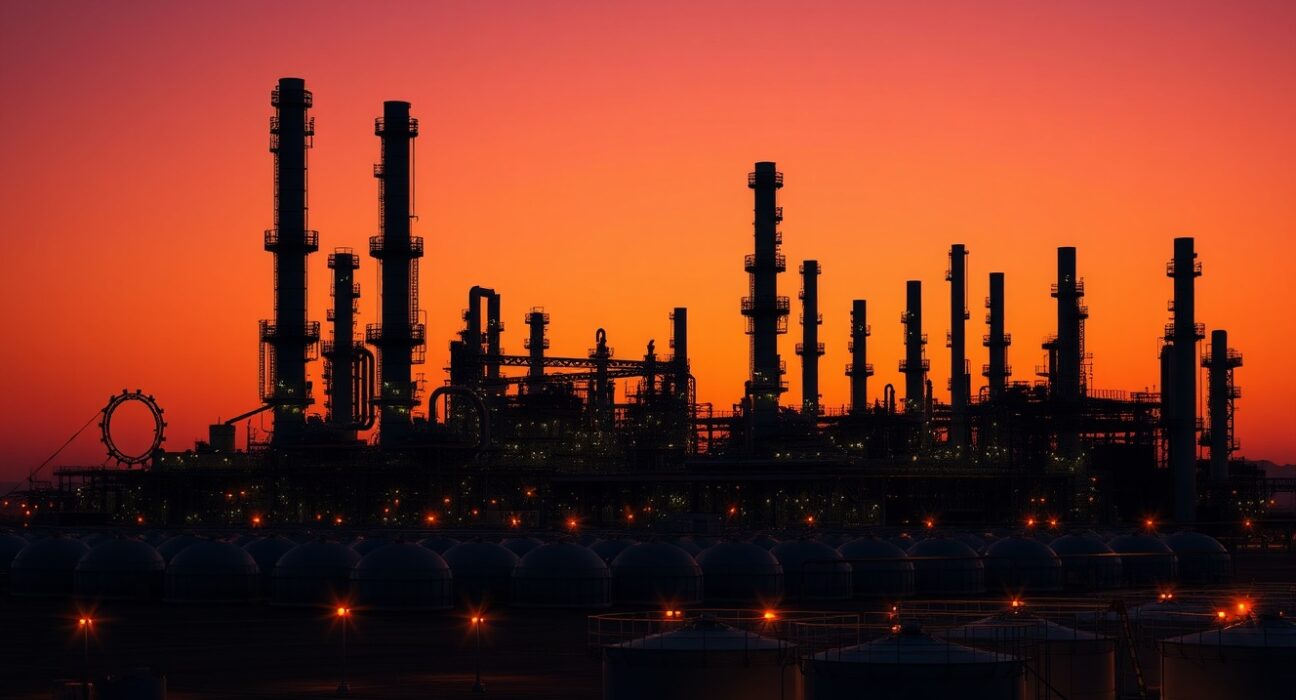
Global energy markets are holding their breath as West Texas Intermediate (WTI) Crude Oil demonstrates remarkable resilience, maintaining a position firmly above the $103.00 per barrel threshold. This stability unfolds against a backdrop of escalating geopolitical pressure, with a critical diplomatic deadline involving Iran casting a long shadow over global supply chains. The interplay between technical market support and fundamental supply risks creates a precarious equilibrium for traders and analysts worldwide.
WTI Crude Oil Price Action and Technical Landscape
WTI futures for June delivery have consolidated within a narrow band above the psychologically significant $103.00 level. This price point now acts as a crucial support zone, tested repeatedly over recent trading sessions. Market technicians note the 50-day and 200-day moving averages are converging just below this level, potentially providing a dynamic floor for prices. Furthermore, trading volumes have increased notably, indicating sustained institutional interest rather than speculative froth. The Relative Strength Index (RSI) currently sits in a neutral territory, suggesting the market is neither overbought nor oversold, leaving room for movement in either direction based on fundamental news.
Comparatively, the global Brent crude benchmark trades at a modest premium to WTI, reflecting ongoing regional supply differentials and transportation costs. The following table illustrates key price levels and indicators for WTI as of this analysis:
| Metric | Value | Significance |
|---|---|---|
| Current Price | $103.45 | Primary support above $103.00 |
| 50-Day MA | $101.20 | Dynamic support level |
| 200-Day MA | $98.75 | Long-term trend indicator |
| RSI (14-day) | 54 | Neutral momentum |
| Weekly Range | $102.80 – $104.60 | Defined trading channel |
The Geopolitical Catalyst: Iran’s Looming Deadline
The primary fundamental driver underpinning current oil price strength is the impending deadline in negotiations concerning Iran’s nuclear program. Diplomats from several world powers have set a clear date for Tehran to respond to a revised proposal. Consequently, the market is pricing in a significant geopolitical risk premium. A breakdown in talks could swiftly reintroduce stringent sanctions on Iranian oil exports, potentially removing over one million barrels per day from the global market. Conversely, a successful agreement would likely see that supply return, applying downward pressure on prices.
Historical context is critical here. The 2015 Joint Comprehensive Plan of Action (JCPOA), when operational, allowed Iran to export approximately 2.5 million barrels per day. Current exports are estimated to be around 1.2-1.5 million bpd. Therefore, the market’s sensitivity stems from a potential swing of 1-1.3 million bpd, a substantial volume in a market with limited spare capacity. The situation is further complicated by regional dynamics, including:
- Strait of Hormuz security: Approximately 20% of global oil trade transits this chokepoint.
- OPEC+ production discipline: The alliance maintains modest spare capacity, limiting its ability to offset a major supply shock.
- Global inventory levels: Commercial stocks in OECD nations remain below their five-year averages, reducing a buffer.
Expert Analysis on Supply and Demand Fundamentals
Energy market analysts emphasize the confluence of factors beyond geopolitics. The International Energy Agency (IEA) recently revised its 2025 global oil demand growth forecast upward, citing stronger-than-expected economic resilience in major economies. Simultaneously, supply growth from non-OPEC+ producers, notably the United States, has begun to plateau. Capital discipline among shale producers and higher service costs are constraining output increases. This tightening fundamental picture means the market has less slack to absorb a sudden disruption.
Furthermore, refining margins, or “crack spreads,” remain robust, indicating healthy downstream demand for crude. This supports sustained crude purchases by refiners, particularly as the Northern Hemisphere approaches the summer driving season. The combination of inelastic demand and constrained supply creates an environment where any geopolitical spark can ignite a significant price move. Market participants are therefore closely monitoring not just the Iranian deadline, but also the logistical and political capacity for other producers to respond.
Broader Market Impacts and Economic Implications
Sustained oil prices above $100 per barrel have wide-ranging consequences. For consumers, it translates directly into higher costs for gasoline, diesel, and heating fuels, acting as a tax on disposable income. For central banks, particularly the Federal Reserve, persistent energy-led inflation complicates the path to lower interest rates. For corporate earnings, sectors like transportation, manufacturing, and chemicals face rising input costs, potentially squeezing profit margins.
Emerging market economies, which are often net oil importers, face heightened pressures on their trade balances and currencies. This dynamic can create feedback loops in global financial markets. On the other hand, major exporting nations and energy companies benefit from increased revenue, which can lead to higher capital expenditure and shareholder returns. The current price environment thus represents a complex transfer of wealth and a test of economic resilience across different regions and sectors.
Conclusion
WTI Crude Oil’s steadfast position above $103.00 reflects a market in careful balance. Technical support converges with a potent geopolitical risk premium tied directly to the outcome of Iran’s nuclear deadline. The fundamental backdrop of firm demand and limited spare supply capacity amplifies the importance of this geopolitical event. Market participants should prepare for elevated volatility as the deadline passes, with price direction heavily contingent on whether diplomatic channels remain open or close. The stability seen today is, therefore, a calm that may very well precede a significant storm in global energy markets.
FAQs
Q1: What is the main reason WTI Crude Oil is holding above $103?
The primary driver is a geopolitical risk premium linked to an impending deadline in negotiations over Iran’s nuclear program. The market fears a collapse in talks could lead to renewed sanctions, cutting off a significant volume of Iranian oil from global markets.
Q2: How does the Iran situation specifically affect oil supply?
Iran currently exports an estimated 1.2-1.5 million barrels of oil per day. A return to strict sanctions could remove most of this volume from the market. A successful deal could allow exports to increase, adding supply. This potential swing is substantial in a tight market.
Q3: Are there other factors supporting high oil prices besides geopolitics?
Yes. Fundamentals are also supportive. Global oil demand forecasts have been revised upward, while supply growth from non-OPEC+ producers like the US is slowing. Global oil inventories are below average, leaving little buffer for supply shocks.
Q4: What are the economic impacts of oil above $100 per barrel?
High oil prices increase energy costs for consumers and businesses, contributing to inflation. They pressure central bank policy, strain the trade balances of oil-importing nations, and can reduce corporate profitability in transport and manufacturing sectors.
Q5: What key price level are traders watching for WTI Crude Oil?
The $103.00 per barrel level is a critical near-term support. A sustained break below could signal a reduction in the geopolitical premium and target the 50-day moving average near $101.20. Resistance is seen near the weekly high of $104.60.
Disclaimer: The information provided is not trading advice, Bitcoinworld.co.in holds no liability for any investments made based on the information provided on this page. We strongly recommend independent research and/or consultation with a qualified professional before making any investment decisions.
