

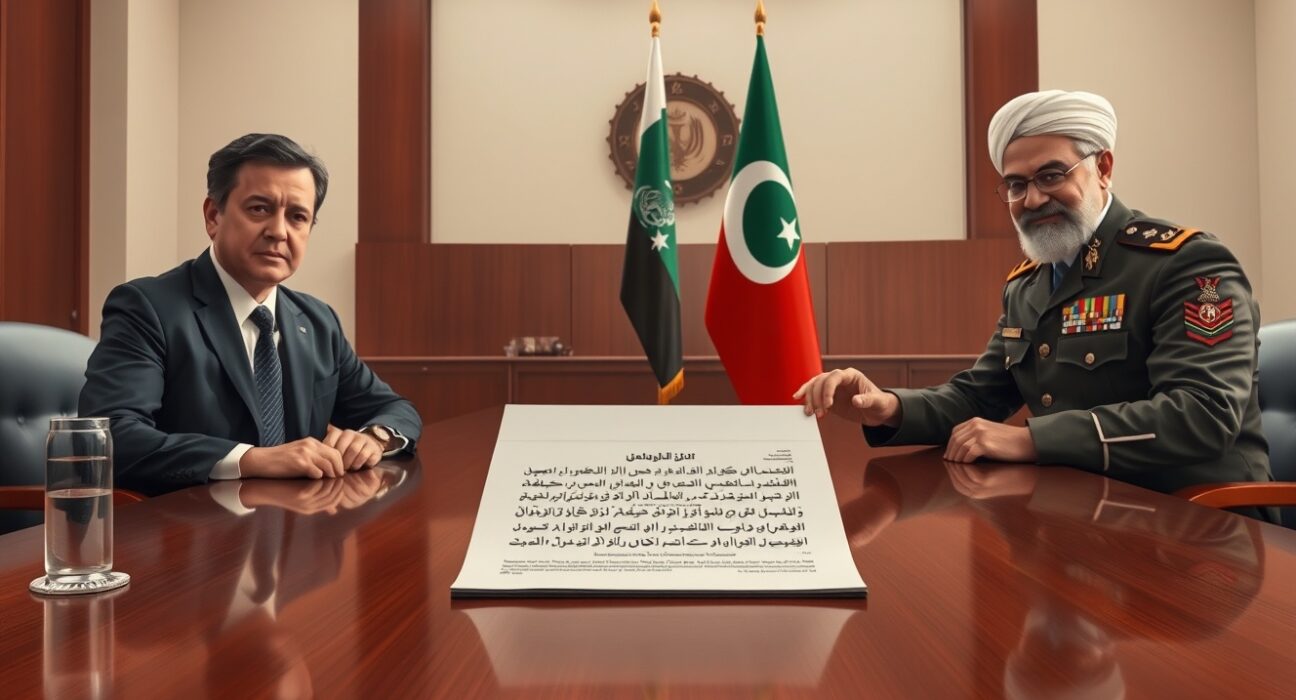
ISLAMABAD, March 15, 2025 — In a significant geopolitical maneuver, Iran has formally presented a 10-point demand list to the United States, utilizing Pakistan as a diplomatic intermediary. This development follows Iran’s Supreme National Security Council’s announcement of a ceasefire acceptance, brokered by Islamabad. Consequently, the move signals a potential pivot from military confrontation to intense political negotiation, with profound implications for regional stability.
Iran’s Demands List: A Strategic Blueprint
The Iran demands list, delivered after Tehran declared it had achieved its primary war objectives, outlines a comprehensive vision for a new regional order. Crucially, the list was formulated unilaterally after Iran rejected proposals from opposing factions. The demands represent not merely negotiation points but foundational prerequisites for any lasting peace. Analysts view this as a strategic effort to consolidate battlefield gains into permanent political and economic concessions.
Furthermore, the choice of Pakistan as the conduit is itself a calculated diplomatic signal. Pakistan maintains complex relationships with both Iran and the United States, positioning it as a rare neutral ground. This channel suggests a deliberate attempt to bypass traditional mediators and establish a new framework for dialogue. The 15-day timeline for political negotiations adds urgency to an already tense situation.
Decoding the Key Demands
The core of the Iran demands list centers on sovereignty, security, and economic restitution. A detailed breakdown reveals its ambitious scope:
- Strait of Hormuz Control: Iran demands a leading role in regulating passage through the Strait of Hormuz, a critical global oil chokepoint. This includes establishing a new protocol in consultation with its military.
- Regional Ceasefire: The demand calls for an end to hostilities for all members of the Axis of Resistance and a halt to Israeli military operations, linking Iran’s security to that of its regional allies.
- U.S. Military Withdrawal: A central plank requires the withdrawal of U.S. combat troops from all regional bases, challenging America’s longstanding military footprint in the Middle East.
- Sanctions and Asset Relief: The list insists on the lifting of all sanctions, the unfreezing of Iranian assets abroad, and full financial compensation for losses incurred.
- International Legitimization: Finally, Iran seeks a binding UN Security Council resolution to approve all points, aiming to translate its demands into enforceable international law.
Geopolitical Implications and Expert Analysis
The demand for control over the Strait of Hormuz is arguably the most consequential. Approximately 20% of the world’s oil passes through this narrow waterway. Granting Iran a formalized, leading role would fundamentally alter global energy security dynamics and maritime law. Regional security experts note this directly challenges the decades-old U.S.-led security architecture that has guaranteed freedom of navigation.
Moreover, the demand for a blanket ceasefire for the Axis of Resistance—a network including groups like Hezbollah and various Iraqi militias—effectively seeks to insulate Iran’s entire regional proxy network from attack. This condition would significantly constrain the military options of Israel and other regional states. The linkage of these demands to a short negotiation window suggests Iran believes it is negotiating from a position of considerable strength.
The Pakistan Ceasefire and Negotiation Context
The backdrop to this Iran demands list is the ceasefire proposal Iran accepted from Pakistan. This Pakistan ceasefire initiative represents a notable foray by Islamabad into high-stakes Middle Eastern diplomacy. Historically, Pakistan has walked a fine line between its strategic partnership with Saudi Arabia (a U.S. ally and Iranian rival) and its need to maintain stable relations with neighboring Iran.
By hosting negotiations, Pakistan elevates its diplomatic profile but also assumes substantial risk. The success or failure of these talks could impact Pakistan’s relationships with Gulf Arab states and the United States. The fact that Iran agreed to this channel indicates a level of trust in Pakistan’s neutrality, or at least a belief that Islamabad can effectively convey Tehran’s position to Washington without immediate rejection.
Potential U.S. and International Response
The initial international reaction to the Iran demands list is likely to be one of profound skepticism, particularly in Washington and European capitals. The demands are sweeping and would require a dramatic reversal of long-standing U.S. foreign policy. The call for a complete withdrawal of U.S. combat troops is a non-starter for many American policymakers who view a military presence as essential for counterterrorism and balancing Iranian influence.
However, the alternative—a rejection that leads to a collapse of the Pakistan ceasefire and a resumption of open conflict—carries its own severe risks. A renewed conflict could further destabilize the region, spike global energy prices, and draw in other powers. Therefore, some analysts predict a strategy of selective engagement, where the U.S. might negotiate on points like sanctions relief or asset returns while firmly rejecting demands on the Strait of Hormuz and troop withdrawals.
Conclusion
The delivery of Iran’s 10-point demand list to the United States via Pakistan marks a critical juncture in Middle Eastern geopolitics. It transforms a military pause into a high-stakes diplomatic test. The demands, particularly regarding the Strait of Hormuz and the Axis of Resistance, outline a vision for Iranian regional hegemony that directly contests American influence. The success of the ongoing negotiations in Islamabad will hinge on whether either side finds sufficient room for compromise within this maximalist framework. The world now watches to see if this bold list becomes a basis for dialogue or a prelude to renewed confrontation.
FAQs
Q1: What is the main goal of Iran’s 10-point demand list?
The primary goal is to translate Iran’s perceived military achievements into permanent political, security, and economic gains. The list seeks to secure regional dominance, lift crippling sanctions, and obtain international recognition for its strategic interests.
Q2: Why did Iran choose Pakistan to deliver the demands?
Pakistan is seen as a relatively neutral intermediary with working relationships with both Iran and the United States. Using this channel allows Iran to present its demands directly without the baggage of more traditional, and often hostile, diplomatic routes.
Q3: How important is the demand regarding the Strait of Hormuz?
It is critically important. The Strait of Hormuz is one of the world’s most vital maritime choke points for oil shipments. Gaining a formalized control or leading role would grant Iran immense leverage over global energy markets and regional security.
Q4: What is the ‘Axis of Resistance’ mentioned in the demands?
The Axis of Resistance is a term used by Iran to describe the network of allied political and militant groups across the Middle East that oppose U.S. and Israeli influence. It includes groups like Hezbollah in Lebanon and various militias in Iraq, Syria, and Yemen.
Q5: Is the United States likely to agree to these demands?
Most analysts consider a full acceptance highly unlikely, as the demands require a fundamental retreat of U.S. power from the region. The potential for negotiation exists on specific points like sanctions, but core demands on troop withdrawal and Strait of Hormuz control are seen as major obstacles.
Disclaimer: The information provided is not trading advice, Bitcoinworld.co.in holds no liability for any investments made based on the information provided on this page. We strongly recommend independent research and/or consultation with a qualified professional before making any investment decisions.
