

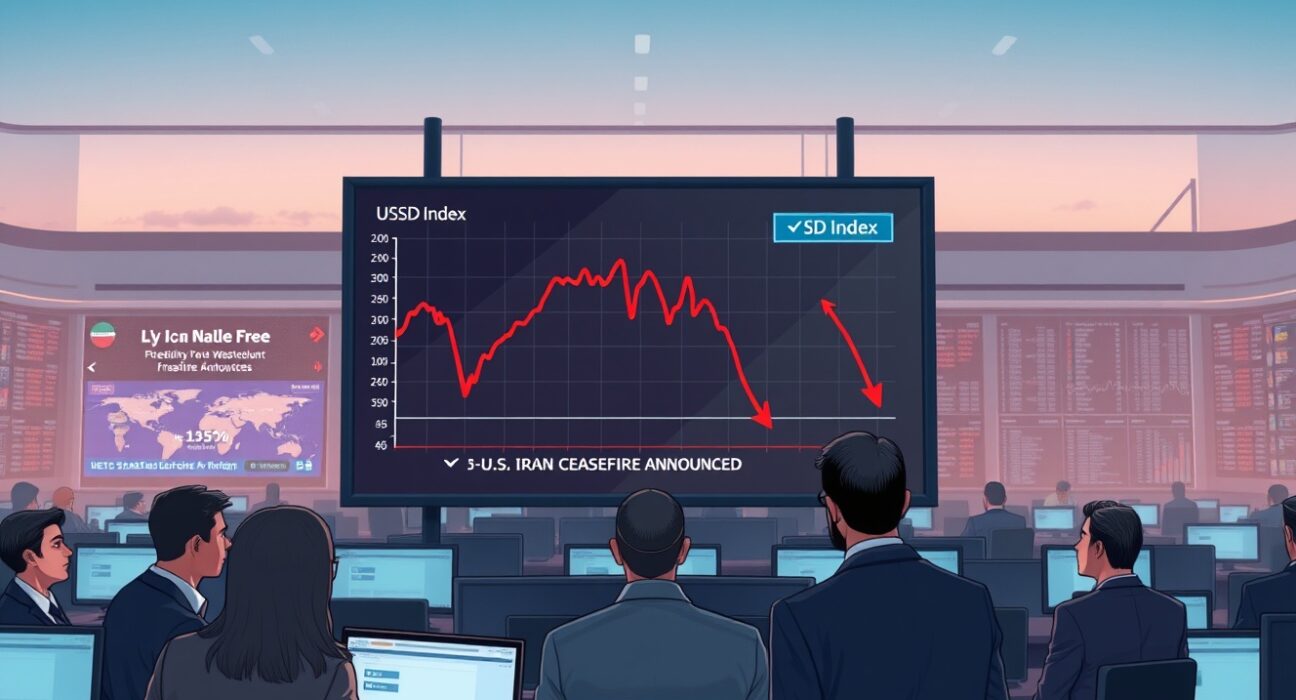
The U.S. dollar faced immediate and significant downward pressure in global forex markets today, following the announcement of a landmark ceasefire agreement between the United States and Iran. This pivotal geopolitical development triggered a swift reassessment of risk and safe-haven asset flows by major financial institutions. Consequently, traders rapidly shifted capital away from the traditional haven of the U.S. dollar. The dollar index (DXY), a key measure against a basket of major currencies, fell sharply in early trading sessions. Market analysts immediately linked the currency’s decline directly to the reduced geopolitical risk premium that had previously supported the greenback.
Dollar Weakens Amid Geopolitical De-escalation
The formal ceasefire announcement, mediated through Swiss diplomatic channels in Geneva, marks a critical turning point in a decades-long adversarial relationship. Historically, tensions in the Middle East, particularly involving major oil producers like Iran, have driven investors toward the U.S. dollar for its perceived safety. However, this de-escalation removes a substantial layer of global uncertainty. As a result, the immediate market reaction saw the euro gain 0.8% against the dollar, while the Japanese yen also appreciated. Furthermore, emerging market currencies, which often suffer during periods of high tension, experienced broad-based strength.
This currency movement follows a clear historical pattern where the dollar weakens following geopolitical resolutions. For instance, similar trends were observed after initial nuclear deal frameworks in the past. The current agreement reportedly includes provisions for sanctions relief and renewed diplomatic engagement. These terms directly impact market expectations for global trade flows and energy security. Therefore, the forex market’s response is both rapid and logical, reflecting a recalibration of global risk sentiment.
Oil Price Volatility and Currency Correlations
The ceasefire has a profound secondary effect on global oil markets, which are intrinsically linked to currency valuations. Iran holds some of the world’s largest proven oil and natural gas reserves. A stable environment paves the way for a potential increase in Iranian oil exports to the global market. Immediately following the news, Brent crude futures fell by over 3%. This decline in oil prices further pressures the dollar, as it reduces global demand for U.S. dollars used in oil transactions, often referred to as the “petrodollar” system.
The relationship between oil prices and the dollar is a key factor for traders. Typically, a weaker dollar makes dollar-denominated commodities like oil cheaper for holders of other currencies, which can support demand. However, in this scenario, the prospect of increased supply is overwhelming that dynamic. The following table illustrates the immediate market moves across key assets:
| Asset | Immediate Change | Primary Driver |
|---|---|---|
| U.S. Dollar Index (DXY) | -0.9% | Reduced safe-haven demand |
| Brent Crude Oil | -3.2% | Expected rise in Iranian supply |
| Euro/USD (EUR/USD) | +0.8% | Dollar weakness, improved EU trade outlook |
| Gold (XAU/USD) | +1.1% | Inflation hedge amid shifting capital flows |
Expert Analysis on Federal Reserve Policy Implications
Senior market strategists note that the ceasefire could influence the monetary policy landscape. The Federal Reserve closely monitors geopolitical developments for their impact on inflation and growth. A sustained period of lower oil prices could help ease inflationary pressures in the United States. This scenario might allow the Fed more flexibility in its interest rate decisions. Lower interest rate expectations, relative to other central banks, can further contribute to dollar weakness. Consequently, the forex market is now pricing in a slightly more dovish path for U.S. rates over the next year.
Moreover, analysts at major investment banks have issued revised forecasts. For example, a note from a leading European bank suggested the ceasefire could remove a 2-3% “geopolitical risk premium” from the dollar’s value over the medium term. This assessment is based on comparative analysis of past conflict resolutions and their currency market impacts. The bank’s model incorporates factors like trade flow adjustments and shifts in global reserve management strategies.
Global Market Reactions and Sector Impacts
Beyond the forex market, global equity indices reacted positively to the news, with European and Asian markets posting gains. The reduction in geopolitical risk is generally favorable for global economic growth and corporate earnings. Specifically, sectors sensitive to oil prices and Middle East stability saw significant moves:
- Airlines and Transportation: Shares rose sharply due to the prospect of lower fuel costs and safer travel corridors.
- Defense and Aerospace: Stocks in this sector experienced mild pressure as investors discounted lower immediate demand for certain military assets.
- Emerging Market Bonds: Yield spreads tightened, indicating increased investor appetite for risk as capital seeks higher returns outside the U.S.
This broad-based market movement underscores the interconnected nature of modern geopolitics and finance. A single diplomatic achievement can simultaneously alter currency valuations, commodity prices, and equity sector rotations. The speed of these reactions highlights the efficiency of electronic global markets in processing complex information.
Historical Context and Long-Term Outlook
The current dollar weakness finds context in historical precedents. The dollar often strengthens during crises and weakens during resolutions. For instance, the currency saw similar declines after the signing of the original Iran nuclear deal (JCPOA) in 2015. However, analysts caution that the long-term trajectory will depend on the ceasefire’s durability and its implementation. Key factors to watch include the verification mechanisms, the pace of sanctions relief, and Iran’s subsequent reintegration into the global economy. Any setbacks in this process could reverse some of the dollar’s recent losses.
Additionally, the U.S. dollar’s status as the world’s primary reserve currency provides a fundamental layer of support that limits any extreme decline. Central banks and sovereign wealth funds hold trillions in dollar-denominated assets. This structural demand typically cushions the dollar during periods of geopolitical calm. Therefore, while the trend is currently negative, most forecasts do not predict a disorderly or prolonged collapse in the dollar’s value. Instead, markets anticipate a period of relative stability and modest weakness as the new geopolitical reality sets in.
Conclusion
The announcement of a U.S.-Iran ceasefire agreement has directly caused the U.S. dollar to weaken across global foreign exchange markets. This movement stems from a rapid decrease in the geopolitical risk premium that had bolstered the dollar and a concurrent drop in oil prices. The financial implications extend beyond forex, affecting equities, commodities, and future central bank policy. While the immediate trend shows dollar weakness, the currency’s long-term path will hinge on the successful implementation of the ceasefire and the broader global economic response. This event starkly demonstrates how diplomatic progress can swiftly translate into significant financial market realignments.
FAQs
Q1: Why does the dollar weaken when geopolitical tensions ease?
The U.S. dollar is considered a “safe-haven” asset. During times of global uncertainty or conflict, investors buy dollars for stability. When tensions ease, that specific demand disappears, and capital flows out to seek higher returns elsewhere, causing the dollar’s value to fall.
Q2: How does a U.S.-Iran ceasefire affect oil prices?
Iran is a major oil producer. A ceasefire reduces the risk of supply disruptions and opens the potential for increased Iranian oil exports to the global market. The expectation of more supply typically causes oil prices to drop.
Q3: Will this dollar weakness affect U.S. consumers?
Yes, but in mixed ways. A weaker dollar makes imported goods more expensive, which can contribute to inflation. However, it also makes U.S. exports cheaper and more competitive abroad, which can benefit domestic industries and support jobs.
Q4: How long might this period of dollar weakness last?
The duration depends heavily on the durability of the ceasefire and broader economic factors. If the agreement holds and global growth improves, the weak dollar trend could persist for months. Any breakdown in diplomacy or a surge in global risk elsewhere could quickly reverse the trend.
Q5: What other currencies typically strengthen when the U.S. dollar weakens?
Major currencies like the euro (EUR), Japanese yen (JPY), and Swiss franc (CHF) often appreciate against a weakening dollar. Additionally, currencies of commodity-exporting nations (e.g., Canadian dollar, Australian dollar) and many emerging market currencies may also see gains.
Disclaimer: The information provided is not trading advice, Bitcoinworld.co.in holds no liability for any investments made based on the information provided on this page. We strongly recommend independent research and/or consultation with a qualified professional before making any investment decisions.
