

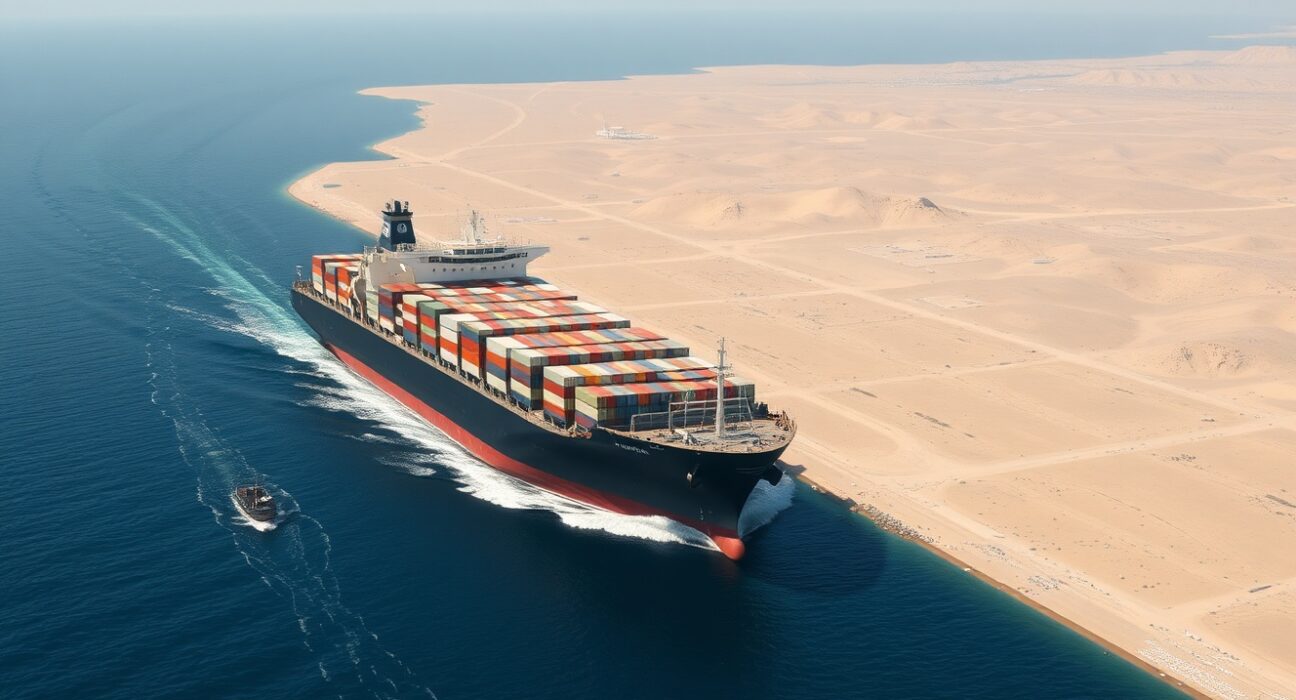
In a significant development reported by the Financial Times, Iran has demanded that vessels transiting the strategic Strait of Hormuz pay passage fees exclusively in Bitcoin or Chinese yuan, marking a direct challenge to traditional financial systems and dollar dominance. This announcement, emerging in early 2025, represents a calculated geopolitical maneuver with far-reaching implications for global trade, energy markets, and international finance. Consequently, shipping companies and governments worldwide are now assessing the practical and political ramifications of this unprecedented demand.
Strait of Hormuz Fees Shift to Digital and Alternative Currencies
The Strait of Hormuz serves as the world’s most important oil transit chokepoint. According to the U.S. Energy Information Administration, approximately 21 million barrels of oil per day flowed through this narrow waterway in 2023, representing about 21% of global petroleum liquid consumption. Iran’s new payment mandate specifically targets this critical maritime artery. The Iranian Ports and Maritime Organization reportedly issued formal notifications to international shipping associations detailing the new requirements. Furthermore, vessels must register their preferred payment method—Bitcoin or yuan—before entering Iranian territorial waters adjacent to the strait.
This policy follows years of escalating financial pressure on Iran through international sanctions. The United States has maintained comprehensive economic sanctions since 2018, severely restricting Iran’s access to the global dollar-based financial system. Additionally, European banking channels have become increasingly restricted. Therefore, Iran’s move represents a strategic effort to circumvent these financial barriers. The country has been developing its cryptocurrency infrastructure since 2019, when it officially recognized cryptocurrency mining as a legal industrial activity. Moreover, Iran launched its state-backed digital currency, the crypto-rial, in 2022 as part of a broader digital economy initiative.
Geopolitical Implications for Global Trade Routes
Iran’s demand carries substantial geopolitical weight beyond mere financial transaction changes. The Strait of Hormuz connects the Persian Gulf with the Gulf of Oman and the Arabian Sea, making it indispensable for oil exports from Saudi Arabia, Iraq, the United Arab Emirates, Kuwait, and Qatar. Any disruption or significant policy change affecting this waterway immediately impacts global energy prices and security. International reactions have been swift and varied. The United States Department of State has called the move “provocative and destabilizing,” while Chinese officials have expressed support for “diversified international settlement systems.”
Regional powers are carefully monitoring the situation. Saudi Arabia, Iran’s regional rival, continues to price its oil exclusively in U.S. dollars. Meanwhile, the United Arab Emirates has been developing its central bank digital currency. Consequently, Iran’s policy may accelerate digital currency adoption across Middle Eastern financial systems. Shipping industry representatives have expressed practical concerns about implementation. The International Chamber of Shipping notes that approximately 30% of the world’s seaborne crude oil passes through the strait, involving thousands of vessel transits annually. Implementing cryptocurrency payments for these transactions presents significant logistical challenges, including volatility management and regulatory compliance.
Expert Analysis on Financial System Impacts
Financial analysts and geopolitical experts provide crucial context for understanding this development. Dr. Elena Rodriguez, Senior Fellow at the Center for Strategic and International Studies, explains, “This represents a deliberate de-dollarization strategy. Iran is leveraging its geographic advantage to create demand for alternative currencies, directly challenging U.S. financial hegemony.” Similarly, maritime law expert Professor James Chen notes, “While coastal states have rights to regulate navigation in their territorial seas under UNCLOS, mandating specific currency use for innocent passage may face legal challenges.”
The technical implementation remains unclear. Iran has not specified whether it will accept Bitcoin directly or use Bitcoin-based settlement systems. The country might utilize state-controlled cryptocurrency exchanges that it established in 2023. Alternatively, Iran could employ digital yuan through its participation in China’s Cross-Border Interbank Payment System (CIPS). This system provides an alternative to the SWIFT network from which many Iranian banks remain excluded. The following table illustrates the potential advantages and challenges of each payment option:
| Payment Method | Advantages for Iran | Challenges for Shippers |
|---|---|---|
| Bitcoin | Bypasses traditional banking sanctions, pseudonymous transactions, global accessibility | Price volatility, technical complexity, regulatory uncertainty |
| Chinese Yuan | Stable value, direct trade with China, political alignment | Limited global acceptance, currency conversion costs, exposure to Chinese policy |
Historical context further illuminates this development. Iran previously threatened to close the Strait of Hormuz during periods of heightened tension, particularly in 2011-2012 and 2019. However, demanding payment in alternative currencies represents a more sophisticated economic strategy. This approach allows Iran to exert influence while maintaining the strait’s operational status. The policy follows Iran’s 2021 agreement with China, which included provisions for oil sales in yuan. Additionally, Russia has increased its use of yuan for international settlements since 2022. Therefore, Iran’s move aligns with a broader pattern among sanctioned states seeking financial alternatives.
Practical Implementation and Industry Response
Shipping companies now face complex operational decisions. Major container lines and tanker operators typically maintain substantial dollar reserves for port fees and transit charges worldwide. Switching to cryptocurrency or yuan payments requires significant adjustments to treasury management systems. Industry sources indicate that larger corporations might establish dedicated cryptocurrency wallets or yuan accounts specifically for Iranian transactions. Conversely, smaller operators may struggle with the technical requirements and compliance issues.
Insurance providers are assessing the implications. Maritime insurance policies typically cover traditional financial transactions but may exclude cryptocurrency payments due to volatility risks. Consequently, insurers might require additional premiums or specific clauses for vessels transiting the Strait of Hormuz. The International Group of P&I Clubs, which provides liability coverage for approximately 90% of the world’s ocean-going tonnage, has established a working group to address these emerging challenges. Their recommendations will significantly influence how the shipping industry responds to Iran’s demands.
Several key factors will determine the policy’s success:
- Compliance Rate: The percentage of vessels actually using the new payment methods
- Enforcement Mechanism: How Iran verifies payments and handles non-compliance
- International Response: Potential countermeasures from affected nations
- Market Adaptation: Development of specialized financial services for shipping
Technological infrastructure presents another consideration. While major Iranian ports have implemented digital systems, the real-time verification of cryptocurrency transactions in maritime environments remains untested. Satellite connectivity limitations in certain areas of the strait could complicate transaction confirmations. However, Iran has invested in coastal communication networks that might support these new financial requirements.
Conclusion
Iran’s demand for Strait of Hormuz passage fees in Bitcoin or yuan represents a multifaceted challenge to the existing global financial order. This policy leverages Iran’s geographic advantage to promote alternative currencies while circumventing international sanctions. The implementation will test both Iran’s technical capabilities and the shipping industry’s adaptability. Furthermore, this development may accelerate broader trends toward digital currency adoption in international trade. As the situation evolves, monitoring compliance rates and international responses will provide crucial insights into the future of maritime finance and geopolitical strategy. The Strait of Hormuz fees policy ultimately demonstrates how geographic chokepoints can become instruments of financial innovation and geopolitical competition in the digital age.
FAQs
Q1: Why is Iran demanding payment in Bitcoin or yuan for Strait of Hormuz passage?
Iran faces comprehensive international sanctions that restrict its access to dollar-based financial systems. By demanding Bitcoin or yuan, Iran circumvents these restrictions, promotes alternative currencies, and asserts greater control over a critical global trade route while maintaining the strait’s operational status.
Q2: How will shipping companies practically pay these Strait of Hormuz fees?
Companies will likely establish dedicated cryptocurrency wallets or yuan bank accounts specifically for Iranian transactions. They may use specialized financial service providers that handle currency conversion and compliance. Larger corporations might develop in-house capabilities, while smaller operators may rely on third-party services.
Q3: What are the legal implications of Iran’s demand for currency-specific payments?
Under the United Nations Convention on the Law of the Sea (UNCLOS), coastal states can regulate innocent passage through territorial seas. However, mandating specific currencies might be challenged as an unreasonable restriction. The international community remains divided on this legal interpretation.
Q4: How might this affect global oil prices and energy markets?
If the policy causes significant disruption or increased costs for shipping companies, those costs could be passed through supply chains, potentially affecting oil prices. However, if implementation proceeds smoothly with high compliance, the direct price impact might be minimal, though the strategic implications remain substantial.
Q5: Has any other country implemented similar cryptocurrency requirements for maritime passage?
No other country has implemented mandatory cryptocurrency payments for strategic maritime passage. However, several nations are exploring digital currencies for international trade. Venezuela previously promoted its Petro cryptocurrency for oil transactions, but with limited success. Iran’s policy represents the most significant implementation attempt to date.
Disclaimer: The information provided is not trading advice, Bitcoinworld.co.in holds no liability for any investments made based on the information provided on this page. We strongly recommend independent research and/or consultation with a qualified professional before making any investment decisions.
