

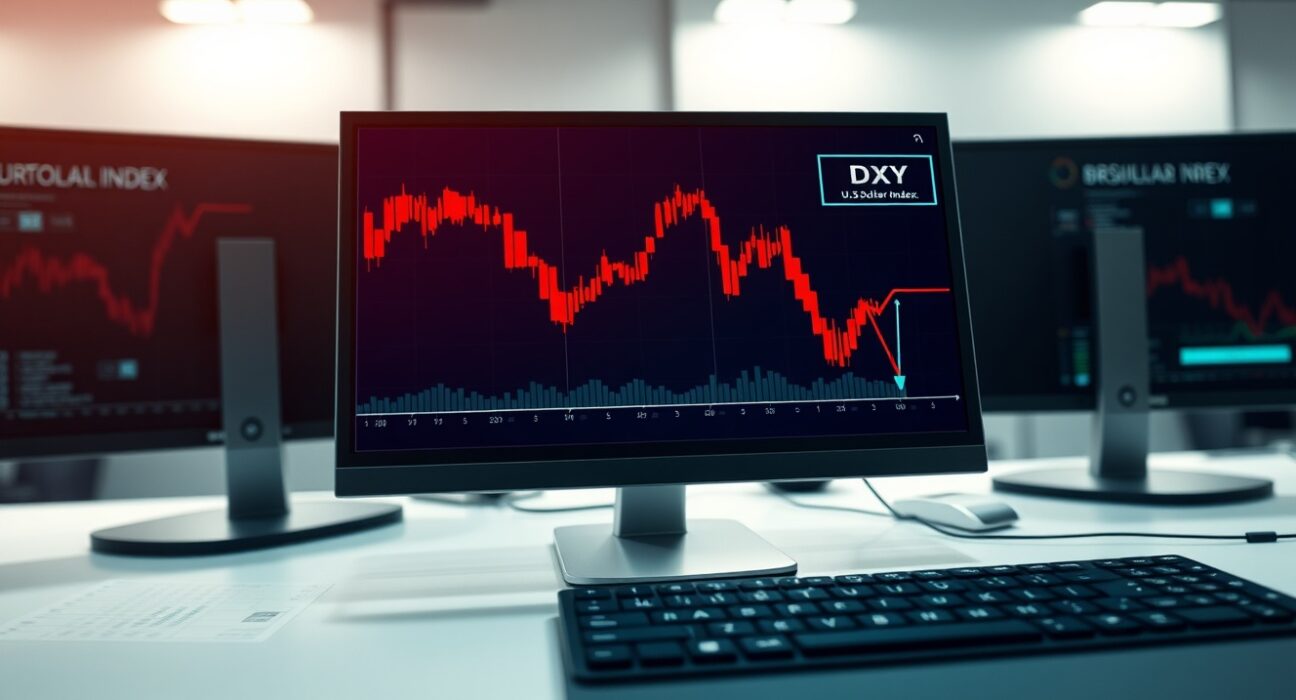
NEW YORK & LONDON, October 26, 2025 – The U.S. dollar plunged in global trading today, heading for its most significant single-session loss since April. This dramatic move follows the unexpected announcement of a formal ceasefire agreement between the United States and Iran. Consequently, the greenback’s status as a traditional safe-haven currency eroded rapidly. Market participants immediately priced in a substantial reduction in geopolitical risk premium.
U.S. Dollar Decline Accelerates After Ceasefire News
The U.S. Dollar Index (DXY), which measures the dollar against a basket of six major currencies, fell sharply by over 1.5% in European and early New York trading. This drop represents the index’s steepest decline since a volatile period in mid-April. The immediate catalyst was a joint statement from Washington and Tehran confirming a de-escalation framework. This agreement aims to halt regional hostilities and initiate a new diplomatic dialogue.
Forex traders reacted swiftly to the development. They rapidly unwound positions built on geopolitical uncertainty. The Japanese yen and Swiss franc, also considered safe havens, weakened initially but found some footing later. Conversely, commodity-linked and emerging market currencies rallied strongly. The Australian dollar and Norwegian krone gained notably, buoyed by rising risk appetite.
Historical Context of Dollar Movements
Historically, the U.S. dollar often strengthens during global crises. For instance, it rallied during the initial phases of the Russia-Ukraine conflict in 2022. Similarly, it saw inflows during Middle East tensions in previous decades. Today’s reversal is significant because it breaks that established pattern. Analysts point to the scale and surprise of the diplomatic breakthrough as key drivers.
Market data from major trading platforms shows exceptionally high volume. The euro surged past the $1.10 level for the first time in weeks. Meanwhile, the British pound also capitalized on the dollar’s broad weakness. The following table illustrates the intraday moves of major currency pairs against the USD:
| Currency Pair | Price Change (%) | Key Level Breached |
|---|---|---|
| EUR/USD | +1.8% | 1.1050 |
| GBP/USD | +1.6% | 1.2850 |
| USD/JPY | -1.2% | 148.00 |
| AUD/USD | +2.1% | 0.6700 |
Geopolitical Impact on Currency Markets
The ceasefire announcement marks a pivotal shift in a long-standing adversarial relationship. Diplomatic sources indicate the deal includes provisions for sanctions relief and nuclear program oversight. Therefore, the immediate market interpretation is a reduction in the risk of a broader regional conflict. This interpretation directly impacts energy markets and, by extension, global capital flows.
Brent crude oil futures fell by nearly 4% following the news. Lower oil prices typically pressure petro-currencies like the Canadian dollar. However, the overwhelming risk-on sentiment provided stronger support. Furthermore, Treasury yields dipped slightly as some safe-haven demand for U.S. government bonds eased. This yield movement added another layer of pressure on the dollar’s interest rate differential appeal.
Several key factors amplified the dollar’s sell-off:
- Algorithmic Trading: Pre-programmed models executed sell orders upon parsing the news headlines.
- Position Unwinding: Hedge funds and institutional investors exited long-dollar bets.
- Central Bank Watch: The Fed’s future policy path is now viewed as potentially more dovish without an inflation spike from oil.
- Capital Flows: Anticipated repatriation flows into the U.S., often seen during crises, are now expected to slow.
Expert Analysis on Market Reactions
Financial strategists from major banks provided immediate commentary. “The market is repricing global risk in real-time,” noted Elena Vasquez, Chief Currency Strategist at Global Macro Advisors. “The dollar had embedded a significant geopolitical premium over the past year. Today’s news systematically removes that premium. We are witnessing a classic ‘risk-on’ rotation across all asset classes.”
Other experts cautioned about the sustainability of the move. “While the knee-jerk reaction is logical, the durability of the ceasefire and the implementation details are crucial,” stated David Chen, Head of Research at Orion Capital. “Currency markets often overshoot on initial headlines. We advise clients to watch for follow-through in the coming sessions and monitor statements from both governments closely.”
Broader Economic and Market Implications
The dollar’s weakness has immediate consequences for multinational corporations and international trade. A weaker dollar boosts the overseas earnings of U.S. companies when converted back into dollars. Conversely, it makes imports more expensive, which could influence domestic inflation readings. The Federal Reserve will undoubtedly monitor these cross-currents in its upcoming policy deliberations.
Emerging market economies, which often struggle with dollar-denominated debt, received a welcome respite. Their local currencies strengthened, reducing the relative burden of external debt repayments. Additionally, global equity markets rallied, with European and Asian indices posting strong gains. The S&P 500 futures pointed to a sharply higher open on Wall Street.
The path forward for the dollar now hinges on several intertwined factors:
- The verifiable implementation of the ceasefire terms on the ground.
- Subsequent U.S. economic data, particularly inflation and job figures.
- Comparative monetary policy trajectories between the Fed and other major central banks like the ECB.
- Overall global growth indicators, which may improve with reduced geopolitical tension.
Conclusion
The U.S. dollar is experiencing its most severe daily downturn since April, driven directly by the historic U.S.-Iran ceasefire agreement. This event triggered a massive repricing of geopolitical risk, leading to a broad-based sell-off in the world’s primary reserve currency. The move underscores the profound and immediate link between diplomatic developments and global capital markets. While the initial reaction has been dramatic, the medium-term trajectory for the dollar will depend on the durability of the peace deal, domestic economic performance, and shifting central bank policies. Today’s market action serves as a powerful reminder that in an interconnected world, geopolitical shifts can rapidly redefine financial landscapes.
FAQs
Q1: Why does the U.S. dollar fall on positive geopolitical news?
The dollar often acts as a safe-haven currency. Investors buy it during times of global uncertainty or conflict. Positive news, like a ceasefire, reduces the perceived need for this safe haven, leading to selling pressure.
Q2: What is the U.S. Dollar Index (DXY)?
The DXY is an index that measures the value of the U.S. dollar relative to a basket of six foreign currencies: the euro, Japanese yen, British pound, Canadian dollar, Swedish krona, and Swiss franc. It is a key benchmark for the dollar’s overall strength.
Q3: How does a weaker U.S. dollar affect other countries?
A weaker dollar generally makes other countries’ exports to the U.S. more expensive and can ease financial conditions in emerging markets by making their dollar-denominated debt cheaper to service in local currency terms.
Q4: Could this dollar decline impact U.S. inflation?
Potentially, yes. A weaker dollar makes imported goods more expensive for American consumers and businesses. This could contribute to inflationary pressures, a key factor the Federal Reserve considers when setting interest rates.
Q5: Is this a long-term trend for the U.S. dollar?
Single-day moves, even large ones, do not necessarily indicate a long-term trend. The dollar’s long-term path will be determined by fundamentals like relative economic growth, interest rate differentials, and sustained geopolitical developments, not just one day’s news.
Disclaimer: The information provided is not trading advice, Bitcoinworld.co.in holds no liability for any investments made based on the information provided on this page. We strongly recommend independent research and/or consultation with a qualified professional before making any investment decisions.
