

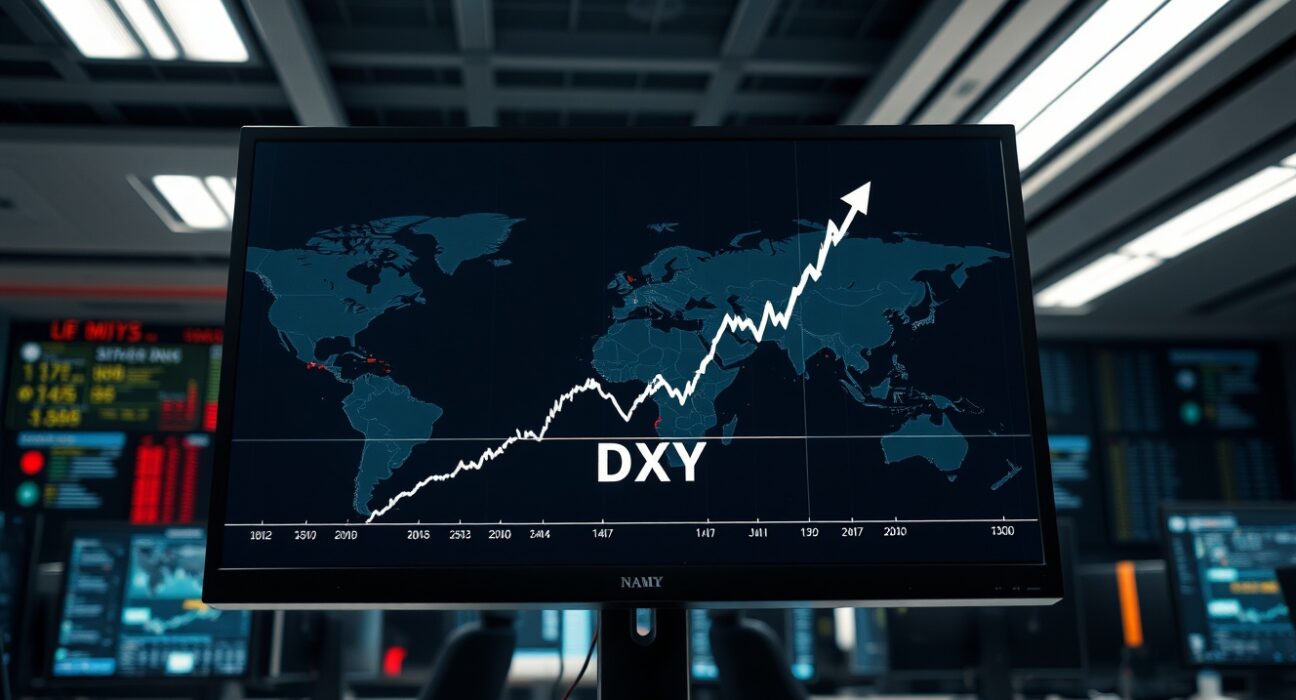
The US Dollar Index (DXY) staged a significant technical rebound from fresh multi-month lows in early 2025, a pivotal move that coincided with reports of widening cracks in several critical international ceasefire agreements. Consequently, traders rapidly reassessed global risk sentiment, driving flows back toward traditional safe-haven assets. This development underscores the fragile interplay between currency valuations and geopolitical stability. Market analysts now scrutinize whether this marks a genuine trend reversal or a temporary relief rally.
DXY Technical Rebound: Analyzing the Chart Patterns
After a prolonged downtrend, the DXY found strong support near the 99.50 level. Subsequently, the index rallied sharply, closing above several key moving averages. This bounce occurred on notably high trading volume, suggesting institutional participation. Technical indicators like the Relative Strength Index (RSI) exited oversold territory, signaling potential momentum shift. Historically, such rebounds from major support zones often precede extended consolidation phases, especially during periods of macroeconomic uncertainty.
Forex strategists highlight several contributing factors to the dollar’s strength:
- Flight to Safety: Investors traditionally flock to the US dollar during global instability.
- Interest Rate Differentials: The Federal Reserve’s policy stance relative to other central banks remains a key driver.
- Liquidity Demand: The dollar’s status as the world’s primary reserve currency amplifies demand in volatile times.
Market participants now watch the 102.00 resistance level closely. A decisive break above it could confirm a broader bullish correction.
Geopolitical Context: The Widening Ceasefire Cracks
Parallel to the DXY’s movement, diplomatic efforts in multiple conflict zones showed severe strain. Reports from international monitors indicated violations and a collapse in negotiation frameworks. These developments injected fresh volatility into global commodity and equity markets. The perceived erosion of geopolitical stability directly impacts currency flows, as capital seeks predictable jurisdictions. Furthermore, energy supply concerns resurfaced, applying additional pressure on economies reliant on imports.
Expert Analysis on Market Correlations
Dr. Anya Sharma, Chief Macro Strategist at Global Insight Advisors, provided context. “Historical data shows a strong correlation between the DXY and the CBOE Volatility Index (VIX) during geopolitical crises,” she stated. “The dollar’s rebound is not an isolated event. It’s a direct function of recalculated global risk premiums.” Sharma referenced the 2022-2024 period, where similar patterns emerged. Her analysis points to sustained dollar strength if ceasefire negotiations continue to deteriorate. Other institutions, like the Bank for International Settlements (BIS), have previously published research on dollar liquidity squeezes during stress events, a dynamic markets may be anticipating.
The timeline below outlines key recent events:
| Date | Event | Market Impact |
|---|---|---|
| Late Feb 2025 | DXY touches 18-month low | Broad USD selling across majors |
| Early Mar 2025 | Ceasefire talks stall in two regions | Oil prices spike 8% |
| Mid-Mar 2025 | DXY initiates rebound from support | EUR/USD falls 1.5%, gold rallies |
Broader Market Impacts and Future Trajectory
The DXY’s movement creates ripple effects across all financial markets. A stronger dollar typically pressures dollar-denominated commodities like gold and oil, though safe-haven demand can override this. Emerging market currencies often face depreciation pressure, complicating central bank policies. For multinational corporations, earnings forecasts require adjustment due to exchange rate fluctuations. Meanwhile, the Treasury market sees increased foreign buying, which can suppress yield rises.
Looking ahead, the primary focus remains on central bank communication and geopolitical headlines. The European Central Bank and Bank of England face difficult choices between fighting inflation and supporting growth. Their actions relative to the Fed will be crucial for the DXY’s path. Additionally, any de-escalation in conflict zones could quickly reverse the dollar’s recent gains. Therefore, traders maintain a highly reactive stance.
Conclusion
The DXY index rebound from fresh lows serves as a powerful barometer of shifting global sentiment amid deteriorating geopolitical stability. This move highlights the dollar’s enduring role as a safe-haven asset when ceasefire agreements fracture. While technical factors suggest room for further recovery, the ultimate trajectory of the DXY remains inextricably linked to real-world diplomatic and military developments. Market participants must now navigate a landscape where currency valuations are increasingly driven by headlines from conflict zones as much as by economic data.
FAQs
Q1: What is the DXY?
The US Dollar Index (DXY) is a measure of the value of the United States dollar relative to a basket of six major world currencies: the Euro, Japanese Yen, British Pound, Canadian Dollar, Swedish Krona, and Swiss Franc.
Q2: Why does the DXY rebound during geopolitical tension?
The US dollar is considered a global safe-haven asset. During periods of international instability or increased risk, investors worldwide often buy US dollars and dollar-denominated assets like Treasuries, seeking stability and liquidity.
Q3: How do ceasefire developments affect currency markets?
Ceasefire cracks or wars disrupt global trade, commodity supplies, and economic growth forecasts. This uncertainty prompts investors to move capital, impacting exchange rates. Currencies of nations seen as stable or insulated from the conflict tend to strengthen.
Q4: Could this DXY rebound turn into a long-term trend?
It depends on sustained drivers. If geopolitical risks escalate further and the Federal Reserve maintains a relatively hawkish stance compared to other central banks, the rebound could extend. A peaceful resolution would likely remove this support.
Q5: What other assets are sensitive to these DXY and geopolitical moves?
Gold, other major currency pairs (like EUR/USD, USD/JPY), global equity indices, and key commodities like oil and natural gas are all highly sensitive to these interrelated dynamics.
Disclaimer: The information provided is not trading advice, Bitcoinworld.co.in holds no liability for any investments made based on the information provided on this page. We strongly recommend independent research and/or consultation with a qualified professional before making any investment decisions.
