

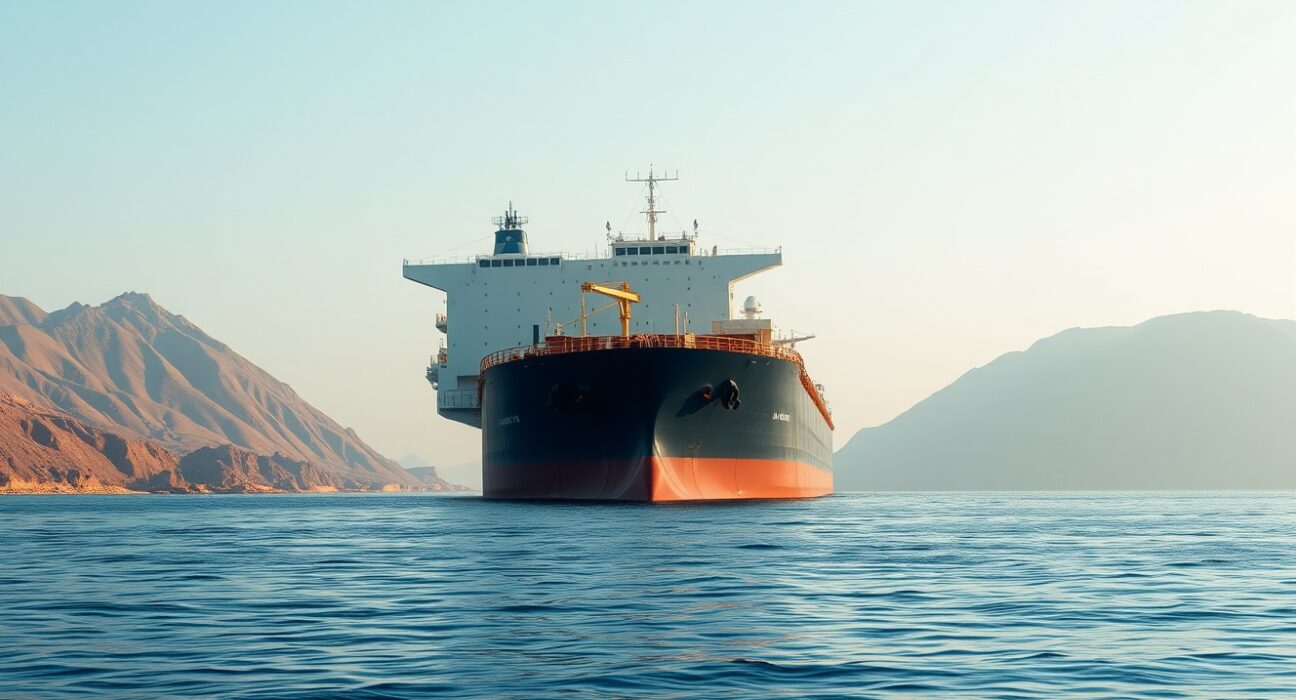
Global energy markets face immediate uncertainty as oil tanker traffic through the world’s most critical maritime chokepoint, the Strait of Hormuz, has come to a complete standstill following the announcement of a ceasefire. According to shipping intelligence firm Kpler, cited by The New York Times, not a single crude carrier has transited the strait since the agreement took effect. Consequently, this unprecedented halt raises urgent questions about regional stability and the security of nearly one-fifth of the world’s daily oil supply.
Strait of Hormuz Sees Unprecedented Oil Tanker Halt
Shipping data presents a stark picture of the current situation. Kpler’s real-time tracking shows that the only vessels to navigate the narrow waterway in the past 24 hours were four dry bulk carriers, which transport commodities like grain and ore. This total absence of crude oil and petroleum product carriers is highly unusual. Historically, the strait sees a constant flow of tankers. For context, the U.S. Energy Information Administration (EIA) notes that in 2023, an average of 20.5 million barrels per day flowed through this passage. This volume represents about 21% of global petroleum liquids consumption. Therefore, any sustained disruption triggers immediate global repercussions.
Understanding the Geopolitical Context of the Ceasefire
The ceasefire, while a step toward de-escalation, exists within a complex and volatile regional framework. The Strait of Hormuz lies between Iran and Oman, with Iranian territorial waters covering a significant portion. Consequently, Iran’s Islamic Revolutionary Guard Corps (IRGC) Navy maintains a heavy presence and has historically conducted military exercises and seizures in the area. Furthermore, regional tensions have frequently manifested as threats to shipping. For example, past incidents have included tanker seizures and alleged attacks. The current pause in traffic suggests shipping companies and their insurers are exercising extreme caution. They are likely assessing the ceasefire’s durability before committing valuable assets to the passage.
Immediate Market Reactions and Global Impact
Financial markets have reacted swiftly to the news. Brent crude futures experienced a sharp spike in early trading. Analysts point to the halt as a classic ‘fear premium’ event. However, the situation differs from a physical blockade. The halt appears to be a voluntary pause by commercial entities, not a military-enforced closure. This distinction is crucial for understanding potential price trajectories. The global impact is multifaceted:
- Supply Chain Disruption: Refineries in Asia, which are heavily reliant on Gulf oil, may soon face logistical shortfalls.
- Insurance Costs: War risk premiums for the region, already elevated, could skyrocket, making shipments prohibitively expensive.
- Strategic Reserves: Major consuming nations may consider releases from their strategic petroleum reserves to calm markets.
- Alternative Routes: Attention turns to longer, costlier routes like the Bab-el-Mandeb strait or overland pipelines, though their capacity is limited.
Historical Precedents and Shipping Industry Response
This is not the first time the strait has been a flashpoint. During the 1980s ‘Tanker War,’ hundreds of ships were attacked. More recently, in 2019 and 2022, tensions led to seizures and attacks. Each event caused temporary shipping delays and insurance hikes. The current industry response involves heightened vigilance. Major tanker operators like Frontline and Euronav, along with industry bodies INTERTANKO and BIMCO, typically issue navigational warnings and recommend specific security protocols. These include:
- Increasing AIS (Automatic Identification System) transparency.
- Coordinating transits with naval forces from coalition task forces.
- Implementing enhanced onboard security measures.
The table below contrasts recent transit patterns:
| Time Period | Average Daily Tanker Transits | Notable Events |
|---|---|---|
| Q4 2023 (Baseline) | 15-20 | Normal commercial flow |
| June 2024 (Tension Peak) | 8-12 | Heightened military activity |
| Post-Ceasefire (Current) | 0 | Voluntary commercial pause |
The Fragile Path Forward for Energy Security
The immediate future hinges on the ceasefire’s credibility. Diplomats from involved nations are undoubtedly engaged in backchannel communications to solidify the agreement. For the shipping halt to end, companies need clear signals of safety. These signals could include public guarantees from regional powers, a visible reduction in naval patrols, or the establishment of a recognized maritime safety corridor. Meanwhile, global energy security faces a stern test. Europe, still navigating post-Russia supply shifts, and growing Asian economies are particularly vulnerable. Consequently, this event may accelerate investments in energy diversification and alternative trade routes.
Conclusion
The complete halt of oil tanker traffic through the Strait of Hormuz following a ceasefire reveals the profound fragility of global energy logistics. While the pause is currently a market-driven precaution, it underscores how geopolitical détente can paradoxically freeze commerce due to perceived risk. The world now watches to see if the ceasefire translates into tangible maritime security, allowing the vital flow of oil to resume and stabilizing a nervous global market.
FAQs
Q1: Why is the Strait of Hormuz so important for oil shipping?
The Strait of Hormuz is a narrow chokepoint connecting the Persian Gulf with the Gulf of Oman and the Arabian Sea. It is the world’s most important oil transit channel, with about 21% of global petroleum liquids consumption passing through it daily from producers like Saudi Arabia, Iraq, the UAE, and Kuwait.
Q2: Is the Strait of Hormuz currently closed by military force?
No. Available data indicates the halt is a voluntary pause by commercial shipping companies and tanker operators, likely due to extreme caution and reassessment of security risks following the ceasefire announcement. It is not a military blockade.
Q3: How long could oil markets withstand a prolonged halt?
While strategic reserves in consuming nations like the U.S., China, and members of the International Energy Agency (IEA) could buffer a short-term physical shortage, markets would experience extreme price volatility within days. A prolonged halt would force a major, costly restructuring of global supply chains.
Q4: What are the alternative routes for Gulf oil if the Strait is bypassed?
Alternatives exist but are limited. These include the East-West Pipeline across Saudi Arabia to the Red Sea, the Abu Dhabi Crude Oil Pipeline to the Fujairah port on the Gulf of Oman (bypassing the strait), and longer maritime routes around the southern tip of Africa, which add significant time and cost.
Q5: How does a ceasefire lead to a halt in shipping instead of an increase?
Paradoxically, a ceasefire can create an information vacuum and uncertainty. Shipping firms and insurers may view the immediate post-ceasefire period as high-risk, awaiting clear evidence that the agreement will hold and that naval forces or non-state actors will not engage in provocative acts. They pause to assess before risking assets.
Disclaimer: The information provided is not trading advice, Bitcoinworld.co.in holds no liability for any investments made based on the information provided on this page. We strongly recommend independent research and/or consultation with a qualified professional before making any investment decisions.
