

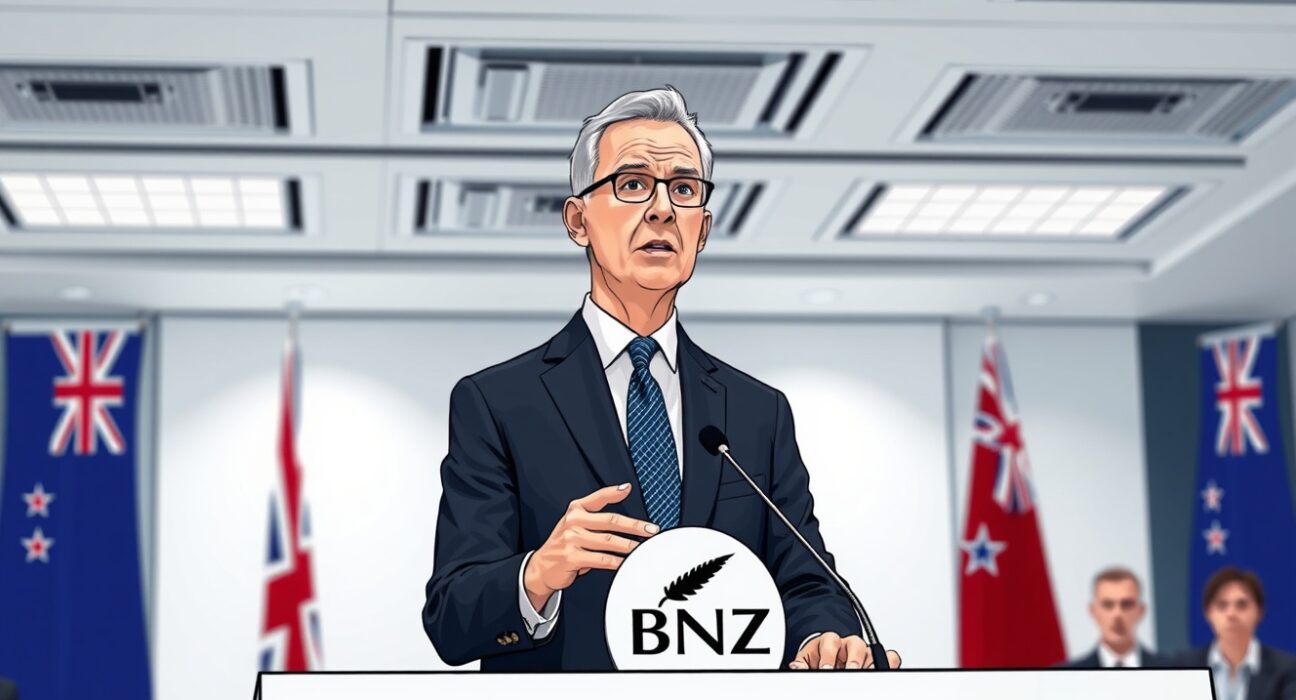
WELLINGTON, New Zealand – Reserve Bank of New Zealand Deputy Governor Paul Breman delivered a significant assessment this week, indicating that New Zealand’s economic trajectory could strengthen considerably if ongoing Middle East conflicts reach resolution. His analysis comes during a period of global economic uncertainty and provides crucial insights into how geopolitical stability directly influences domestic growth prospects.
RBNZ’s Breman Outlines Growth Scenarios
Paul Breman presented detailed economic projections during his quarterly briefing to financial analysts. He emphasized that current growth forecasts incorporate persistent Middle East tensions. Consequently, a swift resolution could trigger upward revisions across multiple economic indicators. The RBNZ monitors several key transmission channels through which global conflicts affect New Zealand’s economy.
These channels include:
- Trade route disruptions affecting shipping costs and delivery times
- Energy price volatility impacting production and transportation costs
- Global investor sentiment influencing capital flows and exchange rates
- Commodity market instability affecting agricultural export prices
Breman noted that New Zealand’s export-oriented economy remains particularly sensitive to these global factors. Historical data shows that previous geopolitical resolutions have typically boosted New Zealand’s GDP growth by 0.3-0.5 percentage points within subsequent quarters.
Middle East Conflict’s Economic Impact Analysis
The ongoing conflicts in the Middle East have created substantial headwinds for New Zealand’s trade-dependent economy. Shipping through critical routes like the Suez Canal has experienced intermittent disruptions, leading to increased freight costs and delayed deliveries. These logistical challenges directly affect New Zealand’s agricultural exports, which represent approximately 60% of merchandise export earnings.
Energy markets have shown particular sensitivity to Middle East developments. Brent crude oil prices have fluctuated between 15-25% above pre-conflict levels throughout 2024. For New Zealand, which imports nearly all its petroleum products, these price movements translate directly into higher production and transportation costs across multiple sectors.
| Indicator | Current Impact | Potential Improvement Post-Resolution |
|---|---|---|
| Export Shipping Costs | Increased 18-22% | Could decrease 12-15% |
| Energy Import Prices | Elevated 20-25% | Potential 15-18% reduction |
| Business Confidence Index | Below historical average | Expected 8-12 point increase |
| Exchange Rate Volatility | Above average levels | Could stabilize significantly |
Financial markets have responded to Breman’s comments with cautious optimism. The New Zealand dollar strengthened slightly against major trading partners following his remarks. Market analysts interpret his statements as signaling potential monetary policy adjustments if growth accelerates as projected.
Expert Perspectives on Global Trade Dynamics
International trade economists support Breman’s assessment, noting that New Zealand’s geographical position makes it especially vulnerable to global shipping disruptions. Dr. Sarah Chen, a senior researcher at the Asia-Pacific Economic Cooperation forum, explains that New Zealand’s export competitiveness depends heavily on reliable maritime routes. She states that resolution in the Middle East would immediately improve supply chain predictability.
Furthermore, agricultural economists highlight that New Zealand’s dairy, meat, and fruit exports face particular challenges during periods of maritime instability. These time-sensitive products require consistent cold chain logistics that become significantly more expensive during route disruptions. A return to normal shipping patterns would directly enhance export profitability.
Monetary Policy Implications and Future Outlook
The RBNZ’s monetary policy committee must consider these geopolitical factors when setting interest rates. Breman indicated that stronger growth resulting from conflict resolution could influence future policy decisions. However, he emphasized that any adjustments would remain data-dependent and carefully calibrated.
Inflation management represents a critical consideration in this context. Reduced energy and transportation costs following conflict resolution could help moderate imported inflation pressures. This development would provide the RBNZ with greater flexibility in its inflation targeting framework.
Breman outlined several monitoring indicators the central bank will track:
- Global shipping cost indices and route availability metrics
- International energy price movements and volatility measures
- New Zealand export volume and pricing data
- Business investment surveys and capacity utilization rates
The Deputy Governor stressed that while potential growth improvements are significant, they represent only one factor in the RBNZ’s comprehensive economic assessment. Domestic conditions, including employment trends and wage growth, will continue to receive primary attention in policy deliberations.
Conclusion
RBNZ Deputy Governor Paul Breman’s analysis provides valuable insight into how geopolitical developments directly influence New Zealand’s economic prospects. His assessment that Middle East conflict resolution could strengthen growth highlights the interconnected nature of global economies. While uncertainties remain, his comments underscore the importance of monitoring international developments for their domestic implications. The RBNZ’s careful analysis of these factors will continue to inform both its economic projections and policy decisions in coming quarters.
FAQs
Q1: What specific growth improvement did Breman suggest could occur?
Breman indicated that New Zealand’s economic growth could strengthen significantly, with historical precedents suggesting potential GDP increases of 0.3-0.5 percentage points following similar geopolitical resolutions.
Q2: How does the Middle East conflict affect New Zealand’s economy?
The conflict impacts New Zealand through increased shipping costs, energy price volatility, disrupted trade routes, and reduced business confidence, all of which affect the export-dependent economy.
Q3: What sectors would benefit most from conflict resolution?
New Zealand’s agricultural export sectors, particularly dairy, meat, and fruit, would benefit significantly from reduced shipping costs and improved supply chain reliability.
Q4: Could this affect RBNZ interest rate decisions?
Yes, stronger growth resulting from geopolitical stabilization could influence future monetary policy decisions, though the RBNZ would continue to base decisions on comprehensive data analysis.
Q5: What indicators will the RBNZ monitor regarding this situation?
The central bank will track global shipping costs, energy prices, export volumes, business investment surveys, and various other economic indicators to assess the evolving situation.
Disclaimer: The information provided is not trading advice, Bitcoinworld.co.in holds no liability for any investments made based on the information provided on this page. We strongly recommend independent research and/or consultation with a qualified professional before making any investment decisions.
