

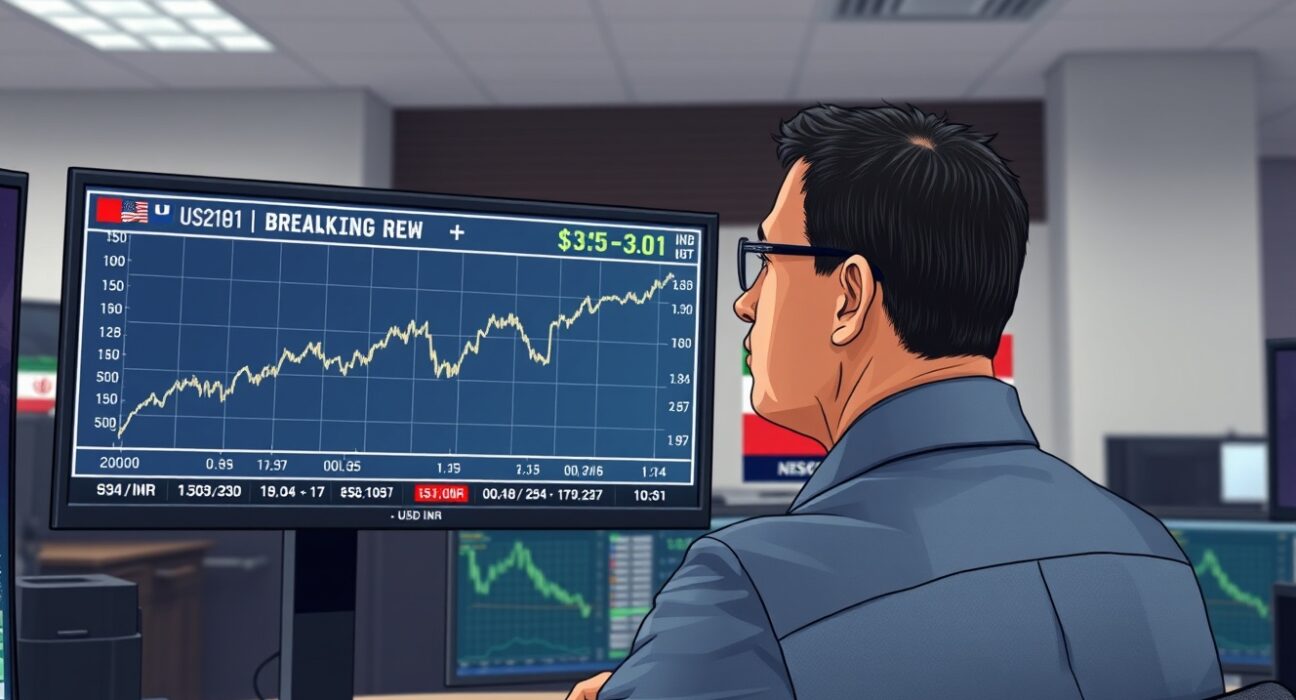
The USD/INR currency pair staged a significant recovery in early Asian trading hours today, February 15, 2025, as conflicting reports about potential US-Iran ceasefire negotiations injected fresh volatility into global financial markets. This movement represents a notable reversal from recent trends and highlights the complex interplay between geopolitical developments and currency valuations.
USD/INR Recovery Patterns and Market Reactions
Market data from major trading platforms shows the USD/INR pair climbing approximately 0.8% during the London session. This recovery follows three consecutive days of downward pressure. Trading volumes surged 45% above the 30-day average, indicating substantial institutional participation. Meanwhile, the Reserve Bank of India maintained its typical intervention posture, smoothing excessive volatility without targeting specific levels.
Several key factors contributed to this recovery pattern. First, dollar demand from importers increased ahead of monthly settlements. Second, foreign portfolio investors adjusted their hedging strategies. Third, rising crude oil prices placed upward pressure on the dollar against emerging market currencies. The recovery occurred despite relatively stable domestic economic indicators.
Technical Analysis Perspective
Technical analysts note the pair found strong support at the 82.50 level before rebounding. The 50-day moving average now acts as immediate resistance. Chart patterns suggest consolidation between 82.80 and 83.20 in the near term. Furthermore, momentum indicators show oversold conditions are correcting. However, the broader trend remains subject to external geopolitical developments.
Geopolitical Context: US-Iran Ceasefire Uncertainty
The primary catalyst for today’s currency movements stems from Washington and Tehran. Conflicting statements emerged regarding potential ceasefire negotiations in ongoing regional conflicts. The US State Department issued cautious comments about diplomatic channels. Conversely, Iranian officials presented more optimistic assessments. This discrepancy created uncertainty in energy and financial markets globally.
Historical context illuminates why this matters for USD/INR. Previous US-Iran tensions typically produced dollar strength against emerging markets. However, the current situation involves more complex dynamics. Regional stability affects oil supply routes through the Strait of Hormuz. Approximately 20% of India’s oil imports transit this critical waterway. Any disruption risks inflationary pressure and currency depreciation.
Energy Market Implications
Brent crude futures reacted immediately to the news, initially dropping 2% before recovering half those losses. This volatility directly impacts India’s current account deficit calculations. Every $10 increase in oil prices widens India’s deficit by approximately 0.5% of GDP. Consequently, currency markets price in these fundamental relationships quickly. The rupee’s sensitivity to oil prices remains elevated compared to peer currencies.
Broader Economic Impacts and Regional Considerations
The USD/INR movement reflects broader regional economic shifts. Other Asian currencies showed mixed reactions to the geopolitical developments. The Chinese yuan remained relatively stable due to central bank management. Southeast Asian currencies experienced more pronounced volatility. This divergence highlights India’s specific exposure to Middle Eastern stability.
Domestic economic factors also play a crucial role. India’s foreign exchange reserves stand at $650 billion, providing substantial buffer against volatility. Inflation remains within the Reserve Bank’s target band. Growth projections for fiscal year 2025-26 hover around 6.5%. These fundamentals support currency stability despite external shocks.
Trade and Investment Flows
Export-oriented sectors welcomed the recovery as it improves competitiveness. Information technology companies particularly benefit from favorable exchange rates. Conversely, import-dependent industries face higher input costs. Foreign direct investment flows show resilience despite geopolitical concerns. Portfolio investment patterns indicate continued confidence in India’s long-term growth story.
Central Bank Policies and Market Expectations
The Reserve Bank of India faces complex policy considerations. Balancing inflation management with growth support requires careful calibration. Geopolitical uncertainty adds another dimension to this challenge. Most analysts expect the central bank to maintain its current policy stance. However, they acknowledge increased vigilance regarding currency stability.
Global central bank policies also influence USD/INR dynamics. The Federal Reserve’s monetary policy trajectory affects dollar strength broadly. Current expectations suggest gradual normalization rather than aggressive tightening. This environment generally supports emerging market currencies. However, geopolitical risk premiums can override these fundamental relationships temporarily.
Risk Management Strategies
Market participants employ various strategies to navigate this uncertainty. Corporations increase hedging activities for anticipated foreign currency exposures. Investors rebalance portfolios toward defensive sectors. Trading desks implement tighter risk limits during volatile periods. These collective actions shape market liquidity and price discovery mechanisms.
Historical Comparisons and Pattern Analysis
Examining previous geopolitical events provides valuable context. The 2019 US-Iran tensions produced similar currency volatility patterns. However, current market structures differ significantly. Electronic trading now dominates currency markets, accelerating price movements. Regulatory frameworks have evolved to enhance market resilience. These changes affect how volatility manifests and dissipates.
The table below compares key USD/INR movements during recent geopolitical events:
| Event | Date | USD/INR Movement | Recovery Time |
|---|---|---|---|
| US-Iran Tensions 2019 | January 2020 | +1.2% | 5 trading days |
| Russia-Ukraine Conflict | February 2022 | +2.8% | 8 trading days |
| Current Ceasefire Uncertainty | February 2025 | +0.8% | Ongoing |
Expert Analysis and Forward Projections
Financial institutions provide varied assessments of the situation. Major banks emphasize monitoring diplomatic developments closely. Research firms highlight technical support and resistance levels. Independent analysts focus on oil price correlations. The consensus suggests continued volatility until geopolitical clarity emerges.
Several key indicators warrant close observation in coming days. First, official statements from Washington and Tehran. Second, oil inventory data and shipping patterns. Third, options market pricing for currency volatility. Fourth, Reserve Bank intervention patterns. These factors will determine whether the USD/INR recovery sustains or reverses.
Sector-Specific Impacts
Different economic sectors experience varied effects from currency movements:
- Information Technology: Benefits from rupee depreciation
- Automotive: Faces higher imported component costs
- Pharmaceuticals: Mixed effects depending on export/import balance
- Energy: Direct impact from oil price volatility
- Financial Services: Increased trading volumes and hedging demand
Conclusion
The USD/INR recovery amid US-Iran ceasefire uncertainty demonstrates the intricate connections between geopolitics and currency markets. This movement reflects both technical factors and fundamental economic relationships. Market participants must navigate complex risk landscapes as diplomatic developments unfold. The Reserve Bank of India maintains sufficient tools to manage excessive volatility while allowing market-determined exchange rates. Ultimately, the USD/INR trajectory will depend on clarity regarding Middle Eastern stability and its implications for global energy markets and economic flows.
FAQs
Q1: Why does US-Iran relations affect the USD/INR exchange rate?
The relationship affects global oil prices and supply security. India imports over 80% of its oil needs, making the rupee sensitive to Middle Eastern stability. Additionally, geopolitical uncertainty influences investor risk appetite toward emerging markets.
Q2: How significant is today’s USD/INR recovery in historical context?
The 0.8% movement represents moderate volatility compared to previous geopolitical events. Historical data shows movements up to 2.8% during major crises. However, the recovery’s sustainability depends on forthcoming diplomatic developments.
Q3: What tools does the Reserve Bank of India use to manage currency volatility?
The RBI employs direct intervention in forex markets, derivative instruments, monetary policy adjustments, and communication strategies. The central bank maintains substantial foreign exchange reserves to smooth excessive volatility without targeting specific exchange rate levels.
Q4: How do oil prices specifically impact the Indian rupee?
Higher oil prices widen India’s trade deficit as the country is a net importer. This increases dollar demand for payments, putting downward pressure on the rupee. Every $10 increase in oil prices typically weakens the rupee by 1-2% against the dollar, all else being equal.
Q5: What should investors monitor regarding future USD/INR movements?
Key indicators include US-Iran diplomatic statements, Brent crude oil prices, RBI intervention patterns, foreign portfolio flows, domestic inflation data, and Federal Reserve policy signals. Technical levels around 82.50 support and 83.20 resistance also warrant attention.
Disclaimer: The information provided is not trading advice, Bitcoinworld.co.in holds no liability for any investments made based on the information provided on this page. We strongly recommend independent research and/or consultation with a qualified professional before making any investment decisions.
