

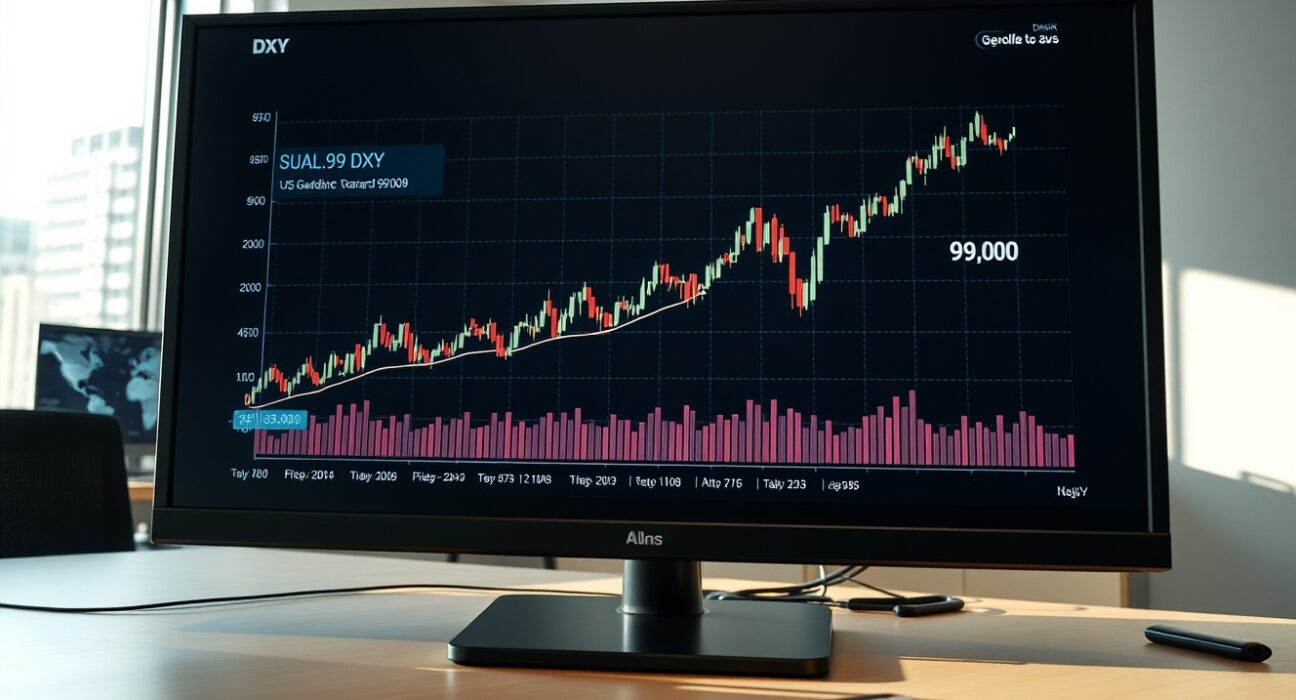
NEW YORK, April 10, 2025 – The US Dollar Index (DXY) experienced a significant rally, climbing decisively to the 99.00 level during Thursday’s trading session. This sharp upward movement coincides directly with growing international skepticism surrounding the viability of a recently proposed ceasefire involving Iran, injecting fresh volatility into global foreign exchange markets. Consequently, traders are rapidly reassessing risk profiles and capital flows, which traditionally benefit the dollar during periods of geopolitical strain.
US Dollar Index Rally: A Technical and Geopolitical Breakdown
The DXY, which measures the United States dollar’s strength against a basket of six major world currencies, broke through key technical resistance. Market analysts immediately linked the surge to headlines from the Middle East. Specifically, diplomatic sources reported that implementation of a tentative ceasefire agreement, which had provided brief market calm, now faces serious challenges. As a result, the perceived geopolitical risk premium expanded rapidly. Investors, therefore, sought the traditional safe-haven appeal of the US dollar. This flight-to-quality dynamic is a well-documented market response to international tension.
Furthermore, the dollar’s gains were broad-based against the basket. The euro (EUR), which carries the heaviest weighting in the DXY, faced pronounced selling pressure. Similarly, the British pound (GBP) and the Japanese yen (JPY) also weakened against the resurgent greenback. The following table illustrates the DXY’s key component currencies and their approximate weighting:
| Currency | Symbol | Approximate Weight in DXY |
|---|---|---|
| Euro | EUR | 57.6% |
| Japanese Yen | JPY | 13.6% |
| British Pound | GBP | 11.9% |
| Canadian Dollar | CAD | 9.1% |
| Swedish Krona | SEK | 4.2% |
| Swiss Franc | CHF | 3.6% |
The Iran Ceasefire Context and Market Mechanics
The immediate catalyst stems from the Middle East. Earlier this week, negotiators had signaled a potential de-escalation path. However, subsequent statements from involved parties introduced substantial doubt. This doubt triggers a specific chain reaction in financial markets. Primarily, uncertainty discourages investment in riskier assets like emerging market currencies and equities. Instead, capital moves towards perceived stability.
- Safe-Haven Flows: The US dollar and US Treasury bonds typically see increased demand.
- Commodity Volatility: Oil prices often become more volatile, affecting currency pairs like USD/CAD.
- Federal Reserve Policy: Persistent uncertainty can influence market expectations for future interest rate decisions.
Moreover, the dollar’s role as the world’s primary reserve currency amplifies these movements. Central banks and institutional investors adjust their massive portfolios in response to shifting risk landscapes. This adjustment creates powerful momentum, which technical traders then often amplify through algorithmic buying programs.
Expert Analysis on Currency Correlations
Historical data consistently shows a correlation between Middle East tensions and dollar strength. For instance, during similar periods of uncertainty in the past decade, the DXY has frequently experienced short-term rallies. Financial strategists note that the current move’s sustainability depends heavily on the conflict’s duration and scale. If the ceasefire negotiations collapse entirely, further dollar appreciation is probable. Conversely, a swift and credible diplomatic resolution could trigger a sharp retracement of the DXY’s gains. Market participants are therefore monitoring diplomatic communications with intense scrutiny, parsing every official statement for clues about the geopolitical trajectory.
Broader Economic Impacts and Future Trajectory
A stronger US Dollar Index carries significant implications for the global economy. Firstly, it makes US exports more expensive for foreign buyers, potentially impacting corporate earnings for multinational companies. Secondly, it can ease inflationary pressures within the United States by lowering the cost of imported goods. For other nations, a strong dollar can complicate monetary policy, especially for emerging markets with dollar-denominated debt. Their borrowing costs effectively increase, creating potential financial stability concerns.
Looking ahead, traders will focus on several key indicators. Upcoming US inflation data and Federal Reserve meeting minutes will provide crucial context. Simultaneously, any new developments from the Middle East will remain the primary driver of short-term sentiment. The market’s technical posture also suggests that a sustained break above the 99.50 level on the DXY could open the path toward the psychologically significant 100.00 mark. However, failure to hold above 98.80 might indicate that the geopolitical risk premium is already fully priced into current exchange rates.
Conclusion
The US Dollar Index (DXY) rally to 99.00 serves as a clear market barometer for rising geopolitical anxiety. The immediate cause is the newfound uncertainty surrounding a potential Iran ceasefire, which has triggered classic safe-haven capital flows into the US currency. This movement underscores the deep interconnection between international diplomacy and global finance. While technical factors and broader monetary policy set the stage, it is often geopolitical events that dictate the short-term tempo of the foreign exchange markets. Investors and analysts will continue to watch both the charts and the headlines with equal vigilance in the coming days.
FAQs
Q1: What is the US Dollar Index (DXY)?
The US Dollar Index (DXY) is a measure of the value of the United States dollar relative to a basket of six major foreign currencies: the Euro, Japanese Yen, British Pound, Canadian Dollar, Swedish Krona, and Swiss Franc. It provides a general indicator of the dollar’s international strength.
Q2: Why does geopolitical tension cause the dollar to rise?
The US dollar is considered a premier “safe-haven” asset. During times of global uncertainty or crisis, investors seek the stability and liquidity of US dollar-denominated assets like Treasury bonds. This increased demand drives up the dollar’s value relative to other currencies.
Q3: How does a stronger US Dollar Index affect everyday Americans?
A stronger dollar can lower prices for imported goods, helping to curb inflation. However, it can also hurt US exporters and multinational companies by making their products more expensive for foreign customers, potentially impacting jobs and corporate profits.
Q4: What other assets are considered safe havens besides the US dollar?
Other traditional safe-haven assets include gold, US Treasury bonds, the Japanese yen (JPY), and the Swiss franc (CHF). These assets tend to retain or increase their value during market stress.
Q5: Could the DXY move above 100.00?
Yes, the DXY has traded above 100.00 multiple times in its history, most recently during periods of aggressive Federal Reserve interest rate hikes and high global risk aversion. A sustained break above 99.50 could signal a test of that key psychological level, depending on the persistence of geopolitical and economic drivers.
Disclaimer: The information provided is not trading advice, Bitcoinworld.co.in holds no liability for any investments made based on the information provided on this page. We strongly recommend independent research and/or consultation with a qualified professional before making any investment decisions.
