

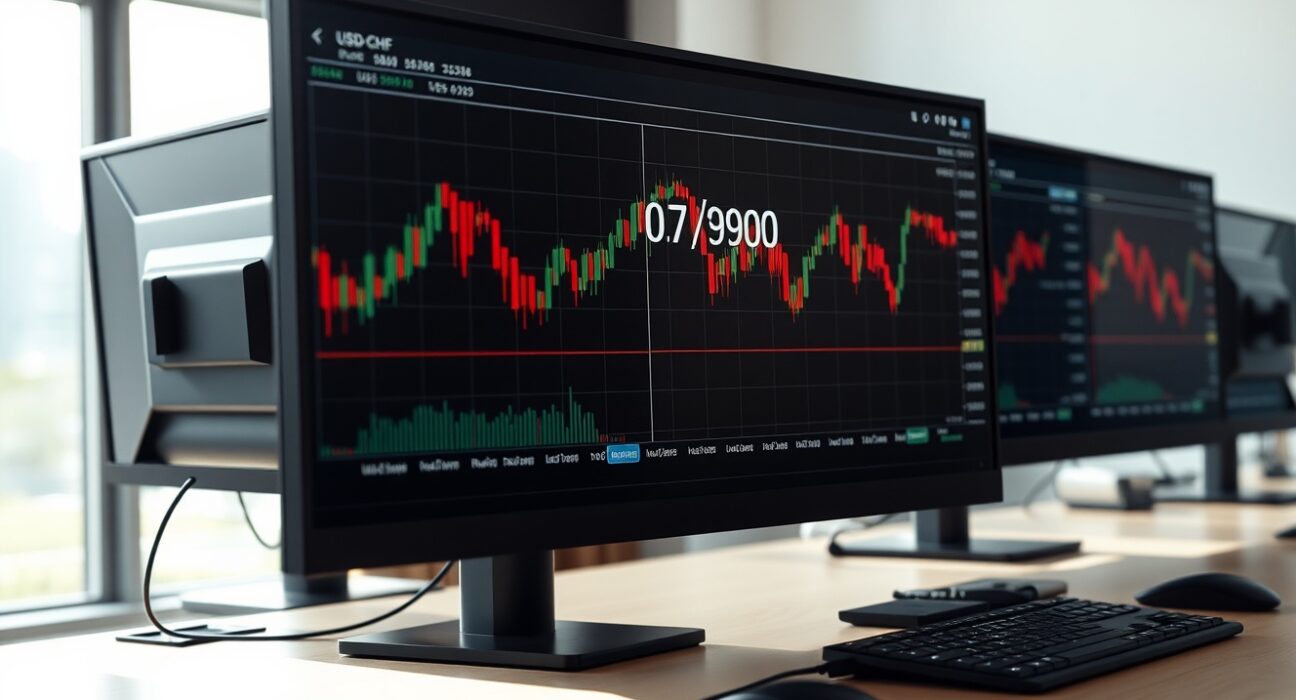
The USD/CHF currency pair demonstrates significant volatility, trading cautiously above the 0.7900 psychological level as markets digest reports of a fragile ceasefire in Iran. This development creates immediate implications for forex traders and global risk sentiment. Financial centers worldwide monitor the situation closely, particularly given the Swiss franc’s traditional role as a safe-haven currency during geopolitical uncertainty.
USD/CHF Technical Analysis and Current Market Position
Market data reveals the USD/CHF pair currently trades within a narrow range between 0.7895 and 0.7915. This consolidation follows recent volatility triggered by Middle Eastern developments. Technical indicators show mixed signals, with the 50-day moving average providing support near 0.7880. Meanwhile, the Relative Strength Index (RSI) hovers around 52, indicating neutral momentum conditions.
Forex analysts note several key resistance and support levels. Immediate resistance appears at 0.7925, followed by stronger resistance at 0.7950. Conversely, support levels cluster around 0.7880 and 0.7850. Trading volume remains elevated compared to monthly averages, reflecting heightened market attention. The following table summarizes critical technical levels:
| Level Type | Price | Significance |
|---|---|---|
| Current Price | 0.7905 | Psychological level |
| Immediate Resistance | 0.7925 | Recent high |
| Strong Resistance | 0.7950 | 50-day MA |
| Immediate Support | 0.7880 | Weekly low |
| Strong Support | 0.7850 | Monthly pivot |
Market participants exhibit caution despite the ceasefire announcement. Historical patterns suggest geopolitical developments in oil-producing regions typically influence currency correlations. Specifically, the Swiss franc often strengthens during Middle Eastern tensions due to Switzerland’s political neutrality and economic stability.
Geopolitical Context: Iran Ceasefire Developments
Regional sources confirm ceasefire negotiations between Iranian authorities and opposition groups reached a tentative agreement. However, implementation remains uncertain according to diplomatic observers. The situation involves multiple factions with differing objectives, complicating stabilization efforts. International mediators continue working to solidify the arrangement.
Previous geopolitical events in the region demonstrate clear impacts on currency markets. For instance, tensions during 2023-2024 prompted significant capital flows into traditional safe havens. The Swiss National Bank monitors these developments closely, as excessive franc appreciation can challenge Swiss export competitiveness. Recent SNB statements acknowledge monitoring “exceptional market conditions” without specifying intervention plans.
Energy markets show immediate reactions to the developments. Brent crude oil prices retreated approximately 2.5% following the ceasefire announcement. This movement influences currency correlations, particularly for commodity-linked pairs. However, analysts caution that sustained peace remains uncertain, potentially limiting market conviction.
Expert Analysis: Forex Market Implications
Financial institutions provide varied assessments of the situation’s currency implications. Major bank research departments highlight several key factors influencing USD/CHF direction:
- Risk Sentiment Shifts: Improved geopolitical conditions typically reduce safe-haven demand
- Dollar Dynamics: Federal Reserve policy expectations remain the primary USD driver
- Swiss Economic Data: Upcoming inflation and GDP figures influence SNB policy
- Correlation Patterns: Historical USD/CHF behavior during similar events
Market strategists emphasize the ceasefire’s fragility as a critical consideration. Previous Middle Eastern agreements have collapsed quickly, creating whipsaw price action in currency markets. Consequently, traders maintain defensive positioning despite apparent de-escalation. Options market data reveals increased demand for protection against sudden franc strength.
Broader Market Context and Historical Comparisons
The current situation shares characteristics with several historical geopolitical events. The 2015 Iran nuclear deal negotiations produced similar currency market reactions. During those discussions, USD/CHF experienced heightened volatility despite limited direct economic connections. Market psychology often drives currency movements more than fundamental linkages during geopolitical events.
Global central bank policies create additional complexity for the currency pair. The Federal Reserve maintains a data-dependent approach to interest rates, while the Swiss National Bank prioritizes currency stability. This policy divergence typically creates trading opportunities when geopolitical events introduce cross-currents. Current interest rate differentials between the US and Switzerland stand at approximately 175 basis points.
Economic data releases scheduled for the coming week may override geopolitical influences. US inflation figures and Swiss employment data could redirect market attention toward fundamental factors. However, sustained Middle Eastern tensions would likely maintain safe-haven demand regardless of economic releases. Market participants therefore monitor multiple variables simultaneously.
Technical Perspective: Chart Patterns and Indicators
Chart analysis reveals several noteworthy patterns in USD/CHF price action. The pair recently tested and held above its 200-day moving average, suggesting underlying strength. However, momentum indicators show divergence, with the MACD histogram flattening near the zero line. This technical configuration often precedes directional breaks once external catalysts emerge.
Volume profile analysis indicates concentrated trading activity between 0.7890 and 0.7920. This high-volume node may serve as a pivot area for future price movements. Breakouts above or below this range would likely accelerate as stop-loss orders trigger. Options expiration schedules also influence near-term technical behavior, with significant positions set to expire at 0.7900.
Seasonal patterns provide additional context for USD/CHF analysis. Historical data shows the pair typically experiences increased volatility during spring months. This pattern aligns with the current geopolitical developments, potentially amplifying price movements. Correlation analysis with other safe-haven assets, particularly gold and Japanese yen, shows strengthening relationships during uncertainty periods.
Conclusion
The USD/CHF currency pair remains delicately positioned above 0.7900 as markets assess fragile geopolitical developments in Iran. Technical factors suggest consolidation within a defined range, while fundamental considerations highlight multiple competing influences. Traders should monitor ceasefire implementation closely alongside economic data releases and central bank communications. The Swiss franc’s safe-haven characteristics may continue influencing USD/CHF dynamics despite apparent de-escalation. Ultimately, sustained direction requires either geopolitical resolution or new economic catalysts to emerge.
FAQs
Q1: Why does USD/CHF react to Middle Eastern geopolitical events?
The Swiss franc functions as a traditional safe-haven currency during global uncertainty. Investors often purchase francs during geopolitical tensions, affecting its value against the US dollar regardless of direct economic connections.
Q2: What technical levels are most important for USD/CHF currently?
Key levels include resistance at 0.7925 and 0.7950, with support at 0.7880 and 0.7850. The 0.7900 psychological level serves as an immediate pivot point for short-term trading decisions.
Q3: How does the Swiss National Bank respond to franc appreciation?
The SNB historically intervenes when excessive franc strength threatens price stability or economic competitiveness. However, recent policy statements emphasize data-dependent approaches rather than automatic intervention triggers.
Q4: What other assets correlate with USD/CHF during geopolitical events?
Gold, Japanese yen, and US Treasury bonds typically show positive correlation with Swiss franc strength during uncertainty periods. These assets collectively represent traditional safe-haven allocations for global investors.
Q5: How long do geopolitical effects typically influence currency markets?
Initial reactions often last several trading sessions, but sustained impacts depend on event duration and economic consequences. Most geopolitical currency movements partially reverse within weeks unless fundamental economic conditions change.
Disclaimer: The information provided is not trading advice, Bitcoinworld.co.in holds no liability for any investments made based on the information provided on this page. We strongly recommend independent research and/or consultation with a qualified professional before making any investment decisions.
