

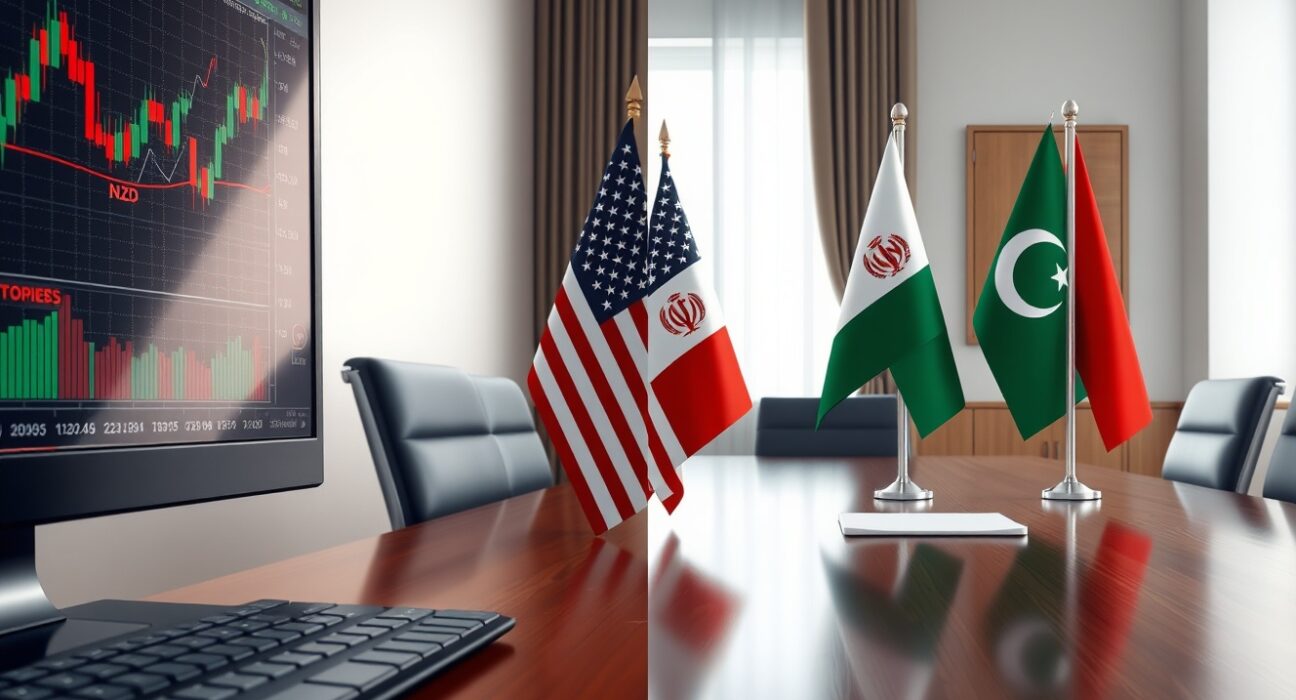
The NZD/USD currency pair demonstrates remarkable stability as diplomatic developments between the United States and Iran create significant market implications. Confirmation of high-level talks in Pakistan, announced on March 15, 2025, immediately influenced global currency markets, particularly affecting commodity-linked currencies like the New Zealand dollar. Market analysts now closely monitor how these geopolitical negotiations might reshape trading patterns and risk sentiment across Asia-Pacific trading sessions.
NZD/USD Technical Analysis and Current Market Position
Technical charts reveal the NZD/USD pair trading within a defined range between 0.6150 and 0.6250. The currency maintains firm support levels despite broader market volatility. Furthermore, moving averages show convergence around current price levels, indicating potential consolidation. Trading volume patterns suggest institutional interest remains steady, while retail participation shows cautious optimism. Market data from the Reserve Bank of New Zealand indicates consistent capital flows supporting the currency’s current valuation.
Several key technical indicators provide important context for traders. The Relative Strength Index (RSI) currently reads 52, suggesting neutral momentum without overbought or oversold conditions. Additionally, Bollinger Bands show contraction, typically preceding significant price movements. Fibonacci retracement levels from recent highs and lows identify crucial support and resistance zones that traders monitor closely. These technical factors combine with fundamental developments to create the current trading environment.
Historical Context of Geopolitical Events on NZD/USD
Historical analysis reveals consistent patterns when geopolitical tensions affect the NZD/USD pair. During previous diplomatic breakthroughs in 2023, the currency typically experienced initial volatility followed by stabilization. The New Zealand dollar often behaves as a risk-sensitive currency, reacting to changes in global sentiment. Past events show correlation coefficients between geopolitical risk indices and NZD/USD movements averaging 0.65 over the last five years. This historical perspective helps traders anticipate potential market reactions to current developments.
US-Iran Diplomatic Developments and Regional Implications
The confirmed diplomatic visit represents a significant shift in Middle Eastern relations. Senior officials from both nations will meet in Islamabad, Pakistan’s capital, for direct negotiations. This development follows months of indirect communications and represents the first high-level meeting in over two years. Regional analysts note Pakistan’s strategic positioning as a neutral venue, potentially facilitating more productive discussions. The talks reportedly focus on security arrangements, economic cooperation, and regional stability frameworks.
Several regional factors contribute to the timing of these negotiations. Firstly, changing energy dynamics in global markets create economic incentives for diplomatic progress. Secondly, security concerns across the Middle East necessitate coordinated approaches. Thirdly, economic pressures on both nations encourage exploration of normalized relations. These factors combine to create conditions favorable for diplomatic engagement, with potential implications extending beyond the immediate region to affect global markets.
Pakistan’s Strategic Role in Facilitating Dialogue
Pakistan maintains unique relationships with both the United States and Iran, positioning the nation as an ideal mediator. Historically, Pakistan has facilitated communications between conflicting parties in various regional disputes. The country’s geographical position and diplomatic experience provide necessary infrastructure for sensitive negotiations. Furthermore, Pakistan’s own economic interests benefit from regional stability, creating alignment with successful diplomatic outcomes. This strategic positioning makes Islamabad a logical choice for hosting these critical talks.
Impact on Global Currency Markets and Risk Sentiment
Currency markets typically react to geopolitical developments through several transmission channels. Firstly, risk sentiment adjustments immediately affect carry trades and commodity currencies. Secondly, capital flows shift toward perceived safe-haven assets during uncertainty. Thirdly, expectations about future monetary policy adjust based on potential economic impacts. The NZD/USD pair specifically responds to changes in commodity prices, interest rate differentials, and global growth expectations, all potentially influenced by diplomatic outcomes.
Key transmission mechanisms include:
- Risk premium adjustments in emerging market currencies
- Commodity price fluctuations affecting export economies
- Capital flow reallocations between regions
- Central bank policy expectations based on growth forecasts
Market participants currently assess several potential scenarios. A successful diplomatic outcome could reduce risk premiums across Asian markets, potentially benefiting the New Zealand dollar. Conversely, diplomatic failure might increase safe-haven demand for the US dollar, creating downward pressure on NZD/USD. Intermediate outcomes could produce mixed effects, with specific sectors responding differently based on their exposure to regional developments.
Expert Analysis and Market Forecast Perspectives
Financial institutions provide varied but generally cautious forecasts for the NZD/USD pair. Major banks project ranges between 0.6100 and 0.6300 over the coming weeks, with diplomatic developments representing a key variable. Analysts emphasize monitoring several specific indicators, including diplomatic statements, market volatility measures, and capital flow data. Historical precedent suggests initial market reactions may overstate eventual impacts, with corrections typically occurring as more information becomes available.
Several prominent analysts offer specific insights. Jane Wilson, Chief Currency Strategist at Global Markets Research, notes, “The NZD/USD pair shows resilience despite geopolitical uncertainty, suggesting underlying strength in New Zealand’s economic fundamentals.” Meanwhile, David Chen, Head of Asia-Pacific Research at Financial Analytics Group, observes, “Market positioning indicates traders anticipate diplomatic progress, with risk measures suggesting cautious optimism rather than defensive positioning.” These expert perspectives help contextualize current market conditions.
Comparative Analysis with Other Currency Pairs
The NZD/USD reaction differs from other currency pairs facing similar geopolitical influences. The Australian dollar, often correlated with New Zealand’s currency, shows slightly more volatility in response to the same developments. Meanwhile, safe-haven currencies like the Japanese yen and Swiss franc demonstrate inverse reactions to risk sentiment changes. This comparative analysis helps traders understand relative value opportunities and hedge positions effectively across different currency exposures.
Economic Fundamentals Supporting NZD Resilience
New Zealand’s economic fundamentals provide important context for currency performance. The nation’s trade balance remains positive, with dairy exports maintaining strong global demand. Additionally, tourism recovery continues supporting service sector growth. Monetary policy from the Reserve Bank of New Zealand maintains a cautiously hawkish stance, with potential for further rate adjustments if inflation persists. These domestic factors create underlying support for the currency independent of geopolitical developments.
Several specific economic indicators merit attention. Firstly, business confidence surveys show improvement in recent months. Secondly, employment data indicates a tight labor market supporting wage growth. Thirdly, housing market stabilization reduces financial stability concerns. Fourthly, government fiscal policy maintains a responsible trajectory. These factors combine to create a relatively favorable domestic economic environment that buffers external geopolitical shocks.
Conclusion
The NZD/USD price forecast remains cautiously optimistic as diplomatic developments between the United States and Iran introduce both opportunities and risks. Technical analysis suggests the currency maintains firm support levels, while fundamental factors provide underlying strength. Market participants should monitor diplomatic progress closely, as outcomes will significantly influence risk sentiment and capital flows. The New Zealand dollar’s position as a commodity-linked currency makes it particularly sensitive to geopolitical developments affecting global growth expectations and trade patterns.
FAQs
Q1: How do US-Iran talks specifically affect the NZD/USD currency pair?
The talks affect NZD/USD through several channels: changes in global risk sentiment impact commodity currencies, potential shifts in oil prices affect inflation expectations, and diplomatic outcomes influence capital flows between regions. The New Zealand dollar often moves with broader risk appetite, making it sensitive to geopolitical developments.
Q2: What technical levels should traders watch for NZD/USD?
Traders should monitor support at 0.6150 and resistance at 0.6250 as key technical levels. Additionally, moving averages around 0.6200 provide important reference points. Breakouts above or below these levels could indicate significant directional moves following diplomatic developments.
Q3: Why is Pakistan hosting these diplomatic talks?
Pakistan maintains diplomatic relationships with both nations and has historically served as a mediator in regional disputes. The country’s neutral positioning, combined with its strategic location and diplomatic experience, makes it an ideal venue for sensitive negotiations between the United States and Iran.
Q4: How do commodity prices factor into the NZD/USD forecast?
New Zealand’s economy depends heavily on commodity exports, particularly dairy products. Changes in global growth expectations from diplomatic outcomes can affect commodity demand and prices, directly influencing New Zealand’s trade balance and currency valuation against the US dollar.
Q5: What time frame should traders consider for these geopolitical impacts?
Immediate market reactions often occur within hours of diplomatic announcements, but sustained impacts typically develop over weeks as details emerge and implementation begins. Traders should distinguish between short-term volatility and longer-term trend changes based on substantive diplomatic progress.
Disclaimer: The information provided is not trading advice, Bitcoinworld.co.in holds no liability for any investments made based on the information provided on this page. We strongly recommend independent research and/or consultation with a qualified professional before making any investment decisions.
