

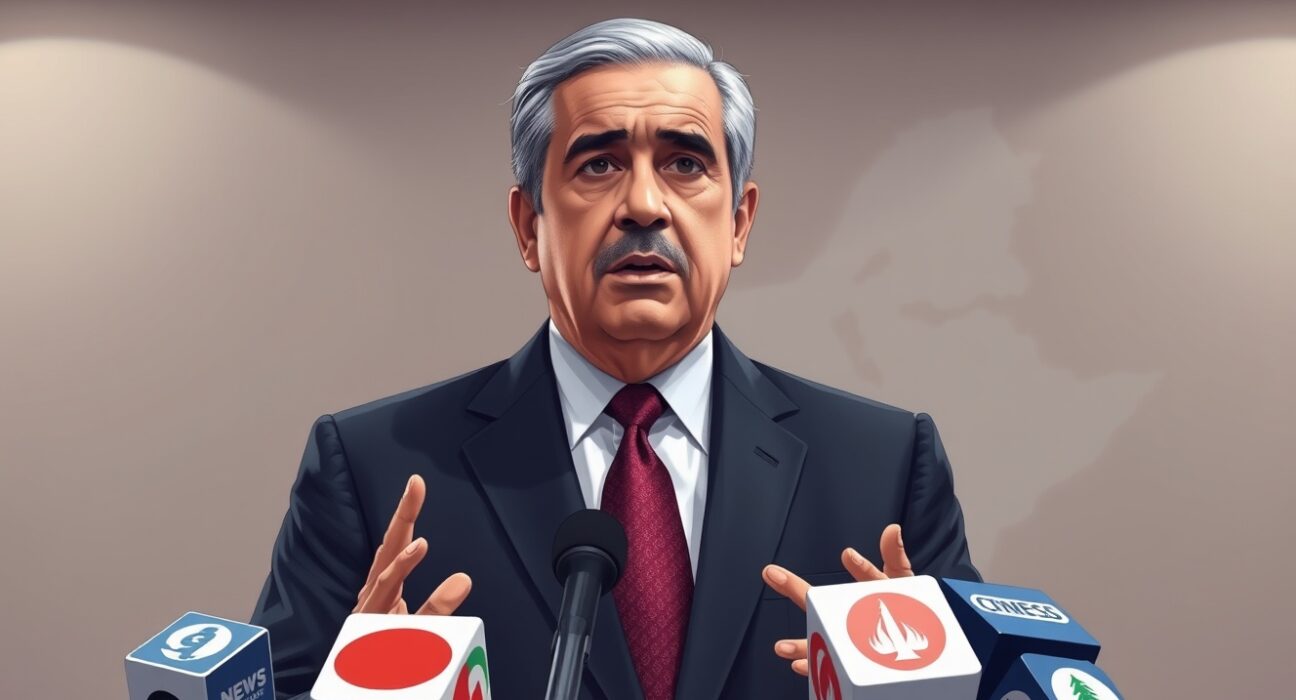
TEHRAN, Iran – March 2025 – Iran’s President Ebrahim Raisi issued a stark warning today, declaring that repeated Israeli military incursions into Lebanese territory constitute a clear and dangerous violation of the initial ceasefire agreement. The Iranian leader framed these actions as a signal of bad faith that threatens to derail any potential diplomatic accord, while simultaneously pledging Iran’s unwavering support for Lebanon.
Iran’s President Condemns Israeli Ceasefire Violations
President Raisi delivered his remarks during a press conference in Tehran, addressing what he termed a pattern of provocative Israeli actions. He stated that Israel’s repeated incursions represent not just isolated military maneuvers but a fundamental breach of the understanding that halted broader hostilities. Furthermore, Raisi characterized these operations as a “dangerous signal of deceit and lack of will for any potential accord.” This language marks a significant escalation in Tehran’s rhetorical stance toward the ongoing tensions along the Israel-Lebanon border.
The context for this statement is a fragile calm that has persisted since a major exchange of fire between Hezbollah and the Israeli Defense Forces (IDF) several months prior. That confrontation, which involved rocket barrages and airstrikes, raised fears of a full-scale regional war. A ceasefire, brokered through indirect channels, was meant to de-escalate the situation. However, sporadic incidents and limited operations have continued, with both sides accusing the other of violations.
Analyzing the Strategic Impact of Border Incursions
Military analysts note that the term “incursion” typically refers to limited ground operations, aerial violations of airspace, or cross-border intelligence-gathering missions. These actions, while often small in scale, carry substantial symbolic weight. They test the resolve of the opposing force and the durability of any standing agreements. In this case, each reported incursion erodes the already minimal trust between the involved parties.
The strategic landscape of southern Lebanon is complex. Hezbollah maintains a significant military presence there, which Israel views as an existential threat. Consequently, the IDF conducts regular surveillance and preemptive operations to counter what it describes as imminent threats. From Israel’s perspective, these actions are defensive necessities. From Tehran and Hezbollah’s viewpoint, they are unprovoked aggressions that undermine sovereignty.
Expert Perspective on Ceasefire Dynamics
Dr. Leila Hassan, a senior fellow at the Center for Middle Eastern Strategic Studies, explains the fragility of such arrangements. “A ceasefire is not a peace treaty,” she notes. “It is a temporary halt in major hostilities, often with tacit rules of engagement. When one side repeatedly tests the boundaries with incursions, it creates a ‘death by a thousand cuts’ scenario for the agreement. The other side faces immense internal pressure to respond, which can trigger a rapid escalation cycle.” This analysis underscores why President Raisi’s statement emphasizes that continued incursions render negotiations “meaningless.”
Iran’s Historical and Strategic Commitment to Lebanon
A core component of Raisi’s address was the reaffirmation of Iran’s support for Lebanon. “Iran would always remain prepared for conflict and would never abandon the people of Lebanon,” he declared. This pledge is rooted in a decades-long strategic alliance. Iran is the principal patron of Hezbollah, providing the group with funding, weapons, training, and political support. This relationship is a cornerstone of Iran’s foreign policy, extending its influence across the Levant and presenting a deterrent to Israeli military action.
The commitment to Lebanon also resonates on a sectarian and ideological level for Iran’s leadership. Hezbollah positions itself as a defender of Lebanese sovereignty and the broader “Axis of Resistance” against Israeli and American influence in the region. By vowing not to abandon Lebanon, Raisi is signaling to multiple audiences: Hezbollah’s leadership, the Lebanese public, regional rivals, and the international community. The message is one of steadfastness and readiness for confrontation if necessary.
Timeline of Recent Israel-Lebanon Border Tensions
Understanding the current rhetoric requires examining the recent sequence of events. The following timeline outlines key developments leading to the present diplomatic standoff.
| Date | Event | Significance |
|---|---|---|
| Late 2024 | Major cross-border exchange of fire between IDF and Hezbollah. | Most serious escalation in years, prompting international crisis diplomacy. |
| Early Jan 2025 | Indirect ceasefire agreement takes effect. | Halts major rocket and airstrike campaigns but lacks detailed monitoring mechanisms. |
| Feb 2025 | Reports of Israeli drone overflights in southern Lebanon. | Hezbollah files complaint with UNIFIL (United Nations Interim Force in Lebanon). |
| Early Mar 2025 | Alleged small-scale IDF ground operation near the Blue Line. | Denounced by Lebanese government as a violation of sovereignty. |
| Mid-Mar 2025 | President Raisi’s public condemnation. | Iran elevates the issue to a high-level diplomatic confrontation. |
The Broader Regional and International Context
This bilateral friction does not occur in a vacuum. It is deeply intertwined with several other regional dynamics:
- Stalled Nuclear Talks: Negotiations to revive the JCPOA (Iran nuclear deal) remain dormant. This deadlock contributes to a climate of mutual suspicion between Iran and Western powers, including Israel’s key ally, the United States.
- War in Gaza: Although a separate conflict, the situation in Gaza influences the calculus of all actors in Lebanon. A resurgence of fighting there could easily spill over into renewed conflict on the Israel-Lebanon border.
- Lebanon’s Internal Crisis: Lebanon suffers from a profound political and economic collapse. The state is weak, and Hezbollah operates with a high degree of autonomy. This power vacuum makes the border area particularly volatile and difficult to regulate.
International responses have been cautious. The United Nations has called for maximum restraint from all sides. The United States, while firmly supporting Israel’s right to self-defense, has reportedly urged behind-the-scenes for actions that do not provoke a wider war. European powers are primarily concerned with preventing another refugee crisis.
Conclusion
President Raisi’s forceful statement serves as a clear diplomatic marker. It frames Israeli military activity as the primary obstacle to stability and positions Iran as the guarantor of Lebanese resistance. The warning that negotiations become “meaningless” under current conditions presents a stark choice: de-escalate border operations or face the potential collapse of the ceasefire framework. As the region watches, the actions taken in the coming weeks along the Israel-Lebanon border will test the seriousness of these warnings and the durability of an already fragile peace. The core issue of Israeli incursions into Lebanon remains a critical flashpoint with the power to unravel regional stability.
FAQs
Q1: What exactly does Iran mean by “Israeli incursions” into Lebanon?
Typically, this refers to Israeli military operations that cross the internationally recognized Blue Line into Lebanese territory. These can include ground patrols, drone or aircraft overflights, or special forces operations. Israel states such actions are necessary for counter-terrorism, while Lebanon and Iran deem them violations of sovereignty.
Q2: What was the “initial ceasefire agreement” President Raisi referenced?
He is likely referring to the informal understanding that ended a major bout of fighting between Hezbollah and Israel in late 2024. This was not a formal treaty but a mutually understood de-escalation, likely mediated by third parties, which halted widespread rocket fire and airstrikes.
Q3: Why is Iran so committed to supporting Lebanon?
Iran’s support is primarily channeled through its ally, Hezbollah. This relationship is strategic, giving Iran a powerful proxy force on Israel’s border, and ideological, based on shared opposition to Israeli and U.S. influence in the region. It is a central pillar of Iran’s regional foreign policy.
Q4: How has Israel responded to these accusations?
As of this reporting, Israel has not issued a formal public response to Raisi’s specific statement. Historically, Israeli officials defend cross-border operations as essential defensive measures against imminent Hezbollah threats, such as weapons transfers or attack preparations.
Q5: What is the risk of this situation escalating into a larger conflict?
The risk is significant. Each incursion and rhetorical escalation increases the chance of a miscalculation or a retaliatory strike that spirals out of control. The presence of well-armed non-state actors (Hezbollah) and the direct involvement of a regional power (Iran) make this one of the world’s most dangerous flashpoints.
Disclaimer: The information provided is not trading advice, Bitcoinworld.co.in holds no liability for any investments made based on the information provided on this page. We strongly recommend independent research and/or consultation with a qualified professional before making any investment decisions.
