

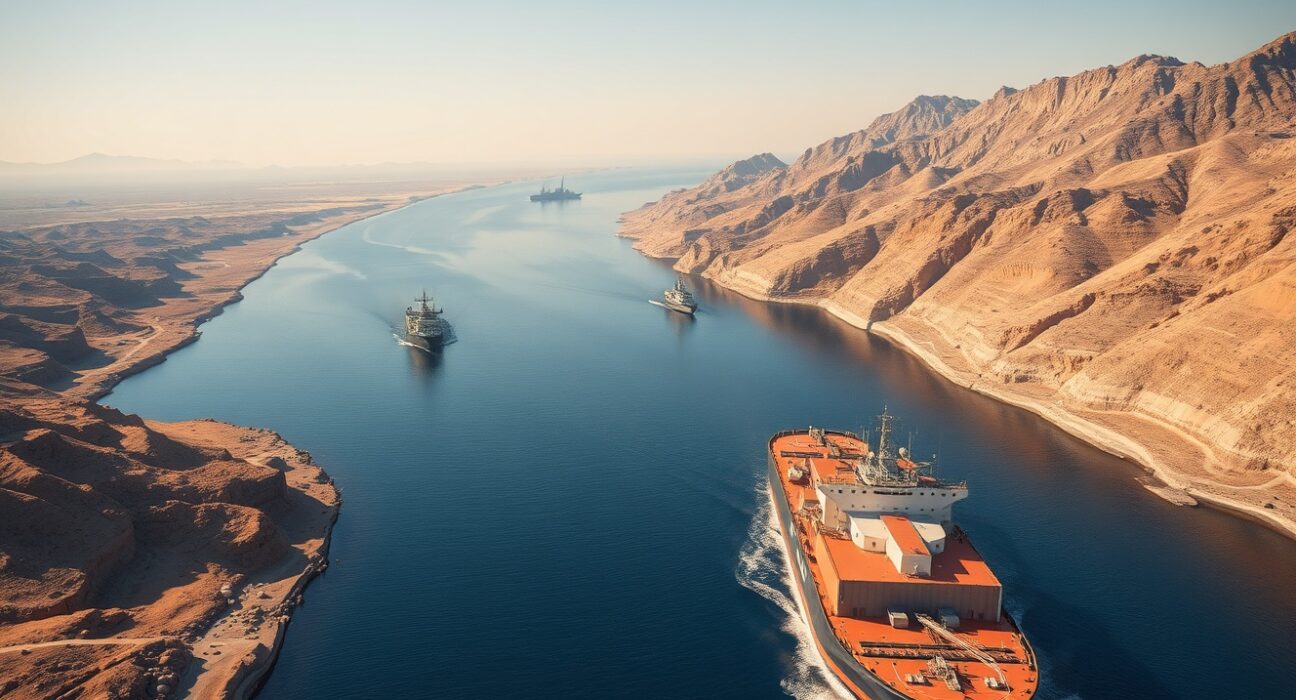
Global oil markets experienced a seismic shock this week as West Texas Intermediate (WTI) crude futures surged to $98 per barrel, marking the highest level since 2022. This dramatic rally follows renewed geopolitical tensions centered on the Strait of Hormuz, a critical maritime chokepoint for global oil shipments. Former U.S. President Donald Trump’s recent statements advocating for a potential blockade of the strait have injected unprecedented volatility into energy markets, prompting analysts to reassess their WTI price forecasts for the remainder of 2025.
WTI Price Forecast and the Strait of Hormuz Calculus
The Strait of Hormuz represents arguably the world’s most important oil transit corridor. Consequently, approximately 21 million barrels of oil pass through this narrow waterway daily. This volume accounts for nearly one-third of all seaborne traded oil and about 20% of global petroleum consumption. Therefore, any threat to this transit route immediately triggers a risk premium in crude prices. Market participants rapidly priced in this geopolitical risk, pushing the WTI price forecast significantly higher. The $98 per barrel level represents a key psychological and technical resistance point not seen in over three years.
Historical data clearly demonstrates the market’s sensitivity to Hormuz disruptions. For instance, during the 2019 tanker attacks and the 2020 escalation between the U.S. and Iran, WTI prices spiked by an average of 15-20% within weeks. The current situation, however, involves a proposed policy action rather than an isolated incident, creating a more sustained upward pressure on the WTI price forecast. Energy analysts from S&P Global Commodity Insights note that the market is now factoring in a prolonged period of elevated risk.
Analyzing the Geopolitical Trigger and Market Reaction
The immediate catalyst for the price surge was a series of public statements from former President Trump. He suggested that a blockade of the Strait of Hormuz could be used as leverage in broader international negotiations. Although such an action would constitute a severe escalation with complex legal and military implications, financial markets reacted to the mere possibility. Trading floors from London to Singapore saw frantic buying activity as hedge funds and commodity trading advisors adjusted their positions.
The reaction was not limited to the front-month WTI contract. The entire futures curve experienced a pronounced shift. The table below illustrates the price change across key contract months:
| Contract Month | Price Before Statement | Price After Statement | Change |
|---|---|---|---|
| June 2025 (Front Month) | $84.50 | $98.00 | +$13.50 |
| December 2025 | $82.10 | $92.75 | +$10.65 |
| June 2026 | $80.25 | $88.40 | +$8.15 |
This structure, where near-term contracts rise more than later-dated ones, indicates the market views the risk as immediate but potentially temporary. However, the backwardation (higher prices for immediate delivery) also signals current physical tightness and urgent demand for secure supply.
Expert Analysis on Supply Chain Vulnerabilities
Dr. Anya Petrova, Lead Geopolitical Analyst at the Center for Energy Studies, provided critical context. “The market’s violent reaction underscores a fundamental truth,” she explained. “Global oil logistics possess almost no spare capacity to reroute volumes equivalent to Hormuz transit. Alternative pipelines, like the Abu Dhabi Crude Oil Pipeline, can divert only a fraction. Similarly, the Saudi East-West Pipeline has limited spare capacity. Consequently, a serious disruption would force a physical shortage, not just a financial repricing.”
This analysis directly impacts the WTI price forecast. If a disruption occurs, the price mechanism would need to rise high enough to destroy sufficient demand to balance the market—a level analysts suggest could be well above $120 per barrel. The current rally to $98, therefore, may represent only a preliminary risk assessment.
Broader Economic Impacts and Sectoral Effects
The surge in the WTI price forecast carries significant implications beyond the trading pits. Firstly, higher crude costs translate directly into increased prices for gasoline, diesel, and jet fuel. This development threatens to reignite inflationary pressures that central banks have struggled to contain. Secondly, energy-intensive industries, from airlines to manufacturing, face rising operational costs that could squeeze profit margins and impact economic growth forecasts.
Key impacts include:
- Transportation Sector Strain: Airlines and shipping companies face immediate fuel cost increases, potentially leading to higher consumer fares and freight rates.
- Strategic Reserve Dynamics: The U.S. and other IEA members may consider releases from strategic petroleum reserves to calm markets, though capacity is lower following previous drawdowns.
- Alternative Energy Acceleration: Sustained high oil prices could accelerate investment in renewable energy and electric vehicle adoption, a structural shift with long-term consequences for the WTI price forecast.
Furthermore, petrostates reliant on oil revenue, particularly those in the Gulf region, face a complex dilemma. Higher prices boost fiscal budgets but also increase the stakes and risks associated with regional instability. Their diplomatic and military responses will be crucial in determining the duration of this price spike.
Historical Precedents and Risk Assessment
To understand potential outcomes, we must examine historical parallels. The 1973 oil embargo and the 1979 Iranian Revolution both caused massive oil price spikes and global economic recessions. However, today’s market differs in crucial ways. The United States is now the world’s largest oil producer, thanks to the shale revolution, providing a larger domestic buffer. Additionally, global inventories, while not abundant, are more transparent and managed.
Nevertheless, the concentration of supply risk remains acute. The U.S. Energy Information Administration (EIA) consistently highlights the Strait of Hormuz as the world’s most critical oil transit chokepoint. Any sustained closure is considered a low-probability, high-impact “tail risk” event that markets are ill-equipped to handle smoothly. The current WTI price forecast volatility reflects this inherent vulnerability in the global energy system.
Military and Diplomatic Pathways Forward
Security experts emphasize that a full blockade is a militarily complex and escalatory action. The strait is international waters, and any attempt to close it would likely trigger a multinational naval response. The U.S. Fifth Fleet is permanently stationed in Bahrain, and allied nations have repeatedly committed to ensuring freedom of navigation. Therefore, while the political rhetoric has shifted the WTI price forecast, the practical barriers to actual closure remain substantial. The market is effectively pricing the probability of an incident or partial disruption, rather than a complete shutdown.
Conclusion
The WTI price forecast has been violently recalibrated by geopolitical rhetoric surrounding the Strait of Hormuz. The rally to $98 per barrel serves as a stark reminder of the oil market’s fragility and its acute sensitivity to supply chain threats. While the probability of a full-scale blockade remains debated, the market has clearly priced in a materially higher risk environment. Consequently, traders, policymakers, and consumers must prepare for continued volatility. The ultimate trajectory of the WTI price forecast will depend not just on words, but on the unfolding diplomatic and military realities in one of the world’s most strategic waterways.
FAQs
Q1: What is the Strait of Hormuz, and why is it so important for oil prices?
The Strait of Hormuz is a narrow sea passage between Oman and Iran. It is the world’s most important oil transit chokepoint, with about 21 million barrels of oil passing through daily. Any threat to this route immediately creates a supply risk premium, pushing up crude oil benchmarks like WTI.
Q2: How does a proposed blockade affect the WTI price forecast if it hasn’t happened yet?
Financial markets are forward-looking and price based on probabilities. The mere suggestion of a blockade by a major political figure increases the perceived risk of a future supply disruption. Traders buy oil contracts now to hedge against or speculate on higher future prices, causing immediate price rallies.
Q3: What are the main alternatives if the Strait of Hormuz is blocked?
Alternatives are limited. Pipelines like the Abu Dhabi Crude Oil Pipeline (capacity ~1.5 million bpd) and the Saudi Petroline (capacity ~5 million bpd) can divert some oil. However, their combined capacity falls far short of the 21 million bpd that transit the strait, meaning a significant volume would be stranded, causing a physical shortage.
Q4: Could the U.S. use its own shale oil production to offset a Hormuz disruption?
While U.S. shale production provides a important domestic buffer, oil is a global market. A major disruption in the Middle East would raise prices worldwide, including in the U.S. American production could not be increased fast enough to replace lost volumes, and U.S. crude exports would likely be redirected to allies in Asia facing shortages.
Q5: What historical oil price spikes compare to the current situation?
Significant historical spikes include the 1973 Arab Oil Embargo (prices quadrupled), the 1979 Iranian Revolution, and the 1990 Gulf War. The 2022 spike following Russia’s invasion of Ukraine saw WTI briefly exceed $120. The current event is unique as it is driven by a prospective policy threat rather than an ongoing war or revolution.
Disclaimer: The information provided is not trading advice, Bitcoinworld.co.in holds no liability for any investments made based on the information provided on this page. We strongly recommend independent research and/or consultation with a qualified professional before making any investment decisions.
