

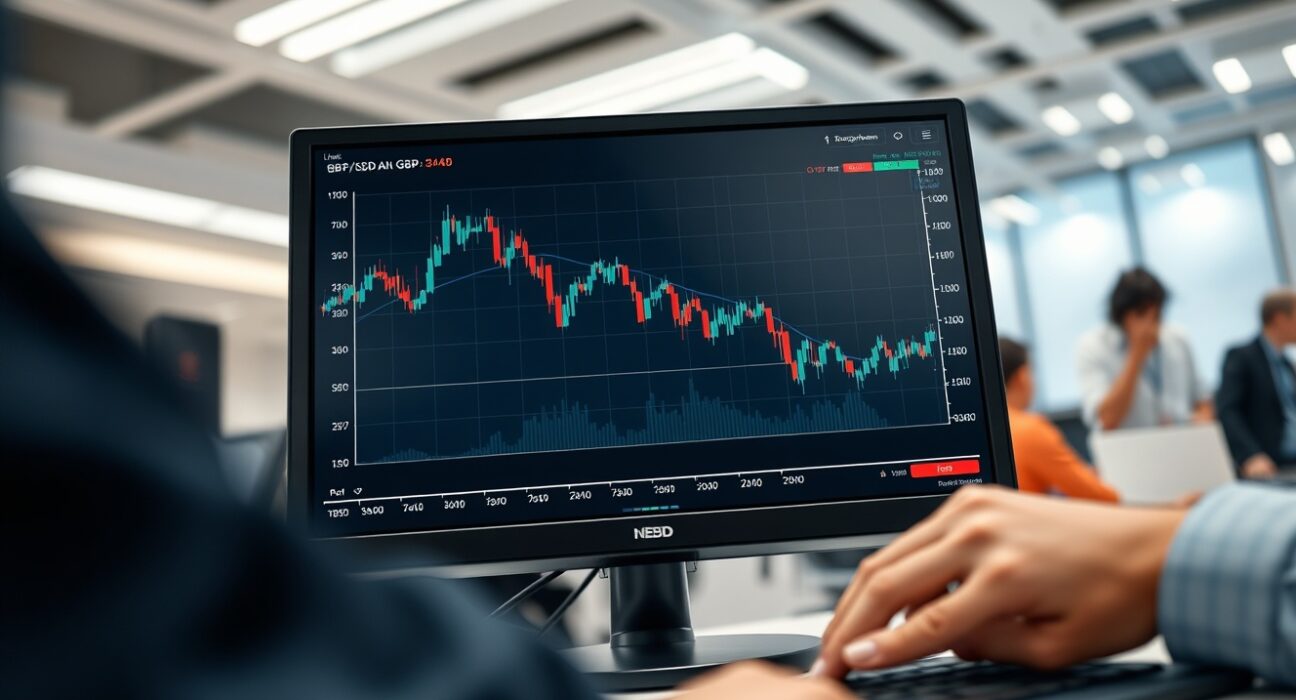
LONDON, April 10, 2025 – The pound sterling today faced significant downward pressure in global currency markets. Consequently, the British currency slipped markedly against a resurgent US dollar. This movement primarily stems from escalating geopolitical tensions, which are driving investors toward traditional safe-haven assets. Market analysts are closely monitoring the GBP/USD pair, which breached key technical levels during the London session.
Pound Sterling Today: Analyzing the Immediate Market Reaction
The GBP/USD exchange rate fell sharply, dropping over 0.8% to trade near a one-month low. This decline reflects a broad-based dollar firming across the forex board. Meanwhile, the euro and other risk-sensitive currencies also weakened. The dollar index (DXY), which tracks the greenback against a basket of peers, climbed to its highest level in several weeks. This flight to safety is a classic market response to uncertainty. Traders are reducing exposure to assets perceived as risky.
Several key factors are contributing to the pound’s weakness. Firstly, renewed conflict in the Middle East has heightened global anxiety. Secondly, concerns over energy supply disruptions are pushing investors toward the dollar’s relative stability. Thirdly, the Bank of England’s recent cautious stance on interest rates has removed a key support pillar for sterling. Market sentiment has shifted decisively in favor of the US currency for now.
Geopolitical Tensions Drive Forex Market Volatility
Forex markets are highly sensitive to geopolitical developments. Recent events have triggered a clear safe-haven flow into the US dollar and Swiss franc. Historically, the dollar benefits during periods of global stress due to its status as the world’s primary reserve currency. This dynamic is playing out forcefully in the current environment. The pound, often viewed as a growth-linked currency, is particularly vulnerable during such shifts.
Analysts at major financial institutions have issued updated forecasts. For instance, Jane Archer, Chief Currency Strategist at Global Forex Advisors, noted, “The market is repricing risk premiums. While UK economic data remains mixed, the external shock from geopolitics is the dominant short-term driver.” This expert perspective underscores the outsized impact of non-economic factors on currency valuations during crises.
The Technical and Fundamental Landscape for GBP/USD
From a technical standpoint, the break below the 1.2500 support level for GBP/USD is significant. This breach opens the path for further declines toward the 1.2350 region. On the fundamental side, the interest rate differential between the UK and US is also in focus. The Federal Reserve’s relatively hawkish posture contrasts with a more dovish Bank of England, adding underlying pressure on sterling.
The following table summarizes key market movements from the London session:
| Currency Pair | Rate | Daily Change | Key Level Breached |
|---|---|---|---|
| GBP/USD | 1.2485 | -0.85% | 1.2500 Support |
| EUR/USD | 1.0720 | -0.60% | 1.0750 Support |
| USD/JPY | 152.80 | +0.40% | 152.50 Resistance |
| Dollar Index (DXY) | 105.80 | +0.70% | 105.50 Resistance |
Economic Impacts of a Weaker Pound Sterling
A declining pound has immediate consequences for the UK economy. Firstly, it increases the cost of imports, potentially fueling inflation. This complicates the Bank of England’s task of managing price stability. Secondly, it makes UK exports more competitive on the global stage, which could benefit certain manufacturing sectors. However, the net effect is often negative in the short term due to higher import prices for energy and goods.
Consumers will feel the impact through several channels:
- Higher fuel prices at the pump due to dollar-denominated oil.
- Increased costs for imported food and consumer goods.
- More expensive overseas travel and holidays.
Conversely, international investors may find UK assets like stocks and property relatively cheaper. This could attract foreign capital, providing a partial offset to the currency’s weakness. The overall economic picture remains complex and highly dependent on the duration of the current geopolitical stress.
Historical Context and Market Psychology
Market reactions to geopolitical events follow recognizable patterns. Historically, initial shocks cause sharp, volatile moves as liquidity drops and automated trading algorithms react. Subsequently, markets often enter a consolidation phase as more information emerges. The pound’s performance during past crises, such as the 2014 Ukraine conflict or the 2020 pandemic, shows it typically underperforms the dollar initially before recovering partially.
The current psychology is dominated by fear and uncertainty. Traders are prioritizing capital preservation over yield-seeking. This sentiment is evident in the simultaneous rise of gold and the US dollar, a rare correlation that signals deep risk aversion. Until there is a de-escalation in tensions, this environment is likely to persist, keeping sterling under pressure.
Conclusion
The pound sterling today exemplifies how currency markets act as a barometer for global risk sentiment. The dollar firming on the back of geopolitical tensions has delivered a significant blow to the GBP/USD exchange rate. While UK-specific factors play a role, the overwhelming driver is the global flight to safety. Investors and policymakers alike must now navigate a landscape where external shocks can swiftly override domestic economic narratives. Monitoring key support levels and central bank communications will be crucial in the coming sessions to gauge the pound’s next directional move.
FAQs
Q1: Why is the pound falling against the dollar today?
The pound is falling primarily due to a surge in global geopolitical tensions, which is causing investors to seek the safety of the US dollar, leading to broad-based dollar strength and sterling weakness.
Q2: What does a weaker pound mean for UK inflation?
A weaker pound increases the cost of imports, including energy, food, and manufactured goods. This imported inflation can make it more challenging for the Bank of England to bring overall consumer price inflation down to its target.
Q3: How do geopolitical tensions typically affect forex markets?
Geopolitical tensions typically increase market volatility and drive capital flows into perceived safe-haven currencies like the US dollar and Swiss franc. Growth-linked or commodity currencies, like the pound, often depreciate during such periods.
Q4: Could the pound recover quickly if tensions ease?
Yes, currencies can experience rapid “relief rallies” if the underlying cause of risk aversion dissipates. However, the recovery’s strength would also depend on concurrent UK economic data and interest rate expectations.
Q5: Where is the next key support level for GBP/USD?
Following the break below 1.2500, technical analysts are watching the 1.2350 region, which represents the late-February low and a significant psychological level. A break below that could open the path toward 1.2200.
Disclaimer: The information provided is not trading advice, Bitcoinworld.co.in holds no liability for any investments made based on the information provided on this page. We strongly recommend independent research and/or consultation with a qualified professional before making any investment decisions.
