

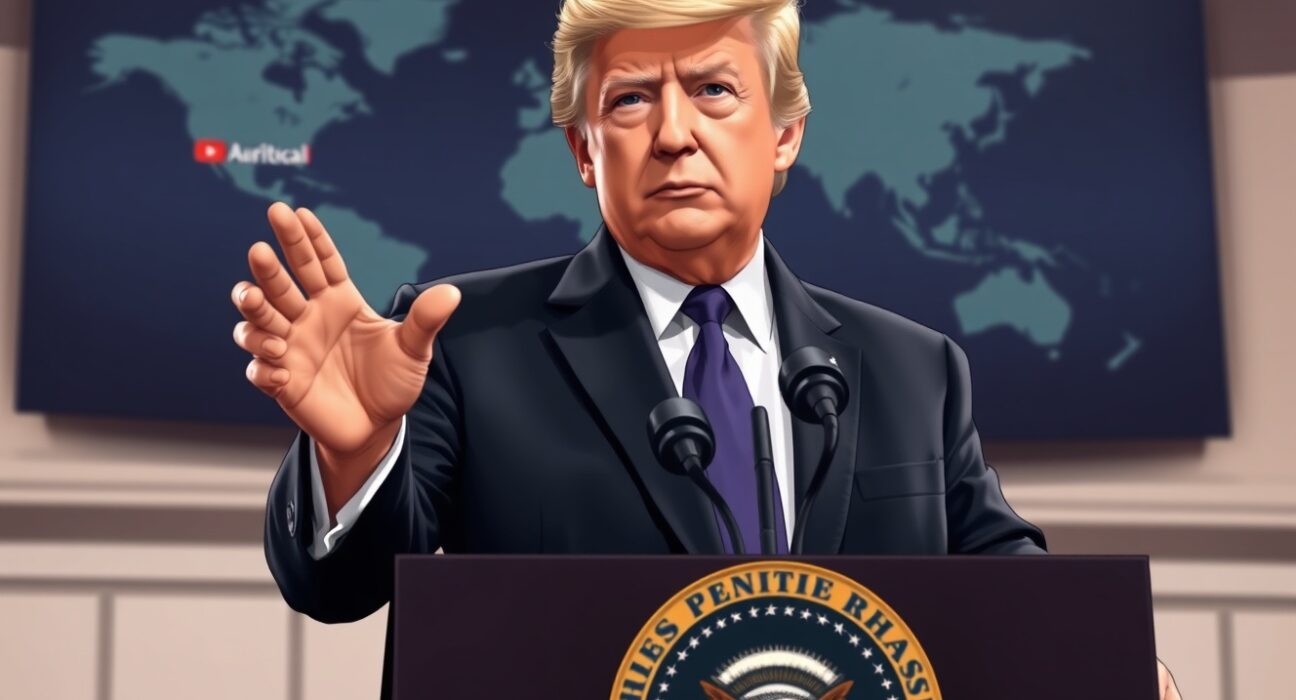
WASHINGTON, D.C. — In a significant foreign policy statement, former President Donald Trump indicated a potential strategic shift in U.S.-Cuba relations, suggesting he could address the Cuba issue after resolving matters with Iran. This declaration, made during a recent policy discussion, highlights the interconnected nature of American geopolitical priorities and signals potential changes in Caribbean and Middle Eastern diplomacy. The statement immediately sparked analysis among foreign policy experts who track the complex relationships between these historically contentious diplomatic fronts.
Trump’s Cuba Policy Framework and Strategic Timing
President Trump’s comments represent a notable development in U.S.-Cuba relations, which have experienced significant fluctuations across multiple administrations. The Obama administration initiated a historic thaw in 2014, re-establishing diplomatic relations after more than five decades of hostility. However, the Trump administration subsequently reversed many of these policies, reinstating travel restrictions and economic sanctions. Trump’s current statement suggests a conditional approach rather than an outright rejection of engagement.
Several factors influence this potential policy sequencing. First, Iran represents an immediate security concern with ongoing nuclear negotiations and regional proxy conflicts. Second, Cuba’s geopolitical significance has evolved amid changing global alliances. Third, domestic political considerations in key electoral states like Florida continue to shape Cuba policy. Foreign policy analysts note that this sequencing approach allows the administration to address what it perceives as more urgent threats before turning to regional matters.
Historical Context of U.S.-Cuba Relations
The United States and Cuba have maintained a complex relationship since the 1959 Cuban Revolution. Key developments include:
- 1960-1962: U.S. embargo begins, Bay of Pigs invasion fails, Cuban Missile Crisis occurs
- 1977-1996: Limited diplomatic exchanges, Cuban Adjustment Act implementation, Helms-Burton Act passage
- 2014-2016: Obama administration normalization efforts, embassy reopenings, travel restrictions eased
- 2017-2020: Trump administration policy reversals, additional sanctions, terrorism designation
This historical backdrop provides essential context for understanding current policy considerations. Each administration has approached Cuba with different priorities and strategies, reflecting broader foreign policy objectives and domestic political realities.
Iran Policy as Prerequisite for Caribbean Engagement
The explicit linkage between Iran and Cuba policy reveals several strategic considerations. Iran currently represents what many security analysts describe as a tier-one foreign policy challenge. The country’s nuclear program, regional influence through proxy groups, and ballistic missile development create immediate security concerns that demand focused diplomatic attention. By prioritizing Iran, the administration follows a traditional foreign policy approach of addressing perceived greater threats first.
Furthermore, resources within the State Department and National Security Council remain finite. High-level diplomatic engagement requires significant personnel, negotiation capital, and political attention. Sequencing these initiatives allows for concentrated effort on what the administration views as the more pressing matter. This approach also creates potential bargaining chips, as progress on one front could influence negotiations on another.
Expert Analysis on Policy Sequencing
Foreign policy specialists offer varied perspectives on this strategic approach. Dr. Elena Rodriguez, a Latin America studies professor at Georgetown University, notes, “This sequencing reflects traditional great power diplomacy where immediate security threats receive priority over regional diplomatic initiatives. However, it also acknowledges that Cuba policy cannot be addressed in isolation from broader geopolitical considerations.”
Conversely, security analyst Michael Chen observes, “The explicit connection between Iran and Cuba suggests a calculated diplomatic strategy rather than random policy announcements. This could indicate planned negotiations where concessions in one arena might facilitate progress in another.” These expert insights highlight the multidimensional nature of foreign policy decision-making.
Geopolitical Implications and Regional Dynamics
The potential Cuba policy shift carries significant implications for regional dynamics in the Western Hemisphere. Venezuela’s ongoing political and economic crisis remains closely tied to Cuban support, creating a complex triangular relationship. Additionally, increasing Chinese and Russian engagement in Latin America has altered traditional power dynamics, making U.S. policy decisions more strategically consequential than in previous decades.
Several Caribbean and Latin American nations have recently called for renewed U.S.-Cuba engagement, citing the benefits of regional stability and economic cooperation. The Association of Caribbean States has particularly emphasized the importance of normalized relations for addressing shared challenges like climate change, migration, and economic development. These regional perspectives inevitably influence U.S. policy calculations.
| Administration | Cuba Policy | Iran Policy | Strategic Priority |
|---|---|---|---|
| Obama | Normalization | Nuclear Deal | Diplomatic Engagement |
| Trump (First Term) | Maximum Pressure | Maximum Pressure | Economic Coercion |
| Current Statement | Conditional Engagement | Primary Focus | Sequenced Diplomacy |
Domestic Political Considerations and Electoral Impact
Domestic politics inevitably shape foreign policy, particularly regarding Cuba. Florida’s electoral significance, with its substantial Cuban-American population, has historically influenced presidential approaches to Cuba policy. However, demographic shifts and evolving attitudes within younger Cuban-American generations have created more nuanced political calculations. Recent polling indicates growing support for engagement among younger voters while maintaining concerns about human rights and political freedoms.
Additionally, bipartisan support exists for certain aspects of Cuba policy. Human rights concerns, particularly regarding political prisoners and freedom of expression, receive attention across the political spectrum. Economic considerations also play a role, with agricultural and business interests in various states advocating for expanded trade opportunities. These domestic factors create a complex political landscape that any Cuba policy initiative must navigate.
Economic Dimensions and Sanctions Policy
Economic factors significantly influence Cuba policy decisions. The U.S. embargo, formally established through the Trading with the Enemy Act of 1917 and later strengthened by multiple legislative acts, represents one of the longest-standing economic sanctions in modern history. However, its effectiveness remains debated among economists and policy analysts.
Key economic considerations include:
- Trade Potential: Agricultural exports, medical supplies, and telecommunications equipment
- Tourism Impact: Travel restrictions and their effect on both economies
- Remittance Flows: Financial transfers from Cuban-Americans to family members
- Humanitarian Concerns: Medical equipment and food security issues
These economic dimensions interact with broader foreign policy objectives, creating multiple pressure points for potential policy adjustments.
Diplomatic Channels and Implementation Mechanisms
Practical implementation of any Cuba policy shift would require specific diplomatic mechanisms and institutional preparations. The U.S. Interests Section in Havana, operating under the Swiss Embassy since 1977 before becoming an official embassy in 2015, would serve as the primary diplomatic channel. Additionally, backchannel communications through third countries or international organizations might facilitate preliminary discussions.
Several confidence-building measures typically precede major diplomatic shifts in contentious bilateral relationships. These often include humanitarian exchanges, academic and cultural programs, and incremental economic adjustments. Historical precedent suggests that successful normalization processes involve gradual, reciprocal steps rather than sudden, comprehensive agreements. This measured approach allows both sides to test intentions and build necessary trust.
Conclusion
President Trump’s statement regarding potential Cuba policy engagement following Iran resolution represents a significant development in U.S. foreign policy. This sequenced approach reflects strategic prioritization of immediate security concerns while acknowledging the importance of Caribbean relations. The explicit connection between these two diplomatic fronts suggests calculated geopolitical planning rather than isolated policy decisions. As global dynamics continue evolving, particularly with increased great power competition in Latin America, U.S.-Cuba relations will likely remain a strategically important component of broader hemispheric policy. The conditional nature of this potential engagement underscores the complex interplay between security priorities, diplomatic resources, and domestic political considerations that shape American foreign policy decision-making.
FAQs
Q1: What specific Cuba issues might President Trump address after Iran?
Potential issues include travel restrictions, remittance policies, diplomatic engagement levels, and specific sanction adjustments. The administration would likely focus on incremental changes rather than comprehensive normalization initially.
Q2: How does Iran policy currently affect U.S.-Cuba relations?
Iran policy consumes significant diplomatic resources and political attention, potentially delaying Caribbean initiatives. Additionally, similar maximum pressure approaches have been applied to both countries, creating policy parallels.
Q3: What are the main obstacles to improved U.S.-Cuba relations?
Primary obstacles include human rights concerns, property claims from expropriated assets, Cuba’s relationships with U.S. adversaries, and domestic political considerations in key electoral states.
Q4: How might Cuba policy changes affect other Latin American countries?
Improved U.S.-Cuba relations could facilitate broader regional cooperation on migration, drug interdiction, and economic development. It might also influence Venezuela policy given close Cuba-Venezuela ties.
Q5: What timeline might a potential Cuba policy review follow?
Timing depends entirely on Iran policy developments. Experts suggest any significant Cuba policy movement would require at least 6-12 months after substantial Iran resolution, allowing for diplomatic reallocation and domestic consensus building.
Disclaimer: The information provided is not trading advice, Bitcoinworld.co.in holds no liability for any investments made based on the information provided on this page. We strongly recommend independent research and/or consultation with a qualified professional before making any investment decisions.
