

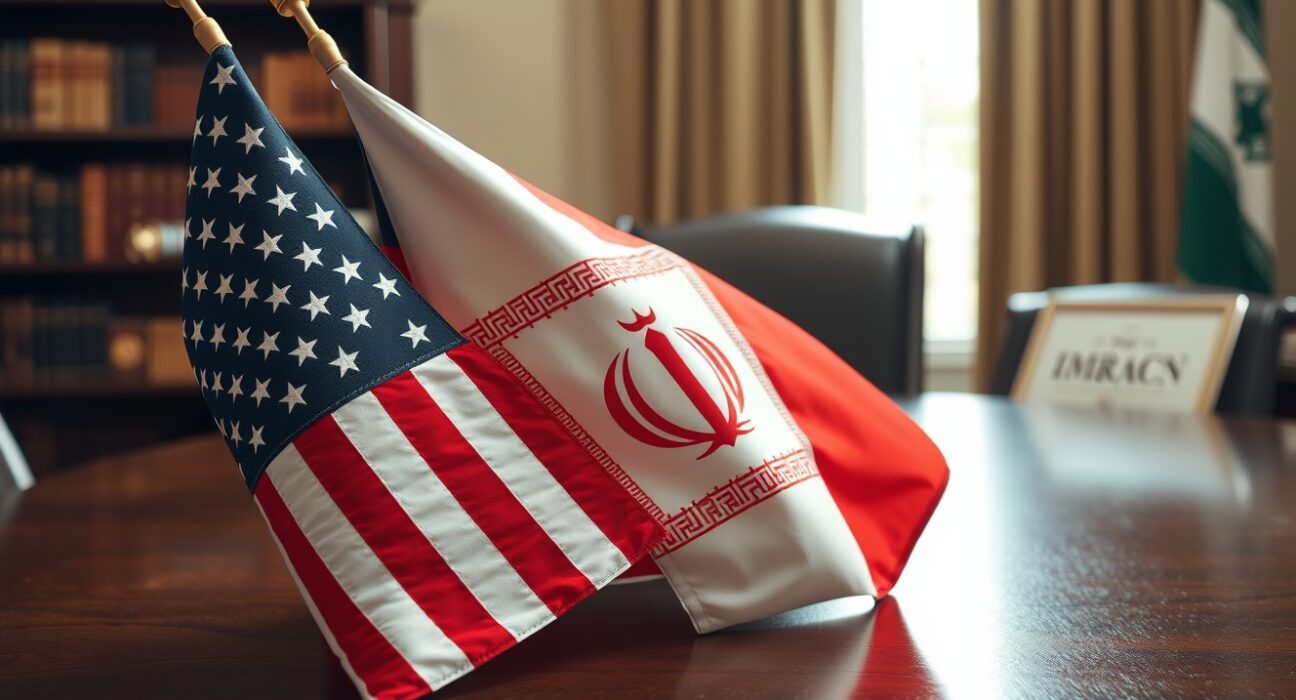
WASHINGTON, D.C. – In a significant statement that could reshape Middle Eastern geopolitics, President Donald Trump declared the war with Iran is already over. This pivotal announcement, made during a Fox News interview scheduled for broadcast, marks the latest development in a complex and often volatile relationship between the two nations. Consequently, analysts are now scrutinizing the practical and strategic implications of this declaration for global security and regional stability.
Trump’s Declaration on the Iran War
President Trump reiterated his position that hostilities with Iran have concluded. This statement follows a similar proclamation he made in mid-March. The Fox News interview, taped for later release, also covered his perspectives on NATO and economic matters. However, the declaration regarding Iran immediately captured global attention. Furthermore, this is not the first time the President has characterized the conflict as finished. Therefore, the repetition signals a deliberate diplomatic message to multiple audiences, both domestic and international.
The context of this announcement is crucial. It follows a period of heightened tensions, including the U.S. drone strike that killed Iranian General Qasem Soleimani in January 2020. That event brought the two countries to the brink of direct military confrontation. Subsequently, Iran launched missile strikes on Iraqi bases housing U.S. troops. Since then, a tense stalemate has persisted, punctuated by diplomatic maneuvers and regional proxy engagements.
Historical Context of U.S.-Iran Relations
Understanding Trump’s statement requires examining the decades-long friction. Relations have been strained since the 1979 Iranian Revolution and the subsequent hostage crisis. The 2015 Joint Comprehensive Plan of Action (JCPOA), commonly known as the Iran nuclear deal, represented a major diplomatic thaw. However, the Trump administration withdrew from the agreement in 2018, reinstating severe economic sanctions. This policy shift, termed “maximum pressure,” aimed to curb Iran’s nuclear program and regional influence.
The following timeline outlines key recent events:
- May 2018: U.S. withdraws from JCPOA; sanctions reimposed.
- April 2019: U.S. designates Iran’s Islamic Revolutionary Guard Corps as a terrorist organization.
- June 2019: Iran shoots down a U.S. surveillance drone.
- January 2020: U.S. drone strike kills General Soleimani.
- January 2020: Iran retaliates with missile strikes on Ain al-Asad base.
March 2020: Trump first states the war is “over.”
This history shows a pattern of escalation and de-escalation. The President’s latest comments fit into a broader strategy of managing conflict without large-scale military deployment.
Expert Analysis on the Declaration’s Meaning
Foreign policy experts offer varied interpretations. Some analysts view the statement as a political signal to reduce immediate tensions. Others see it as an effort to reframe the narrative ahead of elections. Dr. Elena Rodriguez, a senior fellow at the Center for Strategic Studies, notes, “Declaring a war ‘over’ is a political and diplomatic tool. It does not necessarily reflect on-the-ground realities but can create new facts for negotiation.” She emphasizes that regional proxy conflicts continue in Yemen, Syria, and Iraq.
Military analysts point to the continued U.S. presence in the region. Naval deployments in the Persian Gulf and troops in Syria and Iraq remain. Therefore, the strategic posture suggests deterrence, not disengagement. The declaration may instead indicate a shift from overt threats to other forms of pressure, primarily economic and diplomatic.
Regional and Global Implications
The announcement carries weight for Middle Eastern allies and adversaries. Key regional players include:
- Israel: Has consistently advocated for a hardline stance against Iran.
- Saudi Arabia: Views Iran as its primary regional rival.
- Iraq: Caught geographically and politically between the two powers.
For these nations, a perceived U.S. de-escalation could prompt strategic recalculations. They might seek greater assurances or pursue independent security measures. Globally, European signatories to the JCPOA have struggled to salvage the deal. This U.S. statement could open new diplomatic channels or further complicate existing efforts.
Economically, the “maximum pressure” campaign has severely impacted Iran’s economy. However, it has not led to the policy changes the administration desired. The table below summarizes the core contrasts between the administration’s stated goals and observable outcomes:
| Stated Goal | Observed Outcome |
|---|---|
| Negotiate a new, stronger nuclear deal | Iran expanded uranium enrichment beyond JCPOA limits |
| Limit Iran’s ballistic missile program | Iran continued missile development and testing |
| Reduce Iran’s regional proxy influence | Proxy activities continued, albeit with resource constraints |
This disconnect highlights the challenge of translating declaratory policy into tangible results.
Domestic Political Reactions
Within the United States, reactions split along partisan lines. Supporters of the administration welcome the move as a step toward avoiding another protracted war. Critics argue the statement is premature and ignores ongoing threats. Congressional leaders have called for briefings to understand the policy shift’s full scope. Additionally, the declaration intersects with broader debates about congressional war powers and the Authorization for Use of Military Force (AUMF).
Conclusion
President Trump’s declaration that the war with Iran is over represents a significant moment in U.S. foreign policy. While the statement may seek to lower immediate tensions, the underlying geopolitical competition persists. The complex history, continued proxy conflicts, and regional dynamics suggest that managing the relationship with Iran will remain a long-term challenge. Ultimately, the practical meaning of “over” will be determined by subsequent actions from both Washington and Tehran, not by words alone. The world now watches to see if this pronouncement leads to genuine diplomatic engagement or merely a new phase of strategic competition.
FAQs
Q1: What exactly did President Trump say about Iran?
In a Fox News interview, President Trump stated that the war with Iran is already over. This repeats a similar declaration he made in March 2020.
Q2: Does this mean all tensions between the U.S. and Iran are resolved?
No. Experts caution that the statement is a political declaration. Underlying issues like the nuclear program, sanctions, and regional proxy activities remain unresolved.
Q3: What was the immediate trigger for this latest announcement?
The statement was part of a broader interview. It appears to be a reaffirmation of the administration’s position rather than a response to a specific new event.
Q4: How have U.S. allies in the Middle East reacted?
Formal reactions are still emerging. Traditionally, allies like Israel and Saudi Arabia prefer a firm U.S. stance against Iran. They are likely seeking clarification on what this means for U.S. security commitments.
Q5: What is the status of the Iran nuclear deal (JCPOA)?
The U.S. withdrew from the deal in 2018. Iran has since incrementally breached its limits. European parties are trying to keep the agreement alive, but its future remains uncertain.
Disclaimer: The information provided is not trading advice, Bitcoinworld.co.in holds no liability for any investments made based on the information provided on this page. We strongly recommend independent research and/or consultation with a qualified professional before making any investment decisions.
