

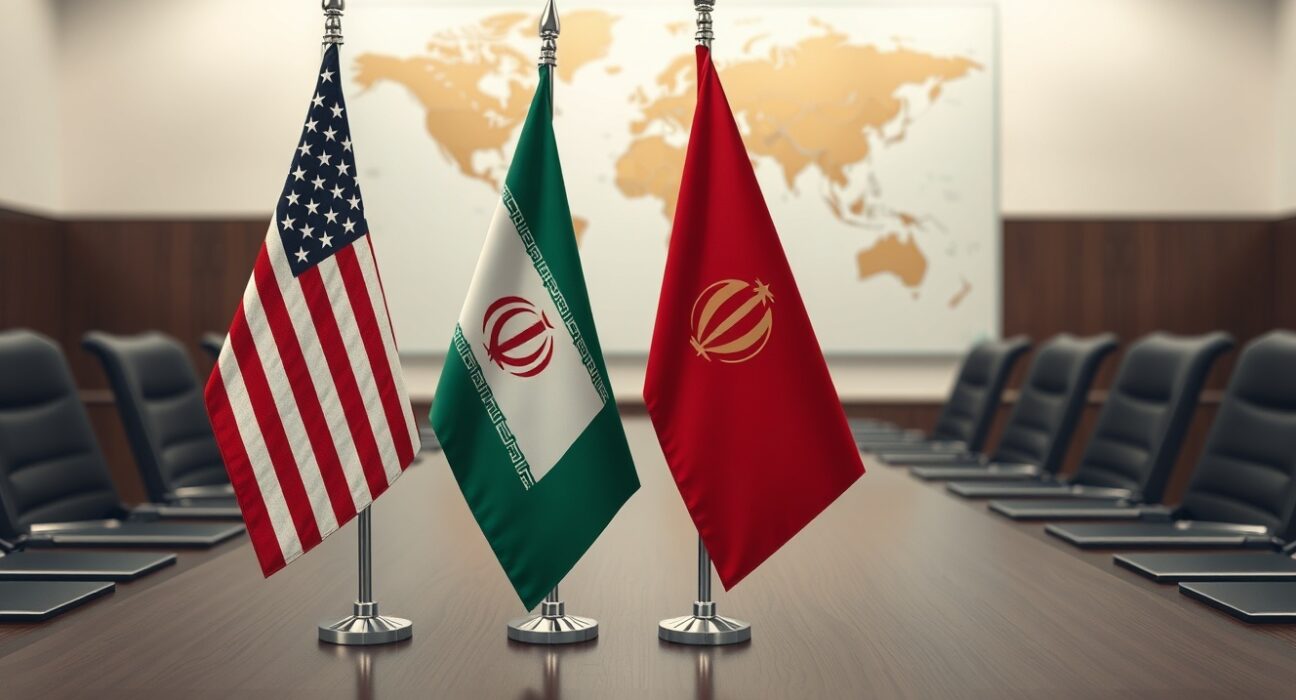
WASHINGTON, D.C. – In a significant diplomatic declaration, U.S. President Donald Trump stated that Iran has agreed not to possess nuclear weapons. This assertion, made during a press briefing, immediately reverberated through global diplomatic and security circles. Consequently, analysts are scrutinizing the context and potential implications of this statement for Middle Eastern stability and international non-proliferation efforts. The remark directly references the long-contested issue of Iran’s nuclear ambitions, a central point of geopolitical tension for over two decades.
Analyzing Trump’s Statement on Iran Nuclear Weapons
President Trump’s declaration requires careful examination within the framework of existing international agreements. Primarily, the Joint Comprehensive Plan of Action (JCPOA), negotiated in 2015, already placed stringent limits on Iran’s nuclear program. However, the United States, under Trump’s administration, unilaterally withdrew from that pact in 2018. Therefore, his recent statement raises immediate questions about its basis and intent. Is it a reaffirmation of Iran’s existing JCPOA commitments, a reference to a new understanding, or a rhetorical point? Furthermore, the Iranian government’s response will be critical for assessing the statement’s factual grounding.
Historical context is essential here. The International Atomic Energy Agency (IAEA) has consistently verified Iranian compliance with the nuclear-related provisions of the JCPOA since its implementation. Despite this verification, the U.S. withdrawal and subsequent “maximum pressure” campaign of sanctions created a major crisis. Subsequently, regional tensions escalated significantly. Experts from non-proliferation think tanks, like the Arms Control Association, often highlight this verification record. They argue it provides a factual baseline for any discussion about Iran’s nuclear activities.
The JCPOA Framework and Its Current Status
The 2015 nuclear deal, known formally as the JCPOA, established a clear and verifiable pathway. It aimed to ensure Iran’s nuclear program would remain exclusively peaceful. Key provisions of the agreement included:
- Uranium Enrichment Cap: Iran agreed to limit enrichment to 3.67% purity for 15 years.
- Stockpile Reduction: Iran’s stockpile of low-enriched uranium was reduced by 98% to 300 kg.
- Centrifuge Restrictions: The number of installed centrifuges was slashed by two-thirds.
- Enhanced Monitoring: The IAEA gained unprecedented access for verification and inspection.
These measures technically extended Iran’s potential “breakout time”—the time needed to produce enough fissile material for one weapon—from a few months to over a year. Since the U.S. withdrawal and re-imposition of sanctions, Iran has incrementally reduced its compliance with these limits. For instance, it has enriched uranium up to 60% purity and increased its stockpile. This table outlines the shift:
| Parameter | JCPOA Limit (2016-2021) | Reported Status (Post-2021) |
|---|---|---|
| Enrichment Level | 3.67% | Up to 60% |
| Stockpile (LEU) | 300 kg | Multiple tons |
| Advanced Centrifuges | Not installed | Installed and operating |
Thus, Trump’s statement intersects with a complex and deteriorating technical landscape. It directly addresses the core objective of the original deal: preventing a nuclear-armed Iran.
Expert Perspectives on Diplomatic Signaling
Non-proliferation specialists offer crucial insights into such high-level statements. Dr. Alexandra Bell, a former senior State Department official, explains that public declarations from heads of state carry significant weight. “They can serve as diplomatic signals,” she notes, “but their value depends entirely on subsequent, concrete actions and verifiable commitments from all parties.” Similarly, regional security analysts emphasize the importance of clarity. Ambiguity in such pronouncements can lead to misinterpretation, potentially increasing the risk of miscalculation. Therefore, the international community will likely seek immediate clarification from both U.S. and Iranian officials.
The regional impact is another critical dimension. Neighboring states, particularly Israel and Saudi Arabia, have historically viewed Iran’s nuclear program as an existential threat. Consequently, any U.S. statement regarding Iranian commitments will be analyzed intensely in Tel Aviv and Riyadh. Israeli officials have repeatedly stated they will not allow Iran to obtain a nuclear weapon. They consider military action a last resort option. Therefore, diplomatic assurances must be ironclad and verifiable to alter regional security calculations.
Historical Timeline of US-Iran Nuclear Diplomacy
Understanding the present requires a review of the past two decades. The path to Trump’s statement is paved with failed talks, interim deals, and one major agreement.
- 2002: Revelations about Iran’s clandestine nuclear facilities spark international crisis.
- 2006-2010: The UN Security Council imposes multiple sanctions resolutions.
- 2013: Interim Joint Plan of Action (JPOA) signed, freezing parts of Iran’s program.
- 2015: The JCPOA is finalized after years of intense multilateral negotiation.
- 2018: President Trump announces U.S. withdrawal from JCPOA.
- 2019-Present: Iran begins reducing compliance; tensions spike with incidents in the Gulf.
This timeline shows the cyclical nature of diplomacy and pressure. Each phase influences the next. Trump’s current statement could represent a potential inflection point, perhaps signaling a desire to re-engage on the issue outside the original JCPOA framework. However, without specific details, it remains a point of discussion rather than a policy blueprint.
Conclusion
President Donald Trump’s statement that Iran has agreed not to possess nuclear weapons is a pivotal moment in a long-standing geopolitical struggle. It directly engages with the central goal of non-proliferation efforts toward Iran. However, its practical meaning depends on several unresolved factors. These include the current status of Iran’s nuclear activities, the lack of a functioning agreement, and the need for robust verification. The international community will now watch for follow-up actions from both Washington and Tehran. Ultimately, the path to sustainable peace requires clear, verifiable, and mutually agreed commitments that enhance security for all nations in the region. The statement on Iran nuclear weapons is a significant data point, but the arduous work of diplomacy lies ahead.
FAQs
Q1: What did President Trump actually say about Iran and nuclear weapons?
President Trump stated, “Iran has agreed not to possess nuclear weapons.” This was a declarative sentence offered during a press interaction, without immediate elaboration on the context or terms of such an agreement.
Q2: How does this statement relate to the 2015 Iran nuclear deal (JCPOA)?
The JCPOA was designed to prevent Iran from developing nuclear weapons by imposing strict limits and inspections. The U.S. left that deal in 2018. Trump’s statement could be seen as affirming the JCPOA’s core goal but does not necessarily indicate a return to that specific agreement.
Q3: What has been Iran’s official response to this statement?
As of this analysis, there has been no immediate, direct official response from the Iranian government to this specific remark. Historically, Iranian officials have consistently stated their nuclear program is for peaceful purposes only.
Q4: Does Iran currently possess nuclear weapons?
No. According to the U.S. Intelligence Community and the International Atomic Energy Agency (IAEA), Iran is not known to currently possess nuclear weapons. The concern has always been about its latent capability and the potential to develop them.
Q5: What is the significance of a U.S. president making such a statement?
Presidential statements on foreign policy set the official U.S. position and can signal diplomatic intent. They influence global markets, ally perceptions, and adversary calculations. Such a clear declaration on a sensitive issue can shape the diplomatic landscape for future negotiations.
Disclaimer: The information provided is not trading advice, Bitcoinworld.co.in holds no liability for any investments made based on the information provided on this page. We strongly recommend independent research and/or consultation with a qualified professional before making any investment decisions.
