

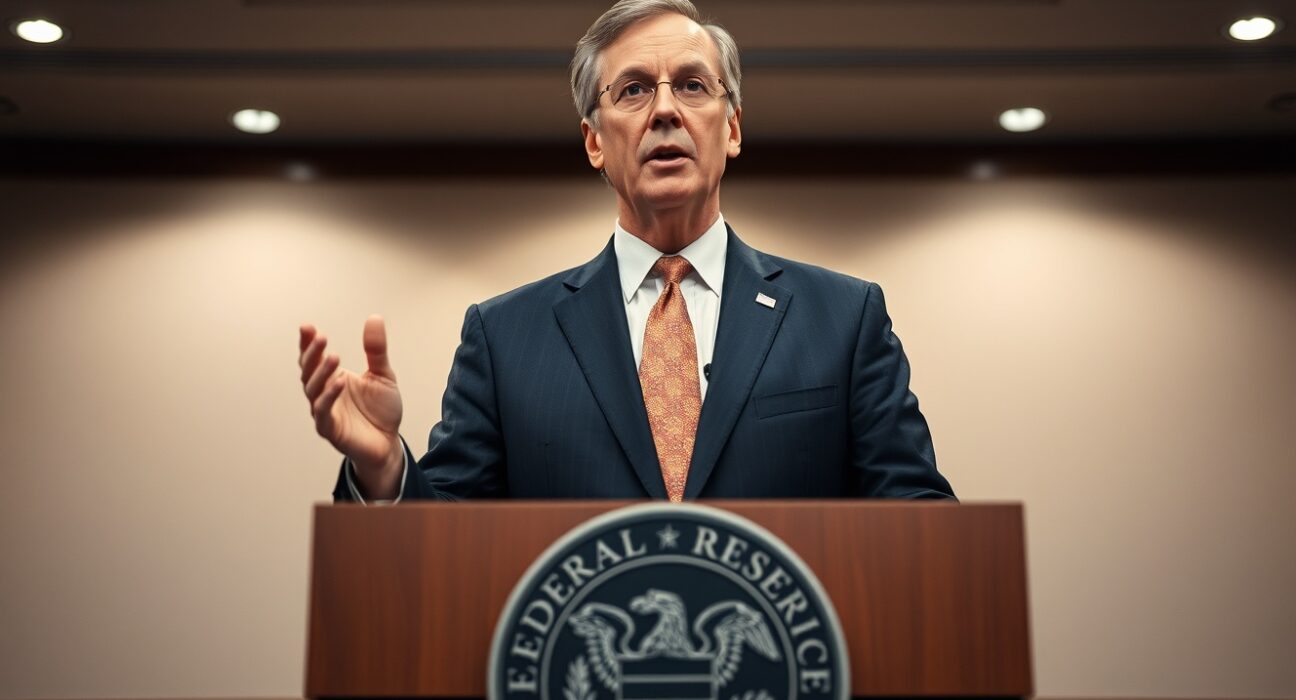
WASHINGTON, D.C. — Federal Reserve Governor Christopher Waller delivered a significant statement today regarding the U.S. dollar’s position in global finance. He expressed no concern about the currency losing its dominant reserve status. Furthermore, Waller emphasized that international trust in the dollar remains exceptionally strong. This declaration comes amid ongoing discussions about currency diversification worldwide.
U.S. Dollar Reserve Status Faces Scrutiny Amid Global Shifts
Governor Waller’s comments address growing speculation about potential challenges to dollar dominance. The Federal Reserve official made his remarks during a monetary policy conference at the Brookings Institution. He specifically noted that countries continue to rely heavily on the dollar for international trade and reserves. Consequently, this reliance provides substantial stability to the global financial system.
Historical context reveals the dollar has maintained its reserve status since the Bretton Woods agreement in 1944. Currently, approximately 60% of global foreign exchange reserves remain denominated in U.S. dollars. Additionally, nearly 90% of international transactions use the dollar as the primary settlement currency. These statistics demonstrate the currency’s entrenched position in world markets.
Several factors contribute to this sustained dominance. First, the United States maintains the world’s largest and most liquid financial markets. Second, the country’s legal system provides strong protection for property rights. Third, the Federal Reserve’s independence ensures monetary policy credibility. Finally, the dollar’s convertibility remains unrestricted for international transactions.
Global Trust in Dollar Stability Remains Paramount
Governor Waller highlighted that international confidence forms the foundation of reserve currency status. He specifically mentioned that no viable alternative currently exists to challenge the dollar’s position. Moreover, recent geopolitical developments have actually reinforced the dollar’s safe-haven status during periods of uncertainty.
The table below illustrates key indicators of dollar dominance:
| Indicator | Percentage | Trend |
|---|---|---|
| Global FX Reserves | 58.4% | Stable |
| International Trade Invoicing | 88.5% | Gradual Decline |
| SWIFT Payments | 46.6% | Moderate Decline |
| Foreign Debt Issuance | 62.3%</n | Increasing |
Recent data from the International Monetary Fund supports Waller’s assessment. The IMF’s Currency Composition of Official Foreign Exchange Reserves report shows minimal erosion in dollar holdings. Meanwhile, the euro maintains approximately 20% of global reserves. The Chinese yuan represents less than 3% despite China’s economic growth.
Expert Analysis of Reserve Currency Dynamics
Economists generally agree that reserve currency transitions occur gradually over decades. Historically, the British pound sterling dominated global finance for nearly a century before the dollar’s ascent. Currently, no single currency possesses all the necessary attributes to replace the dollar immediately.
Key requirements for reserve currency status include:
- Deep financial markets with high liquidity
- Political stability and predictable institutions
- Open capital accounts allowing free movement
- Rule of law protecting foreign investors
- Large economy supporting global trade
Monetary policy credibility represents another critical factor. The Federal Reserve has maintained relatively stable inflation compared to other major central banks. This stability enhances the dollar’s attractiveness as a store of value. Furthermore, the Fed’s transparency in policy decisions builds international confidence.
Geopolitical Factors Reinforce Dollar Position
Recent global tensions have unexpectedly strengthened the dollar’s international role. During the 2022-2023 period, the dollar appreciated significantly against most major currencies. This appreciation occurred despite Federal Reserve interest rate increases that typically pressure emerging markets.
Several developments have contributed to this paradoxical strength. First, the dollar’s status as a safe-haven currency attracts capital during crises. Second, the United States remains relatively insulated from regional conflicts. Third, alternative currencies face their own structural challenges. The eurozone continues grappling with fiscal integration issues. China maintains capital controls that limit the yuan’s international use.
International payment systems also reinforce dollar dominance. The SWIFT messaging network facilitates most cross-border dollar transactions. While alternative systems exist, they lack the dollar system’s scale and efficiency. Additionally, the Federal Reserve’s Fedwire system processes trillions in daily settlements.
Central Bank Perspectives on Currency Diversification
Some central banks have modestly diversified their reserve holdings in recent years. However, this diversification represents risk management rather than dollar abandonment. Most institutions maintain dollar allocations well above 50% of their total reserves. The Bank for International Settlements reports that dollar liquidity remains essential for global banking operations.
Emerging market central banks face particular challenges in reducing dollar exposure. Their economies often depend on dollar-denominated trade and debt. Consequently, maintaining adequate dollar reserves provides crucial stability during capital outflows. The 1997 Asian financial crisis demonstrated the dangers of insufficient dollar reserves.
Recent initiatives like digital currencies have sparked discussion about potential disruption. However, most experts believe central bank digital currencies will complement rather than replace existing systems. The Federal Reserve’s exploration of a digital dollar focuses on maintaining the currency’s international role.
Economic Fundamentals Support Continued Dominance
The United States maintains several structural advantages that support dollar supremacy. The country’s demographic trends remain more favorable than other developed economies. Additionally, American innovation and productivity growth continue outpacing many competitors. These factors contribute to stronger long-term economic prospects.
Energy independence represents another significant advantage. The United States has become a net energy exporter in recent years. This shift reduces vulnerability to oil price shocks that previously pressured the dollar. Furthermore, American energy exports increasingly settle in dollars, reinforcing the currency’s trade role.
Technological leadership in finance also supports dollar dominance. American companies dominate global financial technology and infrastructure. This dominance creates network effects that strengthen the dollar’s position. Meanwhile, dollar-based payment systems continue evolving to meet changing needs.
Market Reactions and Future Implications
Financial markets have generally responded positively to Waller’s comments. The dollar index showed minimal movement following his remarks. This stability suggests investors already shared his assessment of dollar resilience. Bond markets also remained calm, indicating confidence in Federal Reserve policy.
Looking forward, several factors could influence the dollar’s trajectory. Federal Reserve monetary policy decisions will remain crucial. Additionally, fiscal policy developments may impact international confidence. Geopolitical relationships will continue affecting currency dynamics. Finally, technological innovations could gradually reshape global finance.
Most analysts predict incremental changes rather than sudden shifts. The dollar’s share of global reserves may decline gradually over decades. However, most projections show the dollar remaining the dominant reserve currency through 2040. No single alternative appears positioned to achieve parity in the foreseeable future.
Conclusion
Federal Reserve Governor Christopher Waller’s confidence in the U.S. dollar reserve status reflects strong fundamentals. The currency benefits from deep markets, institutional stability, and global trust. While diversification occurs gradually, the dollar maintains overwhelming dominance in international finance. Consequently, concerns about imminent displacement appear premature according to current evidence. The dollar’s position seems secure for the foreseeable future, supported by economic realities rather than mere tradition.
FAQs
Q1: What percentage of global reserves does the U.S. dollar currently hold?
The dollar represents approximately 58.4% of global foreign exchange reserves according to IMF data. This percentage has declined modestly from over 70% in 2000 but remains dominant.
Q2: What are the main challenges to dollar dominance mentioned by experts?
Experts cite potential challenges including fiscal sustainability concerns, geopolitical tensions, digital currency innovations, and the rise of alternative trading blocs. However, most believe these factors will cause gradual rather than sudden changes.
Q3: How does the Federal Reserve’s monetary policy affect the dollar’s reserve status?
The Fed’s policies influence dollar stability and inflation expectations. Consistent, transparent policies enhance the currency’s credibility as a store of value, while unpredictable policies could undermine confidence over time.
Q4: What role does the petrodollar system play in maintaining dollar dominance?
The petrodollar system, where oil trades in dollars, creates constant global demand for the currency. While some oil transactions now occur in other currencies, the vast majority still settle in dollars, reinforcing its international role.
Q5: How do digital currencies and cryptocurrencies affect the dollar’s position?
Currently, digital assets represent a small fraction of global transactions. Central bank digital currencies may eventually influence currency dynamics, but most experts believe they will operate within existing frameworks rather than replacing reserve currencies.
Disclaimer: The information provided is not trading advice, Bitcoinworld.co.in holds no liability for any investments made based on the information provided on this page. We strongly recommend independent research and/or consultation with a qualified professional before making any investment decisions.
