

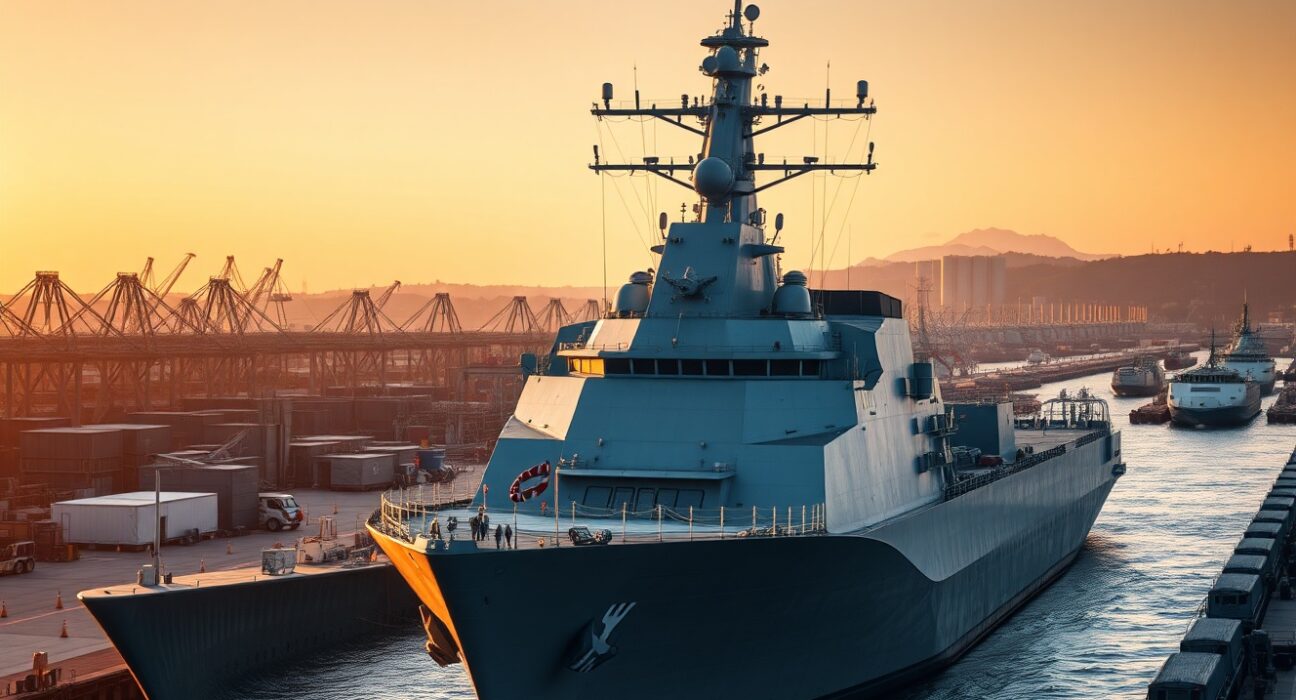
TOKYO, Japan – March 2025: Japan’s financial system demonstrates remarkable stability while the nation undergoes a historic transformation in defense export policy, according to comprehensive analysis from BNY Mellon. This dual development represents a significant geopolitical and economic realignment with far-reaching implications for regional security and global defense markets. The shift follows decades of restrictive arms export policies that limited Japan’s defense industry primarily to domestic procurement.
Japan’s Defense Export Policy Transformation
Japan recently revised its Three Principles on Transfer of Defense Equipment and Technology, marking a fundamental policy reversal. Consequently, the nation now actively promotes defense exports as part of its national security strategy. This strategic pivot responds directly to evolving regional security dynamics and represents a calculated economic opportunity. Furthermore, Japan’s advanced technological capabilities in areas like missile defense, submarines, and surveillance systems position the nation as a competitive player in specific defense market segments.
The policy changes enable several key developments:
- Partnership expansion with allied nations through joint development projects
- Technology transfer agreements that leverage Japanese innovation in sensors and materials
- Strategic exports of specific defense equipment to carefully selected partners
- Industrial base strengthening through increased production scale and R&D investment
Financial Stability as Strategic Foundation
BNY’s analysis identifies Japan’s stable financial system as the crucial foundation enabling this defense policy shift. The nation maintains robust banking sector capital ratios, moderate inflation levels, and sustainable public debt management despite global economic uncertainties. Additionally, Japan’s corporate sector demonstrates strong balance sheets with significant cash reserves available for strategic investments. This financial resilience provides the necessary stability for long-term defense industry planning and capital-intensive projects.
Several financial indicators support this assessment:
| Indicator | Current Status | Regional Comparison |
|---|---|---|
| Banking Sector Capital Ratio | 15.2% | Above regional average |
| Corporate Cash Reserves | ¥320 trillion | Highest among developed economies |
| Government Bond Stability | Yield under 1% | Most stable in Asia |
| Defense Budget Growth | Annual 8-10% | Fastest among G7 nations |
Expert Analysis on Economic Implications
Financial analysts note that Japan’s defense export shift could generate significant economic benefits beyond direct sales. The defense industry typically produces high-value manufacturing jobs and stimulates technological innovation with civilian applications. Moreover, increased defense production could help address Japan’s persistent trade balance challenges by creating new export categories. However, experts caution that success depends on competitive pricing, reliable delivery schedules, and effective after-sales support – areas where Japanese manufacturers must prove themselves against established global competitors.
Regional Security Dynamics and Strategic Positioning
Japan’s policy changes occur within a complex regional security environment characterized by increasing military modernization across Asia. The nation’s defense exports primarily target partners sharing similar security concerns and strategic interests. Accordingly, initial export discussions focus on Southeast Asian nations seeking maritime security capabilities and Middle Eastern partners interested in missile defense systems. This selective approach minimizes geopolitical friction while maximizing strategic alignment with Japan’s foreign policy objectives.
The regional impact manifests in several observable trends:
- Technology partnerships replacing simple buyer-seller relationships
- Interoperability emphasis with existing U.S. and allied systems
- Quality differentiation rather than price competition with other exporters
- Strategic restraint in export destinations to maintain regional stability
Defense Industry Restructuring and Global Integration
Japanese defense contractors undergo significant restructuring to compete effectively in international markets. Major firms like Mitsubishi Heavy Industries, Kawasaki Heavy Industries, and Mitsubishi Electric Corporation establish dedicated international defense divisions with separate management structures. These organizational changes facilitate faster decision-making and more responsive customer engagement. Simultaneously, Japanese companies pursue strategic partnerships with European and American defense giants to access established distribution networks and gain market intelligence.
Implementation Challenges and Risk Management
Despite favorable conditions, Japan’s defense export expansion faces substantial implementation challenges. The nation must develop comprehensive export control systems to prevent technology diversion while navigating complex international regulations. Additionally, Japanese manufacturers accustomed to domestic procurement cycles must adapt to different customer expectations and competitive bidding processes. Risk management extends to geopolitical considerations, as defense exports inevitably influence diplomatic relationships and regional power balances.
Long-Term Strategic Implications and Future Projections
BNY’s analysis projects that Japan’s defense exports could reach $10-15 billion annually within five years, representing approximately 15-20% of current domestic defense spending. This additional revenue stream would significantly enhance defense industry sustainability and research funding. Furthermore, successful defense exports could strengthen Japan’s strategic partnerships through shared security capabilities and deeper technological cooperation. The nation’s approach emphasizes quality, reliability, and technological sophistication rather than competing primarily on price or volume.
Future developments will likely include:
- Niche specialization in specific high-technology defense sectors
- Increased collaboration with allied defense industries on next-generation systems
- Gradual expansion of export categories as experience accumulates
- Continuous balancing between commercial opportunities and strategic restraint
Conclusion
Japan’s simultaneous maintenance of financial stability and pursuit of defense export opportunities represents a sophisticated dual-track strategy with significant implications. The nation leverages its economic resilience to support strategic industrial transformation while carefully managing associated risks. This Japan defense export shift, supported by BNY’s financial analysis, reflects broader trends in geopolitical realignment and economic statecraft. As implementation progresses, the world will closely watch how Japan balances commercial ambitions with strategic responsibilities in an increasingly complex security environment.
FAQs
Q1: What prompted Japan to change its defense export policies?
Japan revised its policies in response to evolving regional security challenges, opportunities to strengthen alliances through defense cooperation, and economic considerations regarding defense industry sustainability. The changes align with broader national security strategy updates.
Q2: How does financial stability support Japan’s defense export ambitions?
Financial stability provides the economic foundation for long-term defense industry investments, enables patient capital allocation for market development, and maintains investor confidence during the transition period. Stable financial conditions also support the yen’s reliability for international defense contracts.
Q3: Which defense sectors show the strongest export potential for Japan?
Maritime security systems, missile defense technology, submarine components, surveillance and reconnaissance equipment, and advanced materials represent Japan’s most competitive defense sectors with strong export potential based on technological advantages.
Q4: How does Japan’s approach differ from other defense exporters?
Japan emphasizes technology quality and reliability over price competition, focuses on strategic partnerships rather than purely commercial relationships, exercises greater restraint in export destinations, and integrates exports within broader security cooperation frameworks.
Q5: What are the main challenges facing Japan’s defense export expansion?
Key challenges include adapting to international competitive bidding processes, developing comprehensive export control systems, managing geopolitical sensitivities, establishing effective after-sales support networks, and competing against established defense exporters with longer market experience.
Disclaimer: The information provided is not trading advice, Bitcoinworld.co.in holds no liability for any investments made based on the information provided on this page. We strongly recommend independent research and/or consultation with a qualified professional before making any investment decisions.
