

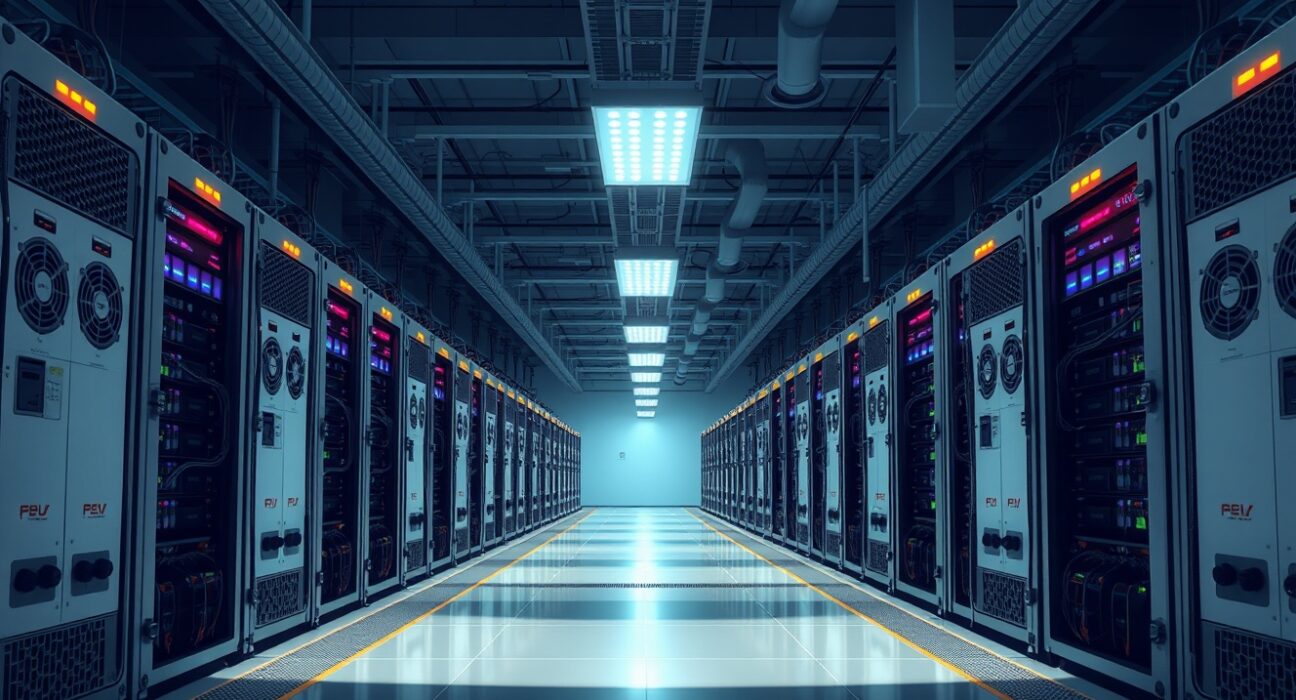
In a significant move for North American cryptocurrency infrastructure, Bitcoin mining firm American Bitcoin (ABTC) announced on March 21, 2025, that it has successfully brought 11,298 of its latest-generation ASIC miners online. This strategic deployment increases the company’s total operational hashrate to 28.1 exahashes per second (EH/s), representing an approximate 12% boost to its overall mining capacity. The expansion underscores a continued trend of institutional investment and technological scaling within the competitive Bitcoin mining sector.
American Bitcoin’s Major Capacity Expansion
The newly activated miners represent a substantial capital investment for American Bitcoin. Consequently, the company’s total computational power now stands at 28.1 EH/s. For context, one exahash equals one quintillion hashes per second. This metric measures the processing power dedicated to securing the Bitcoin network and discovering new blocks. Therefore, this increase solidifies ABTC’s position among mid-to-large-tier public mining companies in the United States. The deployment likely involves the latest ASIC models from manufacturers like Bitmain or MicroBT. These newer machines offer superior energy efficiency measured in joules per terahash. As a result, they can improve the company’s operational margins, especially when electricity costs fluctuate.
Mining analysts often track such expansions as indicators of industry health and confidence. A 12% capacity increase in a single phase is noteworthy. It suggests robust financing and strategic planning. Furthermore, it demonstrates a commitment to maintaining competitive infrastructure. The timing of such deployments is also critical. Companies typically aim to activate hardware before Bitcoin’s periodic difficulty adjustments. This ensures they can maximize potential block rewards. American Bitcoin’s announcement did not specify the exact miner models or the geographic location of the new deployment. However, the firm has historically operated facilities in energy-abundant regions.
Understanding the Hashrate and Mining Landscape
Bitcoin’s global network hashrate is a key security metric. It represents the total combined computational power of all miners worldwide. Currently, the network hashrate exceeds 600 EH/s. Therefore, American Bitcoin’s 28.1 EH/s contributes roughly 4.7% to the global total. This share provides meaningful influence over network security. The company’s expansion also reflects broader industry trends. After the 2022 market downturn, publicly traded miners have focused on efficiency and scale. They are upgrading older, less efficient hardware. This process, known as fleet modernization, reduces energy consumption per unit of hashrate.
The following table illustrates the scale of this deployment relative to common benchmarks:
| Metric | Figure | Context |
|---|---|---|
| New Miners Activated | 11,298 units | Equivalent to a large-scale data center |
| Added Hashrate | ~3.0 EH/s (estimated) | Roughly 0.5% of global network |
| Total ABTC Hashrate | 28.1 EH/s | Positions firm as a top 15 public miner |
| Capacity Increase | ~12% | Significant single-phase growth |
Moreover, the choice of ASIC technology is paramount. Application-Specific Integrated Circuits are hardware designed solely for Bitcoin’s SHA-256 algorithm. Their efficiency directly impacts profitability. Key factors include:
- Energy Efficiency: Measured in joules per terahash (J/TH). Newer models often operate below 20 J/TH.
- Hashrate Output: Each unit’s speed, measured in terahashes per second (TH/s).
- Operational Longevity: The expected useful life before becoming obsolete.
Strategic Implications for the Mining Sector
This expansion carries several implications for the industry. First, it signals continued capital expenditure in the sector. Investors are funding growth despite Bitcoin’s price volatility. Second, it increases the proportion of hashrate located in the United States. This geographic concentration has been a trend since China’s 2021 mining ban. North America now hosts a significant share of global hashrate. This shift brings regulatory scrutiny but also potential for more stable operations.
Third, larger, more efficient operations can exert downward pressure on mining difficulty. When many companies upgrade simultaneously, the network difficulty rises. This can squeeze out smaller miners with less efficient hardware. Consequently, the industry may continue its trend toward consolidation. American Bitcoin’s move aligns with this pattern. The company is scaling up to benefit from economies of scale. These include negotiated energy rates and bulk hardware purchases.
Finally, such expansions require massive amounts of electricity. Responsible miners increasingly seek renewable or stranded energy sources. This mitigates environmental concerns and can lower costs. American Bitcoin has previously highlighted its commitment to sustainable energy mixes. Its new deployment likely considers these factors to ensure long-term viability and positive public relations.
Economic and Network Security Impacts
The activation of over 11,000 new miners directly impacts Bitcoin’s economic and security model. Each miner competes to solve complex mathematical problems. The first to succeed validates a new block of transactions. This miner earns the block reward, currently 3.125 BTC plus transaction fees. By adding hashrate, American Bitcoin increases its probability of winning these rewards. However, it also contributes to the overall security of the Bitcoin network. A higher hashrate makes it exponentially more difficult for any bad actor to launch a 51% attack. This attack would require controlling most of the network’s computational power.
From a market perspective, large-scale deployments affect Bitcoin’s supply dynamics. Miners are constant sellers of Bitcoin to cover operational costs like electricity and hardware financing. A company increasing its capacity by 12% will correspondingly increase its Bitcoin production, assuming all else is equal. This new supply enters the market regularly. While individual miner sales are a small fraction of daily trading volume, aggregated selling pressure from all miners is a fundamental market factor. Analysts monitor these expansions to model future supply flows.
The expansion also represents a substantial fixed-cost investment. Mining hardware has a high upfront cost and a relatively short technological lifespan. Therefore, American Bitcoin’s decision reflects a multi-year bullish outlook on Bitcoin’s price and network activity. The company expects future revenue from block rewards and fees to exceed the capital and operational expenses of this new hardware. This calculation depends on assumptions about Bitcoin’s price, network difficulty, and energy costs. Such investments are inherently strategic bets on the long-term value of the Bitcoin network.
Conclusion
American Bitcoin’s activation of 11,298 new ASIC miners marks a significant step in the ongoing industrial scaling of Bitcoin mining. By boosting its hashrate to 28.1 EH/s and increasing capacity by 12%, the firm strengthens its competitive position within the North American mining landscape. This move highlights key industry trends, including fleet modernization, a focus on energy efficiency, and strategic capital deployment. Ultimately, such expansions contribute directly to the security and decentralization of the Bitcoin network while reflecting institutional confidence in its long-term infrastructure. The continued growth of professionally managed mining operations like American Bitcoin plays a crucial role in the maturation and stability of the broader cryptocurrency ecosystem.
FAQs
Q1: What is hashrate, and why is 28.1 EH/s significant?
Hashrate measures the total computational power dedicated to mining Bitcoin. 28.1 EH/s means American Bitcoin’s machines can perform 28.1 quintillion hash calculations per second. This is significant as it represents a major share of the network’s security and positions ABTC as a top-tier public mining company.
Q2: How much Bitcoin can these new miners potentially produce?
Exact production depends on network difficulty and luck. However, based on its share of the global hashrate (~4.7%), American Bitcoin could theoretically earn a proportional share of the 900 BTC mined daily, equating to roughly 42 BTC per day across its entire fleet. The new miners contribute directly to this potential output.
Q3: What are ASIC miners, and why are they used?
ASIC (Application-Specific Integrated Circuit) miners are specialized hardware designed solely for the SHA-256 algorithm used by Bitcoin. They are used because they are vastly more energy-efficient and powerful at this specific task than general-purpose computers or older GPU miners, making them the only economically viable option for large-scale operations.
Q4: Where does American Bitcoin operate its mining facilities?
While the specific location of this new deployment was not disclosed, American Bitcoin, like many U.S. miners, typically operates in regions with abundant, low-cost energy. This often includes states like Texas, Washington, New York, and Georgia, which offer favorable power contracts and, increasingly, access to renewable energy sources.
Q5: How does this expansion affect the Bitcoin network’s energy consumption?
The impact depends on the energy source and efficiency of the new miners. If they are the latest, most efficient models and are powered by a sustainable energy mix, the expansion could have a relatively minor impact on overall network consumption per unit of security added. The industry trend is toward using more efficient hardware and greener energy.
Disclaimer: The information provided is not trading advice, Bitcoinworld.co.in holds no liability for any investments made based on the information provided on this page. We strongly recommend independent research and/or consultation with a qualified professional before making any investment decisions.
