

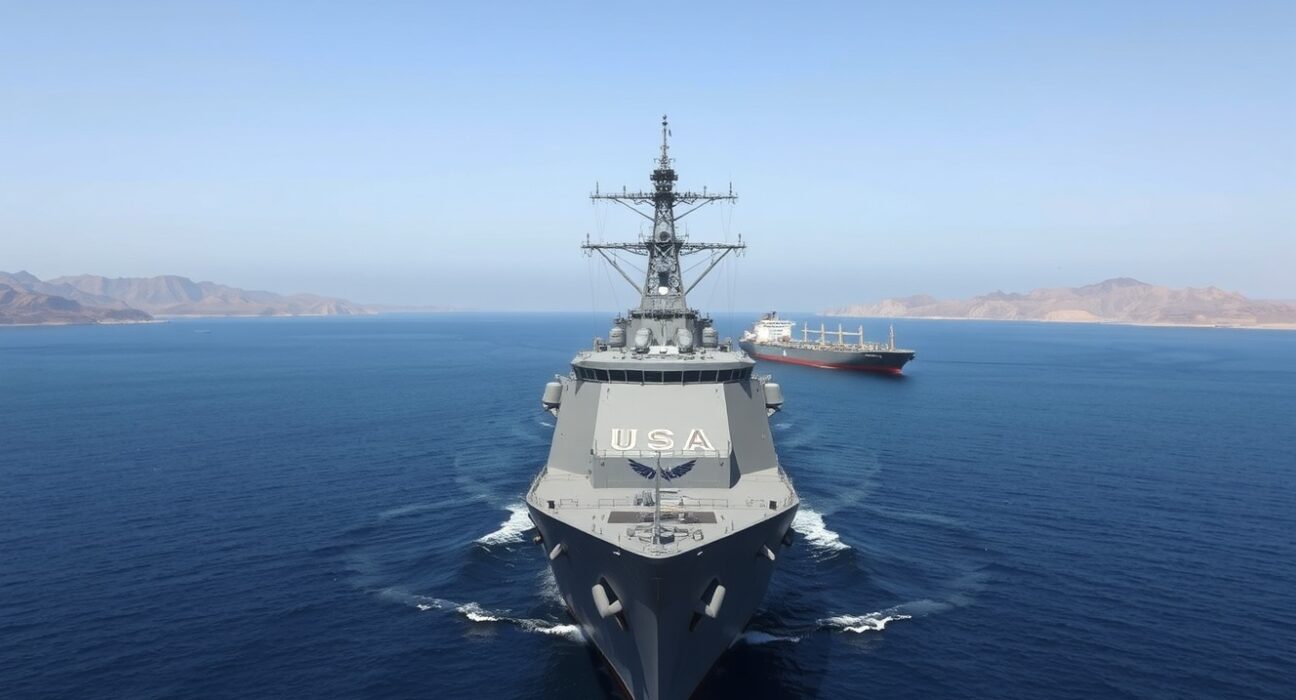
Global energy markets face a severe test as West Texas Intermediate (WTI) crude oil futures surge toward the $93.00 per barrel threshold. This significant price movement, recorded in early 2025, stems directly from escalating supply concerns following reports of a maritime blockade affecting the Strait of Hormuz, a vital artery for global oil shipments.
WTI Price Surge Reflects Immediate Market Anxiety
The benchmark WTI crude oil contract for March delivery climbed sharply in electronic trading. Consequently, prices approached levels not sustained since the previous year. Market analysts immediately linked the rally to breaking news from the Persian Gulf. Specifically, commercial shipping traffic through the Strait of Hormuz has reportedly faced significant disruption. This chokepoint handles roughly 21 million barrels of oil daily. Therefore, any impediment triggers instant volatility.
Furthermore, trading volumes for WTI futures spiked significantly above their 30-day average. This activity indicates heightened participation from both speculative funds and commercial hedgers. The price action demonstrates a classic risk premium being priced into the market. Traders are assessing the potential duration and severity of the supply interruption.
Anatomy of the Strait of Hormuz Blockade
The Strait of Hormuz connects the Persian Gulf with the Gulf of Oman and the Arabian Sea. It is the world’s most important oil transit lane. Notably, major producers like Saudi Arabia, Iraq, the United Arab Emirates, and Kuwait rely on this passage. A blockade, whether military, political, or accidental, creates an immediate physical shortage for buyers.
Initial reports suggest a multi-faceted disruption involving heightened military patrols and contested maritime claims. While details remain fluid, the market’s reaction is unequivocal. The disruption’s core impact lies in its effect on tanker traffic schedules and insurance premiums. Shipping costs for routes originating in the Gulf have already increased.
- Transit Volume: Approximately 21 million barrels per day (bpd), or one-fifth of global consumption.
- Key Exporters Affected: Saudi Arabia, Iraq, UAE, Kuwait, Qatar, Iran.
- Primary Destinations: Asian markets (China, India, Japan, South Korea).
- Alternative Routes: Extremely limited, with major pipeline capacity already utilized.
Expert Analysis on Market Mechanics
Energy strategists point to the fragility of global oil inventories. Global stockpiles have trended lower for several quarters, leaving little buffer for supply shocks. “The market was already balanced on a knife’s edge,” noted a senior analyst from a leading commodities research firm. “Strategic petroleum reserves in consuming nations are below their five-year average. Consequently, this geographic disruption hits a system with reduced flexibility.”
This tight fundamental backdrop amplifies the price impact of the Hormuz news. Historically, similar events have caused price spikes of 10-20% within days. The current WTI move aligns with that pattern. Analysts are now scrutinizing vessel tracking data and official statements from regional governments.
Broader Impacts on Global Energy Flows
The implications extend far beyond the WTI price quote on a screen. A sustained blockage would force a rapid realignment of global oil trade. European refiners, for instance, would compete more aggressively for Atlantic Basin crude from the US, West Africa, and the North Sea. This competition would lift prices for other benchmarks like Brent crude as well.
Asian economies, being the largest buyers of Gulf oil, face direct inflationary pressure. Higher crude costs translate quickly into more expensive gasoline, diesel, and petrochemicals. Central banks monitoring inflation must now consider this new geopolitical risk factor.
| Benchmark | Primary Source Region | Typical Price Reaction |
|---|---|---|
| WTI (Cushing) | U.S. Midcontinent | High (via arbitrage & futures) |
| Brent (North Sea) | Atlantic Basin | Very High (direct physical link) |
| Dubai/Oman | Middle East | Extreme (local benchmark) |
Historical Context and Risk Premiums
The Strait of Hormuz has been a flashpoint for decades. Past incidents, including tanker attacks and seizures, have caused temporary price spikes. However, a full-scale blockade represents a more severe scenario. The market is now calculating a new, higher geopolitical risk premium. This premium is the additional cost buyers will pay for the foreseeable uncertainty.
Energy security discussions will intensify in capitals worldwide. The event underscores the vulnerability of just-in-time global supply chains. Moreover, it may accelerate investment in energy alternatives and infrastructure diversification. For example, new pipeline projects bypassing the Strait could receive renewed political and financial support.
Conclusion
The rapid ascent of WTI crude oil toward $93.00 per barrel serves as a stark reminder of the global economy’s dependence on stable energy corridors. The developing situation in the Strait of Hormuz has injected a potent dose of uncertainty into markets. While the immediate price reaction captures headlines, the longer-term consequences for trade flows, inflation, and energy policy will unfold in the coming weeks. Market participants and policymakers alike will monitor the resolution of this blockade closely, as its duration will ultimately determine the scale of the impact on global WTI crude oil prices and economic stability.
FAQs
Q1: What is the Strait of Hormuz, and why is it important for oil?
The Strait of Hormuz is a narrow maritime passage between Oman and Iran. It is the world’s most critical oil transit chokepoint, with about 21 million barrels of crude oil and petroleum products passing through daily from major Middle Eastern producers to global markets.
Q2: How does a blockade there affect WTI crude oil prices in the United States?
WTI is a globally traded benchmark. A blockade disrupts global supply, tightening the overall market. This forces buyers worldwide to seek alternative sources, including US crude exports, increasing demand and competition for WTI-linked barrels and driving up its price.
Q3: Are there alternative routes for Middle Eastern oil if the Strait is blocked?
Alternatives are very limited. Saudi Arabia and the UAE have pipelines that can bypass the Strait, but their combined capacity is only a fraction of the daily transit volume. Most Gulf oil has no practical alternative route, making a blockade highly disruptive.
Q4: What is a ‘geopolitical risk premium’ in oil prices?
This is the additional amount per barrel that traders build into the oil price due to the risk of supply disruptions from political or military events. It reflects uncertainty and the potential for future shortages, even if no barrels are currently lost.
Q5: How long do oil price spikes from such events typically last?
The duration depends entirely on the event’s length and severity. A short-term disruption may cause a spike lasting days or weeks. A prolonged blockade could sustain higher prices for months, fundamentally altering trade patterns until the situation resolves or new supply routes are established.
Disclaimer: The information provided is not trading advice, Bitcoinworld.co.in holds no liability for any investments made based on the information provided on this page. We strongly recommend independent research and/or consultation with a qualified professional before making any investment decisions.
