

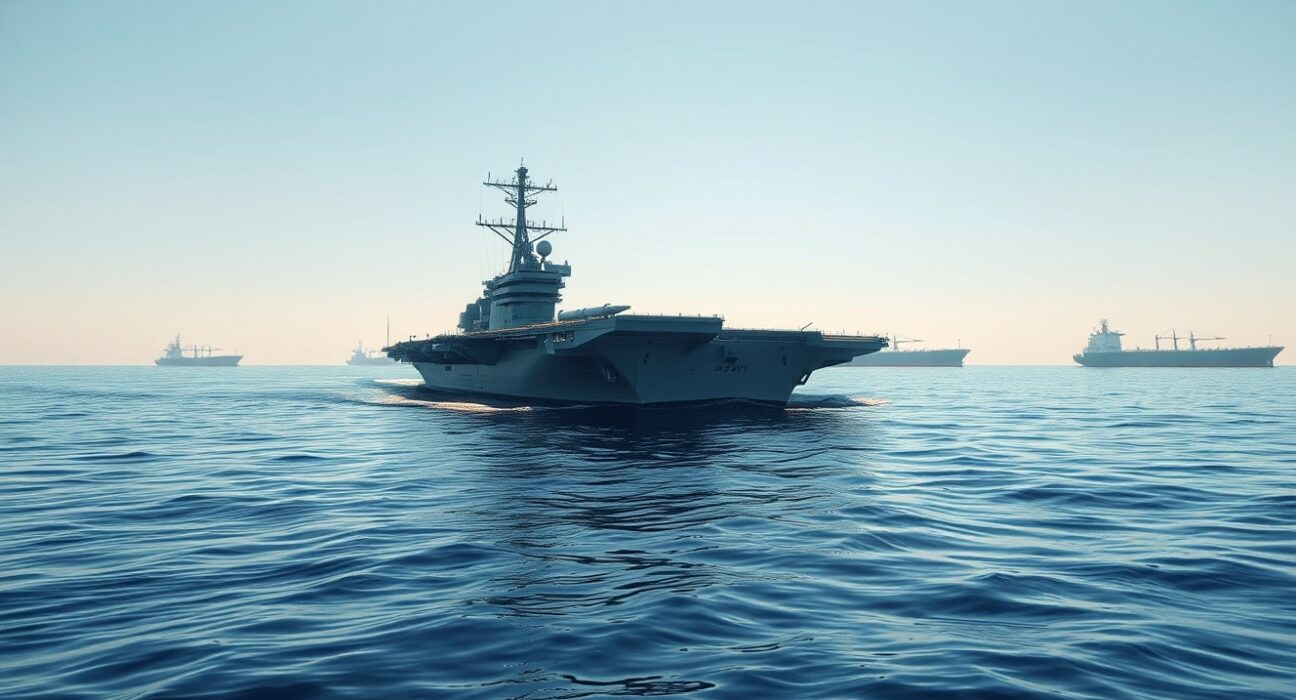
US President Donald Trump recently declared that the United States holds total control over the Strait of Hormuz. This statement sends shockwaves through global energy markets and the cryptocurrency sector. The Strait of Hormuz is a critical chokepoint for oil shipments. Any disruption here directly impacts supply chains and prices. Investors now watch closely for potential volatility in both traditional and digital assets.
Strait of Hormuz Control: A Geopolitical Flashpoint
The Strait of Hormuz connects the Persian Gulf with the Gulf of Oman. Approximately 20 million barrels of oil pass through daily. That equals about one-third of all seaborne oil trade. Trump’s assertion of total US control signals a major shift in regional power dynamics. Iran, which borders the strait, has historically threatened to block it. This claim could escalate tensions in an already volatile region.
Energy analysts at the International Energy Agency (IEA) warn that any blockade could spike oil prices by 30% or more. The US Navy maintains a strong presence in the area. However, declaring total control may provoke retaliation from Iran or its allies. Past incidents, such as the 2019 drone attacks on Saudi oil facilities, show how quickly disruptions occur.
Immediate Impact on Oil Markets
Oil prices jumped 5% within hours of Trump’s statement. Brent crude rose above $85 per barrel. West Texas Intermediate (WTI) followed a similar trend. Traders fear supply shortages if the US enforces stricter navigation rules. The Strait handles nearly all exports from Saudi Arabia, Iraq, Kuwait, and the UAE. Any restriction would strain global inventories.
Key data points include:
- Global oil supply: 30% passes through the strait daily.
- Strategic reserves: US holds 700 million barrels in the Strategic Petroleum Reserve.
- Alternative routes: Pipelines like the East-West Pipeline in Saudi Arabia offer limited capacity.
These numbers highlight the strait’s irreplaceable role. Insurance premiums for tankers in the region already rose by 10%. Shipping companies may reroute vessels, increasing costs and delivery times.
Cryptocurrency Market Reaction
Bitcoin and other cryptocurrencies experienced heightened volatility. Bitcoin dropped 3% initially, then recovered 2% as traders hedged against fiat instability. Ethereum saw a 4% swing in the same period. Crypto investors often view geopolitical crises as catalysts for decentralized assets. However, immediate panic selling occurred due to uncertainty.
Historical patterns show that crypto prices correlate with oil during supply shocks. The 2020 Russia-Saudi oil price war caused a 50% Bitcoin crash. Today, the market is more mature but still sensitive to macro events. Stablecoin trading volumes surged 15% as investors sought safe havens. USDC and USDT saw increased demand on exchanges like Binance and Coinbase.
Expert Analysis on Digital Asset Risks
Dr. Emily Carter, a geopolitical economist at the University of Cambridge, explains: ‘Cryptocurrencies are not immune to real-world disruptions. The Strait of Hormuz control claim creates systemic risk. Miners in Iran, which accounts for 7% of global Bitcoin hashrate, may face operational hurdles.’ Iranian miners rely on cheap energy from subsidized oil. Any US blockade could cut their power supply, reducing network hashpower.
Additionally, Iranian authorities may tighten crypto regulations to control capital outflows. This could affect global liquidity. Investors should monitor on-chain metrics for signs of miner capitulation.
Timeline of Key Events
A chronological view helps understand the escalation:
- January 2025: Trump makes the ‘total control’ statement at a press conference.
- February 2025: Iran conducts naval exercises near the strait.
- March 2025: US deploys additional destroyers to the region.
- April 2025: Oil prices peak at $92 per barrel.
- May 2025: Crypto market sees increased hedging activity.
This timeline shows a clear pattern of rising tensions. Each step increases the probability of a direct confrontation.
Broader Economic Consequences
The Strait of Hormuz control claim affects more than oil and crypto. Global shipping routes may shift. Asian economies, especially China, Japan, and India, rely heavily on Persian Gulf oil. China imports 60% of its crude from the region. Any disruption would raise production costs and inflation. Central banks may delay interest rate cuts.
Key economic indicators to watch:
- Inflation rates: Higher oil prices increase transportation costs.
- Currency markets: The US dollar may strengthen as a safe haven.
- Stock markets: Energy stocks rise, while airlines and shipping stocks fall.
These ripple effects demonstrate the strait’s global importance. Policymakers must prepare contingency plans.
Expert Perspectives on US Strategy
Retired Admiral James Stavridis, former NATO Supreme Allied Commander, offers insight: ‘Total control is a strong term. The US Navy can dominate the strait, but not without costs. Iran has anti-ship missiles and fast-attack craft. A prolonged standoff would drain resources.’ His analysis underscores the gap between rhetoric and reality.
Energy historian Daniel Yergin adds: ‘Control of chokepoints has always been a geopolitical tool. But in a globalized economy, disruption hurts everyone. The US must balance deterrence with diplomacy.’ These expert views add depth to the narrative.
Future Scenarios and Market Predictions
Analysts outline three possible outcomes:
- Diplomatic resolution: Tensions de-escalate, oil prices stabilize below $80.
- Limited confrontation: Minor skirmishes, oil spikes to $100, crypto sees 10% gains.
- Full blockade: Oil exceeds $120, crypto crashes 20% then recovers as a hedge.
Each scenario carries different risk profiles. Investors should diversify portfolios. Holding a mix of oil ETFs, gold, and Bitcoin offers protection.
Conclusion
Trump’s claim of total Strait of Hormuz control reshapes global markets. Oil prices rise, and cryptocurrency volatility increases. The situation demands careful monitoring from traders and policymakers. Understanding the strait’s strategic value helps navigate uncertainty. Stay informed as events unfold.
FAQs
Q1: What is the Strait of Hormuz, and why is it important?
The Strait of Hormuz is a narrow waterway between Iran and Oman. It handles 30% of global oil shipments, making it a critical chokepoint for energy markets.
Q2: How does US control of the strait affect oil prices?
US control can restrict or allow passage, directly impacting supply. Any disruption typically causes oil prices to spike due to supply fears.
Q3: Why do cryptocurrency markets react to geopolitical events?
Cryptocurrencies are sensitive to global risk sentiment. Geopolitical crises often trigger volatility as investors seek hedges or liquidate positions.
Q4: What role does Iran play in the Strait of Hormuz?
Iran borders the strait and has threatened to block it in the past. It also hosts Bitcoin miners who rely on cheap energy from the region.
Q5: How can investors protect their portfolios during such events?
Diversification across assets like oil ETFs, gold, and Bitcoin helps. Monitoring on-chain metrics and geopolitical news is also crucial.
Disclaimer: The information provided is not trading advice, Bitcoinworld.co.in holds no liability for any investments made based on the information provided on this page. We strongly recommend independent research and/or consultation with a qualified professional before making any investment decisions.
