

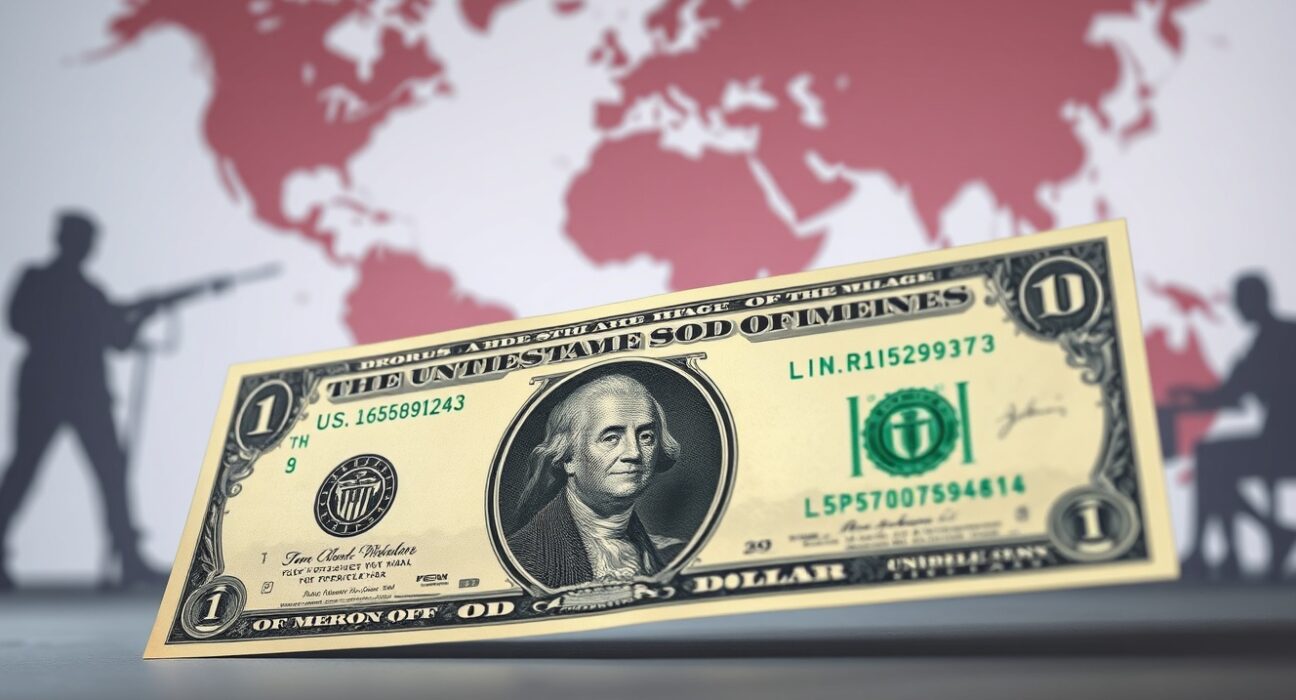
The U.S. dollar firms against major currencies as escalating tensions between the United States and Iran, coupled with uncertainty surrounding peace negotiations, drive investors toward safe haven assets. This surge in demand reflects a global flight to stability, with the dollar benefiting from its traditional role as a secure store of value during geopolitical crises.
Dollar Firms Amid Escalating Geopolitical Risks
The dollar index, which measures the greenback against a basket of six major currencies, climbed steadily over the past week. Market participants attribute this rise directly to the heightened U.S.-Iran tensions. These tensions stem from recent military posturing and stalled diplomatic talks. As a result, traders reduce exposure to riskier currencies like the euro and the Australian dollar. Instead, they flock to the U.S. dollar and the Japanese yen, both classic safe haven assets.
Geopolitical uncertainty often triggers a flight to safety. Investors seek currencies backed by stable economies and deep financial markets. The U.S. dollar fulfills this role effectively. Its liquidity and the size of the U.S. economy make it a preferred choice during crises. Consequently, the dollar firms even when domestic economic data shows mixed signals. This pattern highlights the currency’s unique position in global finance.
Impact of Peace Talk Uncertainty on Currency Markets
The uncertainty surrounding peace talks between the U.S. and Iran adds another layer of complexity. Initial hopes for a diplomatic resolution faded quickly. Reports indicate that both sides remain far apart on key issues. This stalemate prolongs the risk premium embedded in currency valuations. The dollar benefits from this lack of clarity, as investors prefer a known safe haven over speculative positions.
Currency strategists at major banks note that the peace talk uncertainty creates a binary outcome for markets. A breakthrough would likely reduce safe haven demand, weakening the dollar. However, a collapse in talks would amplify the current trend. This uncertainty keeps the dollar bid, as traders position for the worst-case scenario. The market now prices in a higher probability of prolonged tension, supporting the dollar’s strength.
Historical Context: Dollar Firms During Past Middle East Crises
Historical data confirms that the dollar firms during Middle East crises. For example, during the 2019 drone strike on a key Iranian general, the dollar index rose 2% within a week. Similarly, during the 2020 escalation following the assassination of a top Iranian nuclear scientist, the dollar gained 1.5% against the euro. These patterns underscore the dollar’s reliability as a safe haven in the region.
Analysts point to the 2023-2024 period, when U.S.-Iran tensions simmered over nuclear program concerns. The dollar then appreciated 3% against emerging market currencies. This historical performance provides a template for current market behavior. Investors now expect a similar trajectory, reinforcing the dollar’s upward momentum.
Safe Haven Demand Drives Dollar Strength Across Pairs
The safe haven demand is not limited to the dollar index. The greenback strengthens against the euro, the British pound, and the Swiss franc. The EUR/USD pair fell below 1.08, a level not seen in three months. The GBP/USD pair dropped to 1.25, as Brexit-related issues compound the risk-off sentiment. Even the Swiss franc, traditionally a safe haven, underperforms the dollar. This indicates an overwhelming preference for the U.S. currency.
Emerging market currencies face the most pressure. The Turkish lira, South African rand, and Mexican peso all depreciate sharply. These currencies carry higher risk premiums due to their exposure to global trade and geopolitical shocks. Investors repatriate capital to dollar-denominated assets, further boosting the dollar. This dynamic creates a self-reinforcing cycle of safe haven demand.
Key Currency Movements This Week
- EUR/USD: Falls 1.2% to 1.0785, as the dollar firms on safe haven flows.
- GBP/USD: Drops 0.9% to 1.2510, with Brexit uncertainty adding to the decline.
- USD/JPY: Rises 0.5% to 149.80, as the yen also benefits from safe haven demand.
- USD/CHF: Gains 0.3% to 0.8920, though the franc lags the dollar.
- USD/TRY: Surges 2.1% to 32.50, reflecting high risk aversion in emerging markets.
Expert Analysis: Why the Dollar Firms Now
Market experts attribute the dollar’s firmness to three key factors. First, the U.S. economy remains relatively resilient compared to other major economies. Second, the Federal Reserve maintains a cautious stance on interest rates, supporting the dollar’s yield advantage. Third, the lack of credible alternatives to the dollar as a reserve currency reinforces its safe haven status.
Dr. Elena Rossi, a currency strategist at a leading investment bank, explains: “The dollar firms because the geopolitical landscape offers no immediate resolution. Investors price in a prolonged period of uncertainty. This environment uniquely favors the dollar over other currencies, including the yen and the franc.” She adds that the dollar’s strength may persist until a clear diplomatic breakthrough occurs.
Implications for Global Trade and Investment
A firmer dollar has broad implications for global trade. Countries with dollar-denominated debt face higher repayment costs. Emerging economies, in particular, experience capital outflows and currency depreciation. This can lead to higher inflation and slower growth in these regions. For example, the Turkish lira’s decline already pushes up import prices, fueling domestic inflation.
For investors, the dollar’s strength presents both opportunities and risks. Dollar-denominated assets, such as U.S. Treasury bonds, attract inflows. However, multinational corporations with overseas earnings may see reduced profits when converted back to dollars. Exporters in the U.S. also face headwinds, as a strong dollar makes their goods more expensive abroad. These trade-offs highlight the complex impact of safe haven demand.
Table: Impact of Dollar Strength on Key Economies
| Economy | Impact | Reason |
|---|---|---|
| United States | Mixed | Lower import costs but weaker export competitiveness |
| Eurozone | Negative | Higher import costs for dollar-denominated commodities |
| Japan | Positive | Yen safe haven status reduces capital outflows |
| Turkey | Negative | Higher debt servicing costs and inflation |
| South Africa | Negative | Capital flight and rand depreciation |
Outlook: Will the Dollar Continue to Firm?
The outlook for the dollar depends on the trajectory of U.S.-Iran tensions and peace talks. If negotiations show tangible progress, safe haven demand could ease, leading to a dollar pullback. However, if tensions escalate further, the dollar firms even more. Market participants now watch for any diplomatic signals from both sides. The next round of talks, scheduled for next week, will be a critical catalyst.
Technical analysis supports a bullish view for the dollar. The dollar index broke above its 50-day moving average, a key resistance level. This breakout suggests further upside potential. The next target is the 200-day moving average, which would represent a 2% gain from current levels. Traders now position for this scenario, adding to safe haven demand.
Conclusion
The dollar firms as U.S.-Iran tensions and peace talk uncertainty drive safe haven demand. This trend reflects a global preference for stability amid geopolitical risks. The dollar’s strength impacts currency markets, global trade, and investment flows. Investors should monitor diplomatic developments closely, as any breakthrough could reverse the current trajectory. For now, the dollar remains the primary beneficiary of the risk-off environment.
FAQs
Q1: Why does the dollar firm during geopolitical tensions?
The dollar firms because investors view it as a safe haven asset. Its liquidity, deep financial markets, and the U.S. economy’s stability make it a preferred store of value during crises.
Q2: How do U.S.-Iran tensions affect the dollar?
U.S.-Iran tensions create uncertainty, prompting investors to reduce risk. They sell riskier currencies and buy the dollar, which strengthens its value against other currencies.
Q3: What is safe haven demand in currency markets?
Safe haven demand refers to investors moving capital into assets perceived as low-risk during times of turmoil. The dollar, yen, and Swiss franc are common safe haven currencies.
Q4: How does peace talk uncertainty impact the dollar?
Uncertainty about peace talks prolongs geopolitical risk. This keeps safe haven demand elevated, supporting the dollar. A clear resolution would likely reduce this demand and weaken the dollar.
Q5: What are the risks of a strong dollar for emerging markets?
A strong dollar increases debt servicing costs for countries with dollar-denominated loans. It also leads to capital outflows, currency depreciation, and higher inflation in emerging economies.
Disclaimer: The information provided is not trading advice, Bitcoinworld.co.in holds no liability for any investments made based on the information provided on this page. We strongly recommend independent research and/or consultation with a qualified professional before making any investment decisions.
