

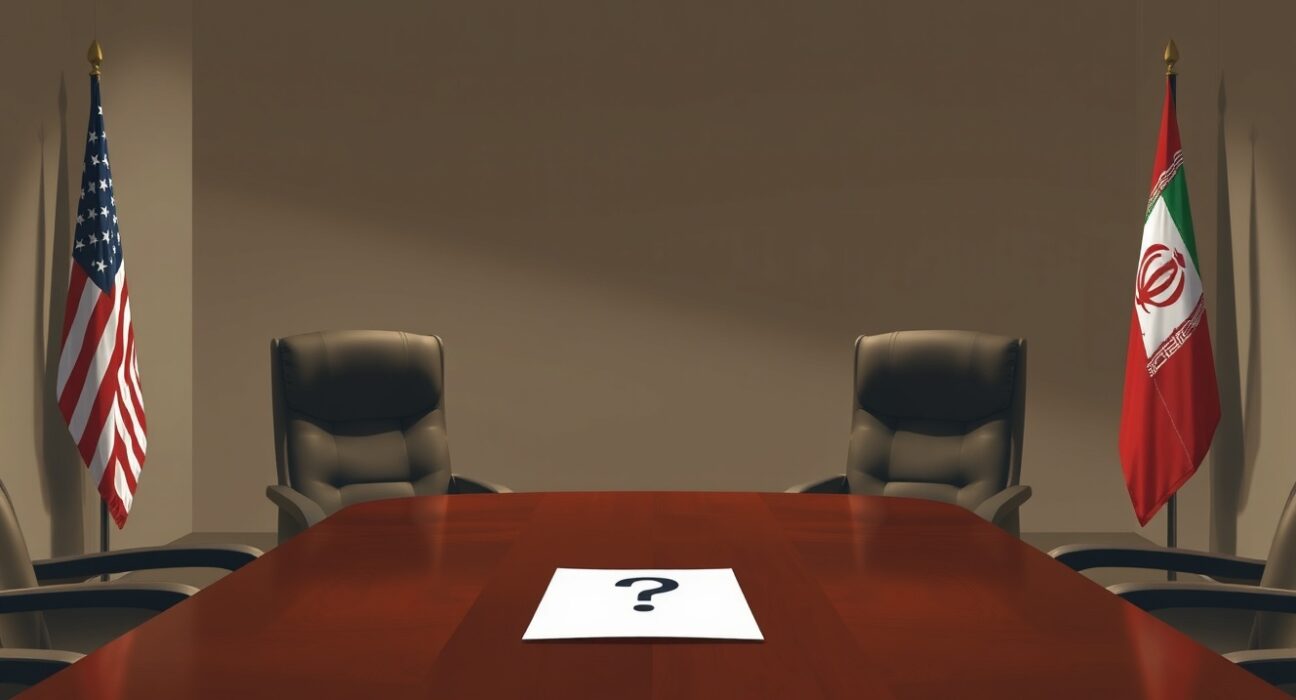
President Donald Trump stated he does not know who leads Iran, creating a significant diplomatic hurdle for potential negotiations. The comment emerged during a press briefing where Trump criticized Iran for stalling tactics and unclear negotiating partners. This statement adds a new layer of complexity to already tense US-Iran relations.
Trump Iran Leader Comments Spark Diplomatic Confusion
On March 28, 2025, President Trump told reporters at the White House that he is uncertain about Iran’s current leadership structure. He said, “I don’t know who leads Iran. They keep stalling, and it is unclear who we should negotiate with.” This remark signals a potential breakdown in communication channels between the two nations.
The comment follows months of back-channel discussions between US and Iranian officials. These talks aimed to revive the 2015 nuclear deal, formally known as the Joint Comprehensive Plan of Action (JCPOA). Trump withdrew the United States from the agreement in 2018, citing insufficient restrictions on Iran’s nuclear program.
Since then, Iran has accelerated its uranium enrichment activities. The International Atomic Energy Agency (IAEA) reported in February 2025 that Iran now possesses enough enriched uranium for multiple nuclear weapons. This development raises the stakes for any future negotiations.
Key points from Trump’s statement:
- Trump claims Iran’s leadership is unclear
- He accuses Iran of deliberate stalling
- The US faces an ambiguous negotiating partner
- Diplomatic channels remain uncertain
Iran’s political structure complicates direct negotiations. The country has both a Supreme Leader, currently Ayatollah Ali Khamenei, and an elected President, Ebrahim Raisi. However, Raisi’s term ended in 2024, and the subsequent election results remain disputed. This creates a power vacuum that Trump’s statement highlights.
Background of US Iran Negotiations
The history of US-Iran negotiations spans decades. The 2015 JCPOA represented a major diplomatic achievement, limiting Iran’s nuclear activities in exchange for sanctions relief. However, Trump’s withdrawal in 2018 shattered that framework.
Since then, Iran has expanded its nuclear capabilities. The country now operates advanced centrifuges at underground facilities in Natanz and Fordow. IAEA inspectors report limited access to these sites, raising concerns about undeclared nuclear activities.
Timeline of key events:
- 2015: JCPOA signed between Iran and P5+1 nations
- 2018: Trump withdraws US from the deal
- 2020: US kills Iranian General Qasem Soleimani
- 2021: Iran begins enriching uranium to 60% purity
- 2024: Iran’s presidential election results disputed
- 2025: Trump questions Iran’s leadership clarity
European mediators have attempted to bridge the gap between Washington and Tehran. France, Germany, and the United Kingdom have led diplomatic efforts. However, these initiatives have failed to produce a breakthrough.
Iran’s Internal Political Crisis
Iran faces its own internal challenges. The disputed 2024 presidential election led to widespread protests. The government responded with a crackdown, further isolating the country diplomatically.
Supreme Leader Khamenei, now 85 years old, holds ultimate authority. However, his health has declined in recent years. Succession planning remains opaque, adding to the uncertainty that Trump referenced.
Iran’s parliament, the Majlis, has also experienced power struggles. Hardline factions have gained influence, pushing for a more confrontational stance toward the West. This internal fragmentation makes it difficult for any single leader to negotiate effectively.
Experts note that Iran’s decision-making process is deliberately opaque. This strategy allows the regime to maintain flexibility and avoid accountability. However, it also frustrates foreign diplomats who seek clear negotiating partners.
Impact on Global Diplomacy
Trump’s statement has immediate consequences for international diplomacy. The United Nations Security Council has scheduled emergency meetings to address the situation. Member states express concern about the lack of clarity in US-Iran communications.
Israel, a key US ally, views Iran’s nuclear program as an existential threat. Israeli Prime Minister Benjamin Netanyahu has repeatedly called for stronger action against Iran. Trump’s comments may embolden Israel to pursue unilateral military strikes.
Saudi Arabia and the United Arab Emirates also monitor the situation closely. Both nations have improved relations with Iran in recent years. However, they remain wary of Iran’s regional ambitions and nuclear capabilities.
Regional reactions to Trump’s statement:
- Israel: Calls for decisive action against Iran
- Saudi Arabia: Urges continued diplomatic engagement
- European Union: Offers to mediate new talks
- Russia: Criticizes US approach to negotiations
- China: Supports Iran’s right to peaceful nuclear energy
The global oil market has reacted negatively to the uncertainty. Crude oil prices rose by 3% following Trump’s comments. Analysts warn that any disruption to Iranian oil exports could further destabilize energy markets.
Expert Analysis on Diplomatic Strategy
Dr. Sarah Miller, a Middle East scholar at Georgetown University, explains the implications. “Trump’s statement reflects a genuine challenge in dealing with Iran’s complex political system. However, it also serves as a negotiating tactic. By claiming uncertainty, Trump creates leverage to demand clearer commitments from Tehran.”
Other analysts disagree. Professor James Carter of the Council on Foreign Relations argues that the statement weakens the US position. “Admitting you don’t know who to negotiate with signals weakness. Iran will exploit this uncertainty to delay further.”
The debate highlights the difficulty of engaging with a regime that deliberately obscures its decision-making. Iran’s leadership structure includes multiple power centers, including the Supreme Leader, the President, the Revolutionary Guard, and the Guardian Council. Each entity has different priorities and agendas.
Historical precedents show that successful negotiations require clear counterparts. The 2015 JCPOA succeeded because both sides identified specific negotiators. Foreign Minister Mohammad Javad Zarif led Iran’s team, while Secretary of State John Kerry represented the US.
Today, no equivalent figure exists on the Iranian side. Zarif resigned in 2020, and his successor has less international credibility. This leadership vacuum complicates any attempt to restart meaningful talks.
Future of US Iran Relations
The path forward remains uncertain. Trump’s administration faces several options:
- Pursue direct talks with Iran’s remaining leadership
- Increase economic sanctions to pressure Tehran
- Support regime change efforts within Iran
- Accept a nuclear-armed Iran as a fait accompli
- Coordinate with European allies on a new framework
Each option carries significant risks. Direct talks may fail if Iran’s leadership remains unclear. Sanctions have already caused economic hardship but failed to change Iran’s behavior. Regime change could lead to civil war or state collapse. Accepting a nuclear Iran threatens regional stability. European coordination requires time that may not exist.
The IAEA’s latest report indicates that Iran could produce enough weapons-grade uranium for a bomb within weeks. This timeline creates urgency for diplomatic action. However, Trump’s statement suggests that the US is not yet prepared to engage seriously.
Congress has also weighed in on the issue. Bipartisan legislation requires the administration to report on Iran’s leadership structure. This report may provide clarity that Trump claims is currently missing.
Conclusion
Trump Iran leader uncertainty highlights a critical gap in US diplomatic strategy. The president’s admission that he does not know who leads Iran underscores the challenges of negotiating with a fragmented regime. This statement carries significant implications for nuclear non-proliferation, regional stability, and global energy markets. Resolving this uncertainty will require coordinated efforts between the US, its allies, and international institutions. The coming weeks will determine whether diplomacy can succeed or if confrontation becomes inevitable.
FAQs
Q1: Why did Trump say he doesn’t know who leads Iran?
Trump made this statement during a press briefing to highlight Iran’s internal political confusion and stalled diplomatic process. He claims the lack of a clear negotiating partner hinders progress.
Q2: Who actually leads Iran in 2025?
Iran has a dual leadership structure with Supreme Leader Ayatollah Ali Khamenei holding ultimate authority. The presidency is currently disputed following the 2024 election, creating uncertainty about who speaks for the government.
Q3: How does this affect US Iran negotiations?
The statement complicates diplomatic efforts by signaling US frustration and potential withdrawal from talks. It may also encourage Iran to delay further or seek alternative negotiating partners.
Q4: What is Iran’s nuclear status in 2025?
Iran now enriches uranium to 60% purity and possesses enough material for multiple nuclear weapons. IAEA inspectors have limited access to key facilities, raising proliferation concerns.
Q5: Could this lead to military conflict?
Yes, the uncertainty increases the risk of miscalculation. Israel has threatened preemptive strikes, and the US maintains a significant military presence in the region. Diplomatic failure could escalate to armed conflict.
Disclaimer: The information provided is not trading advice, Bitcoinworld.co.in holds no liability for any investments made based on the information provided on this page. We strongly recommend independent research and/or consultation with a qualified professional before making any investment decisions.
