

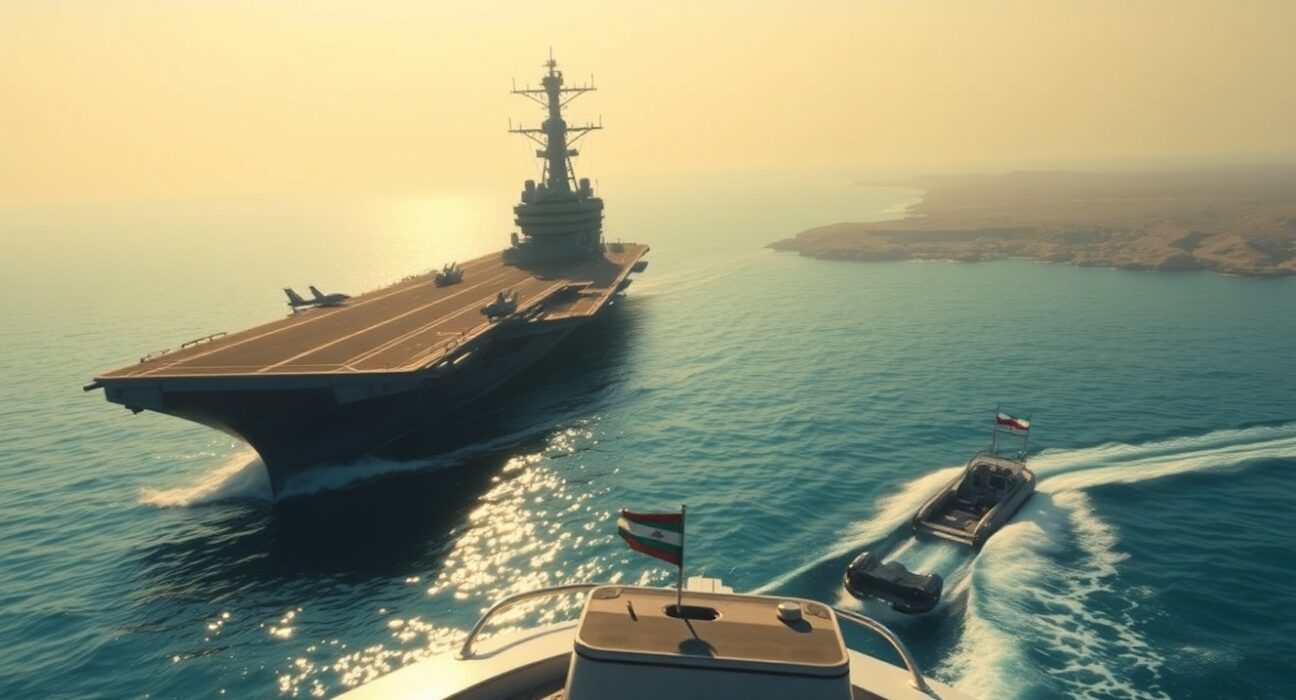
The United States is actively preparing military options targeting Iran’s defensive positions around the Strait of Hormuz if diplomatic efforts fail to secure a ceasefire in the region, according to a recent CNN report. This development marks a significant escalation in the ongoing geopolitical standoff, directly threatening the world’s most critical oil chokepoint.
Understanding the Iran Hormuz Defenses and US Strategy
The Strait of Hormuz connects the Persian Gulf to the Gulf of Oman. It handles about 20% of the world’s petroleum consumption. Iran has heavily fortified this narrow waterway. Its defenses include anti-ship missiles, fast-attack boats, and naval mines. The US now eyes these positions as potential targets.
CNN reports that US military planners have updated contingency plans. These plans focus on degrading Iran’s ability to block the strait. The trigger for action would be the failure of ongoing ceasefire negotiations. These talks involve regional powers and international mediators.
Key defensive assets Iran holds in the region include:
- Coastal Defense Cruise Missiles: Systems like the Noor and Qader missiles can strike ships up to 300 kilometers away.
- Fast Attack Craft: Hundreds of small, heavily armed boats swarm larger vessels.
- Submarine Fleet: Small, quiet submarines can lay mines or launch torpedoes.
- Anti-Ship Ballistic Missiles: The Khalij Fars and other systems pose a new threat to naval assets.
- Radar and Surveillance Networks: These systems track every vessel entering the strait.
This strategy is not new. The US has repeatedly warned Iran against closing the strait. However, the explicit mention of targeting defenses marks a shift. It signals a move from deterrence to preemptive action.
The Geopolitical Stakes: Oil Markets and Global Supply
Any military action in the Strait of Hormuz would immediately impact global oil prices. Traders watch this region closely. A disruption could send crude prices above $150 per barrel. This would trigger a global recession.
Historical precedents show the volatility:
| Event | Year | Oil Price Impact |
|---|---|---|
| Iran-Iraq Tanker War | 1984-1988 | Prices spiked 50% |
| US-Iran Tanker Escort Operations | 1987-1988 | Volatility increased 200% |
| Iran Seizes Tanker in Hormuz | 2019 | Brent jumped 5% in one day |
Today, the situation is more complex. The US is now a major oil producer. This reduces its direct vulnerability. However, allies in Europe and Asia rely heavily on Gulf oil. China imports over 40% of its crude through the strait. India imports over 60%.
Military planners face a difficult choice. A strike on Iran’s defenses would clear the strait temporarily. But it would guarantee a prolonged conflict. Iran could retaliate by attacking US bases in Iraq and Syria. It could also target Saudi oil infrastructure.
Expert Analysis on the Ceasefire Deadline
Defense analysts view the CNN report as a credible leak. It may serve as a warning to Iran. Dr. Sarah Thompson, a geopolitical risk expert at the Center for Strategic Studies, explains: “This is classic coercive diplomacy. The US is signaling that time is running out. It wants Iran to understand the military cost of continuing its current posture.”
The ceasefire talks involve indirect negotiations. Oman and Qatar often mediate. The core demands from the US include a halt to Iran’s nuclear enrichment program. They also demand an end to support for proxy groups in Yemen and Lebanon. Iran demands the lifting of all sanctions.
Neither side has shown significant flexibility. The US military posture in the region has increased. The USS Abraham Lincoln carrier strike group remains on station. Additional F-35 fighter jets have deployed to bases in the UAE and Qatar. These assets would form the backbone of any strike operation.
Military Options: How the US Could Target Iran’s Hormuz Defenses
Military planners have several options. Each carries different risks and outcomes.
Option 1: Limited Precision Strikes
- Target: Key radar sites and missile launchers on Iran’s coastline.
- Method: Cruise missiles from submarines and bombers.
- Risk: Iran would likely retaliate immediately.
- Outcome: Temporary degradation of defenses.
Option 2: Full Suppression of Air Defenses
- Target: All integrated air defense systems along the coast.
- Method: Combined cyber attacks, electronic warfare, and kinetic strikes.
- Risk: Could escalate into a broader war.
- Outcome: US gains air superiority over the strait.
Option 3: Naval Blockade and Mine Clearing
- Target: Iranian naval bases and minefields.
- Method: Use of specialized mine countermeasure vessels and SEAL teams.
- Risk: High casualties from mines and small boat attacks.
- Outcome: Safe passage for commercial shipping restored.
The Pentagon has reportedly prepositioned munitions and support equipment. This reduces the logistical footprint. It allows for a rapid response if the ceasefire fails.
Impact on Global Energy Security and Shipping
Insurance premiums for tankers transiting the strait have already risen. War risk clauses are now standard. Shipping companies are evaluating alternative routes. These include the use of the East-West Pipeline in Saudi Arabia. This pipeline bypasses the strait. But its capacity is limited.
Key energy infrastructure at risk includes:
- Ras Tanura Terminal (Saudi Arabia): The world’s largest offshore oil loading facility.
- Kharg Island Terminal (Iran): Handles over 90% of Iran’s crude exports.
- Fujairah Port (UAE): A major bunkering hub outside the strait.
- Bahrain’s Refinery: Supplies fuel to the US Fifth Fleet.
Strategic petroleum reserves held by major economies provide a buffer. The US holds over 600 million barrels. China has built massive storage facilities. Japan and South Korea maintain 90-day supplies. These reserves could cover a disruption of 30 to 60 days. Beyond that, the economic damage would be severe.
Regional Reactions to the Threat
Gulf Arab states have mixed reactions. Saudi Arabia and the UAE privately support a firm US stance. They fear Iranian retaliation. They also worry about a wider conflict disrupting their own oil exports. Iraq is caught in the middle. It relies on Iranian gas for electricity. It also hosts US troops.
Russia and China have called for restraint. Both nations have strategic interests in the region. Russia is a major arms supplier to Iran. China is Iran’s largest oil customer. Neither wants a war. But both are willing to exploit US strategic overreach.
Israel views the situation with concern. It has its own conflict with Iran’s nuclear program. A US strike on Hormuz defenses could delay Iran’s nuclear ambitions. It could also trigger Hezbollah rocket attacks from Lebanon.
Timeline of Escalation: Key Dates to Watch
The next few weeks are critical. Diplomatic channels remain open. But the military clock is ticking.
- Week 1: Indirect talks resume in Muscat, Oman. No progress reported.
- Week 2: US conducts large-scale naval exercise in the Arabian Sea. Show of force.
- Week 3: Iran test-fires new anti-ship missile. Rhetoric intensifies.
- Week 4: Deadline for ceasefire decision. Military options presented to President.
- Week 5: Potential execution of strike plan if no diplomatic breakthrough.
This timeline is fluid. Both sides have incentives to avoid war. But miscalculation remains a real risk. A single incident—a collision, a stray missile, or a cyber attack—could trigger an unintended escalation.
Conclusion
The US targeting of Iran’s Hormuz defenses represents a critical juncture in Middle East geopolitics. If no ceasefire is reached, military action could disrupt global oil supplies and reshape regional security. The Strait of Hormuz remains the world’s most strategic energy artery. Any conflict there would have immediate and severe consequences for the global economy. Diplomacy remains the preferred path. But the window for a peaceful resolution is narrowing. The world watches as the US and Iran move closer to a direct confrontation over the Iran Hormuz defenses.
FAQs
Q1: Why is the Strait of Hormuz so important to global oil markets?
The Strait of Hormuz handles about 20% of the world’s oil supply. Any disruption there causes immediate price spikes and threatens global economic stability.
Q2: What specific military assets does Iran have to defend the strait?
Iran relies on anti-ship missiles, fast-attack boats, naval mines, small submarines, and coastal radar networks. These create a layered defense system.
Q3: How would a US strike on Iran’s defenses affect oil prices?
Oil prices would likely spike above $150 per barrel. This would trigger a global recession. Strategic reserves could only cover 30 to 60 days of disruption.
Q4: What are the chances of a diplomatic solution before a military strike?
Diplomatic chances are low but not zero. Indirect talks continue. However, both sides hold firm positions on nuclear enrichment and sanctions.
Q5: How are other countries reacting to the US threat against Iran?
Gulf Arab states privately support a firm stance but fear retaliation. Russia and China call for restraint. Israel watches closely for impacts on Iran’s nuclear program.
Disclaimer: The information provided is not trading advice, Bitcoinworld.co.in holds no liability for any investments made based on the information provided on this page. We strongly recommend independent research and/or consultation with a qualified professional before making any investment decisions.
