

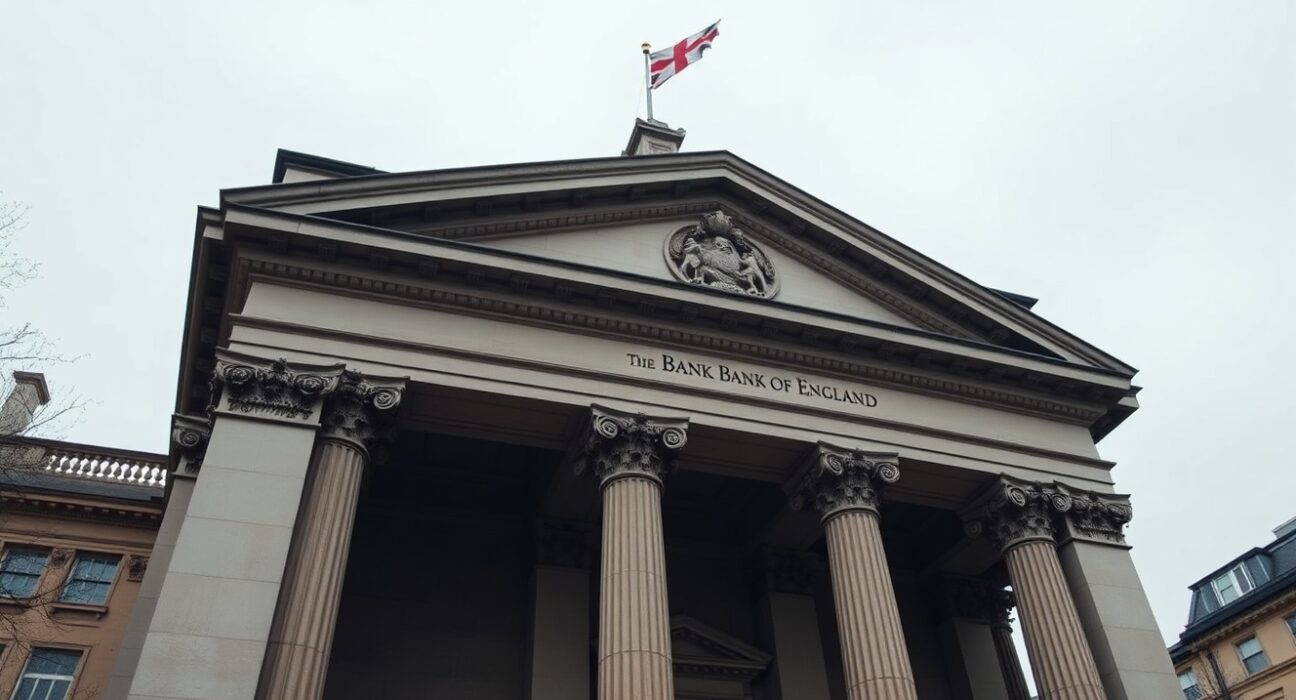
The Bank of England’s Monetary Policy Committee (MPC) maintains a vigilant stance on inflation, according to a fresh analysis from Rabobank. This cautious approach signals that interest rate cuts may not arrive soon. The BoE MPC holds a vigilant stance as persistent price pressures continue to challenge the UK economy.
BoE MPC Holds Vigilant Stance: Rabobank’s Core Assessment
Rabobank’s economists examined the latest MPC minutes. They found a clear message of caution. The committee worries about sticky inflation in services. Wage growth also remains a concern. These factors keep the BoE MPC on high alert.
The central bank wants to see clear evidence. Inflation must fall sustainably toward the 2% target. Until then, the MPC will not ease policy. This stance aligns with other major central banks. The Federal Reserve and ECB also proceed carefully.
Understanding the Bank of England Monetary Policy Outlook
The Bank of England monetary policy path depends on data. Recent CPI figures show inflation at 3.2%. Core inflation stays above 4%. Services inflation exceeds 5%. These numbers justify the MPC’s caution.
Rabobank notes that the labor market remains tight. Unemployment is low at 3.8%. Vacancies still outnumber job seekers. This dynamic fuels wage pressures. Companies pass higher labor costs to consumers.
The UK economy shows mixed signals. GDP growth slowed to 0.1% in Q1. Consumer spending remains resilient. Business investment stays subdued. The MPC balances these competing forces.
Key Factors Driving the MPC’s Decision-Making
- Services inflation: Remains elevated above 5%, driven by hospitality and rents
- Wage growth: Average earnings rise 5.7% year-on-year, above the 3% level consistent with 2% inflation
- Labor market tightness: Employment-to-population ratio near record highs
- Global energy prices: Recent uptick in oil prices adds upside risk
- Fiscal policy: Government spending plans may add demand pressure
Rabobank Analysis: Implications for Interest Rate Decisions
Rabobank expects the Bank of England to hold rates steady. The current base rate stands at 5.25%. Markets price in a first cut around August 2025. But Rabobank warns this timeline may shift.
The analysis highlights three scenarios. First, if inflation falls quickly, the MPC could cut in September. Second, if data remains sticky, cuts may delay until November. Third, if inflation reaccelerates, the MPC might even hike again.
Rabobank leans toward the second scenario. They see inflation easing slowly. The MPC will likely wait until November. This cautious approach protects credibility. It also avoids policy mistakes.
Comparing the UK to Other Economies
| Central Bank | Current Rate | Market Expectation | Rabobank View |
|---|---|---|---|
| Bank of England | 5.25% | Cut in August | Cut in November |
| Federal Reserve | 5.50% | Cut in July | Cut in September |
| European Central Bank | 4.00% | Cut in June | Cut in June |
UK Inflation Outlook: What the Data Shows
The UK inflation outlook remains uncertain. Headline CPI fell from 4.0% to 3.2%. But core inflation dropped only slightly. Services inflation barely budged. These trends worry MPC members.
Food price inflation eased to 2.5%. Energy costs fell year-on-year. But base effects will fade soon. New price pressures emerge from shipping costs. Red Sea disruptions raise transport expenses.
Housing costs also contribute. Rent inflation runs at 6.2%. Mortgage costs remain high. These feed into CPI indirectly. The MPC watches these components closely.
Impact on UK Economy and Financial Markets
The BoE MPC holds a vigilant stance with real consequences. Mortgage holders face continued high rates. Fixed-rate deals cost around 5.5%. Variable-rate borrowers pay more. Housing market activity slows.
Businesses struggle with borrowing costs. Investment plans get postponed. Some firms delay expansion. This weighs on productivity growth. The UK economy underperforms peers.
Sterling strengthens on rate expectations. The pound trades above $1.25. Exporters face headwinds. Import costs fall slightly. The trade balance improves modestly.
Timeline of Recent MPC Decisions
- December 2023: Rates held at 5.25%, three members voted for a hike
- February 2024: Rates held, one member switched to a cut vote
- March 2024: Rates held, split narrowed to 7-2 for hold
- May 2024: Rates held, guidance shifted to ‘vigilant’
Expert Perspectives on the BoE’s Path Forward
Rabobank’s analysis aligns with other experts. The IMF recommends caution. The OECD projects UK inflation above target through 2025. The Treasury Committee supports data dependence.
Former MPC members offer varied views. Some argue for early cuts. They cite weak growth. Others warn against premature easing. They remember the 1970s inflation mistake.
Market participants price in 50 basis points of cuts by year-end. Rabobank expects only 25 basis points. The gap reflects different inflation forecasts. The MPC’s actual path depends on incoming data.
What This Means for Investors and Savers
Investors should prepare for prolonged high rates. Bond yields stay elevated. Short-dated gilts offer attractive yields. Long-dated bonds face uncertainty. Equities face valuation pressure.
Savers benefit from high savings rates. Easy-access accounts pay 4.5%. Fixed-rate bonds offer 5.0%. Cash ISAs provide tax-free returns. These opportunities may not last.
Borrowers face a challenging environment. Mortgage rates remain high. Credit card APRs exceed 20%. Personal loans cost 10%+. Budgeting becomes essential.
Conclusion
The BoE MPC holds a vigilant stance as Rabobank’s analysis confirms persistent inflation risks. The Bank of England monetary policy remains tight. UK inflation outlook requires patience. Interest rate decisions will depend on data. The MPC prioritizes credibility over speed. Markets and households must adapt to this reality. The path to lower rates remains uncertain. Vigilance defines the current policy era.
FAQs
Q1: What does ‘BoE MPC holds vigilant stance’ mean?
The phrase means the Bank of England’s Monetary Policy Committee remains cautious about cutting interest rates. They watch inflation data closely and will not ease policy until they see clear evidence that price pressures are sustainably falling.
Q2: How does Rabobank’s analysis influence market expectations?
Rabobank is a major Dutch bank with a respected research team. Their analysis provides an independent, expert view. Markets use such analysis to adjust rate expectations. Rabobank’s cautious view reinforces the idea that cuts may come later than some hope.
Q3: When will the Bank of England cut interest rates?
Most economists expect the first cut in late 2025. Rabobank predicts November. Markets price in August. The actual timing depends on inflation data, wage growth, and economic activity. No one can predict with certainty.
Q4: How does the UK inflation outlook compare to other countries?
UK inflation is stickier than in the US and Eurozone. Services inflation remains higher. Wage growth is stronger. This means the BoE may cut later than the Fed or ECB. The UK faces unique structural challenges.
Q5: What should borrowers do while the MPC holds rates high?
Borrowers should review their finances. Consider fixing mortgage rates for longer terms. Build emergency savings. Reduce high-interest debt. Avoid new variable-rate borrowing. Seek professional advice if needed.
Disclaimer: The information provided is not trading advice, Bitcoinworld.co.in holds no liability for any investments made based on the information provided on this page. We strongly recommend independent research and/or consultation with a qualified professional before making any investment decisions.
