

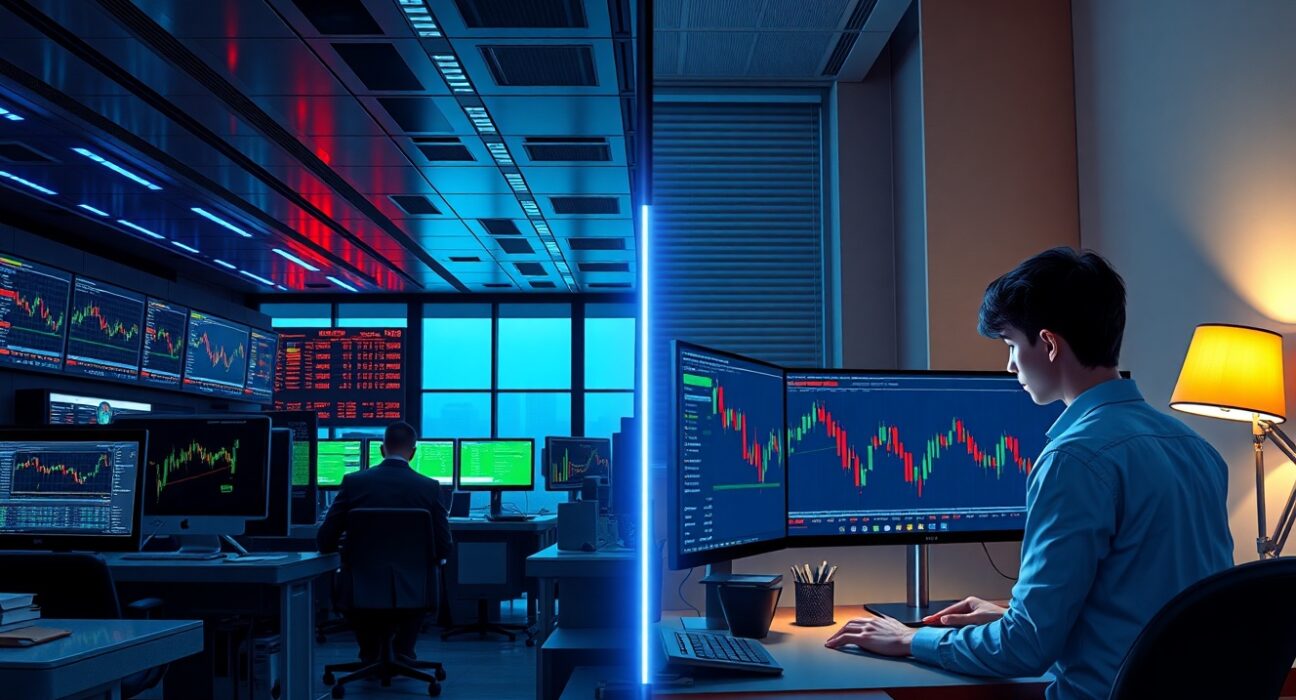
Algorithmic trading now fuels a critical debate on banks vs nonbanks in the FX market. This shift reshapes global forex liquidity and regulation in 2025. Market participants must understand these changes to navigate the evolving landscape.
The Rise of Algo Trading in the FX Market
Algo trading dominates the FX market today. It accounts for over 70% of spot forex volumes. Banks once controlled this space. Now, nonbank firms challenge their dominance. This transition sparks intense discussion among regulators and traders.
Nonbank liquidity providers use advanced algorithms. They offer tighter spreads and faster execution. Banks respond with proprietary systems. Both sides invest heavily in technology. The debate centers on fairness and stability.
Key Drivers of the Debate
Several factors fuel this competition. First, technology costs have dropped. Second, regulatory changes favor nonbanks. Third, client demand for speed increases. These drivers push the FX market toward a new equilibrium.
- Cost reduction: Cloud computing lowers entry barriers.
- Regulation: Basel III impacts bank capital requirements.
- Client needs: High-frequency trading demands low latency.
Banks argue they provide stability. Nonbanks claim they offer efficiency. This tension defines the current FX landscape.
Banks vs Nonbanks: A Structural Comparison
Banks hold traditional advantages. They have deep balance sheets. They also maintain long client relationships. Nonbanks, however, operate with less overhead. They adapt faster to market changes.
| Factor | Banks | Nonbanks |
|---|---|---|
| Capital reserves | High | Moderate |
| Technology speed | Fast | Very fast |
| Regulatory burden | Heavy | Light |
| Market share | Declining | Growing |
This table highlights key differences. Banks struggle with legacy systems. Nonbanks leverage modern infrastructure. The gap widens as technology evolves.
Regulatory Implications
Regulators watch this shift closely. They worry about systemic risk. Nonbanks may lack crisis resilience. Banks face stricter oversight. This imbalance creates regulatory arbitrage.
Central banks propose new rules. These rules aim to level the playing field. However, implementation proves challenging. The debate continues without clear resolution.
Impact on Liquidity and Pricing
Algo trading improves liquidity in normal conditions. It narrows bid-ask spreads. It also increases market depth. But during stress events, liquidity can vanish. This risk concerns both banks and nonbanks.
Evidence from recent flash crashes shows this vulnerability. Algorithms react faster than humans. They can amplify price swings. Regulators demand better risk controls. Market participants must adapt.
Expert Perspectives
Industry experts offer mixed views. Some praise nonbank innovation. Others warn about instability. A senior trader at a major bank states, “Nonbanks bring efficiency but lack accountability.” A nonbank CEO counters, “We provide transparency that banks avoid.”
These perspectives highlight the divide. Both sides have valid points. The truth likely lies in between. Collaboration may offer the best path forward.
Technological Arms Race
Technology drives this competition. Banks invest in AI and machine learning. Nonbanks use open-source algorithms. Both groups seek latency advantages. This arms race benefits end users through better prices.
However, it also raises barriers to entry. Smaller firms struggle to compete. Consolidation may follow. The market could become more concentrated. This outcome concerns regulators.
Future Trends
Looking ahead, several trends emerge. First, hybrid models will grow. Banks may partner with nonbanks. Second, regulation will tighten. Third, technology will continue evolving. These trends shape the FX market’s future.
- Hybrid partnerships: Combining bank stability with nonbank speed.
- Tighter rules: New capital requirements for nonbanks.
- AI integration: Algorithms become more predictive.
These developments will redefine the landscape. Market participants must stay informed.
Conclusion
Algo trading fuels the ongoing debate on banks vs nonbanks in the FX market. This debate reshapes liquidity, regulation, and technology. Both sides bring unique strengths. The future likely involves collaboration. Understanding this shift is essential for all market participants. The FX market evolves rapidly. Staying ahead requires continuous learning and adaptation.
FAQs
Q1: What is algo trading in the FX market?
Algo trading uses computer programs to execute forex trades automatically. It relies on predefined rules and algorithms for speed and efficiency.
Q2: Why do nonbanks challenge banks in FX?
Nonbanks offer lower costs and faster execution. They use modern technology without heavy regulatory burdens. This attracts clients seeking efficiency.
Q3: How does regulation affect the banks vs nonbanks debate?
Regulation imposes stricter rules on banks. Nonbanks face lighter oversight. This creates an uneven playing field. Regulators now consider new rules to balance it.
Q4: What risks does algo trading pose to the FX market?
Algo trading can amplify volatility during stress events. Flash crashes occur when algorithms react too quickly. Proper risk controls are essential to mitigate these risks.
Q5: Will banks or nonbanks dominate the FX market in the future?
Neither side will fully dominate. Hybrid models combining bank stability with nonbank agility will likely emerge. Collaboration offers the best outcome for the market.
Disclaimer: The information provided is not trading advice, Bitcoinworld.co.in holds no liability for any investments made based on the information provided on this page. We strongly recommend independent research and/or consultation with a qualified professional before making any investment decisions.
