

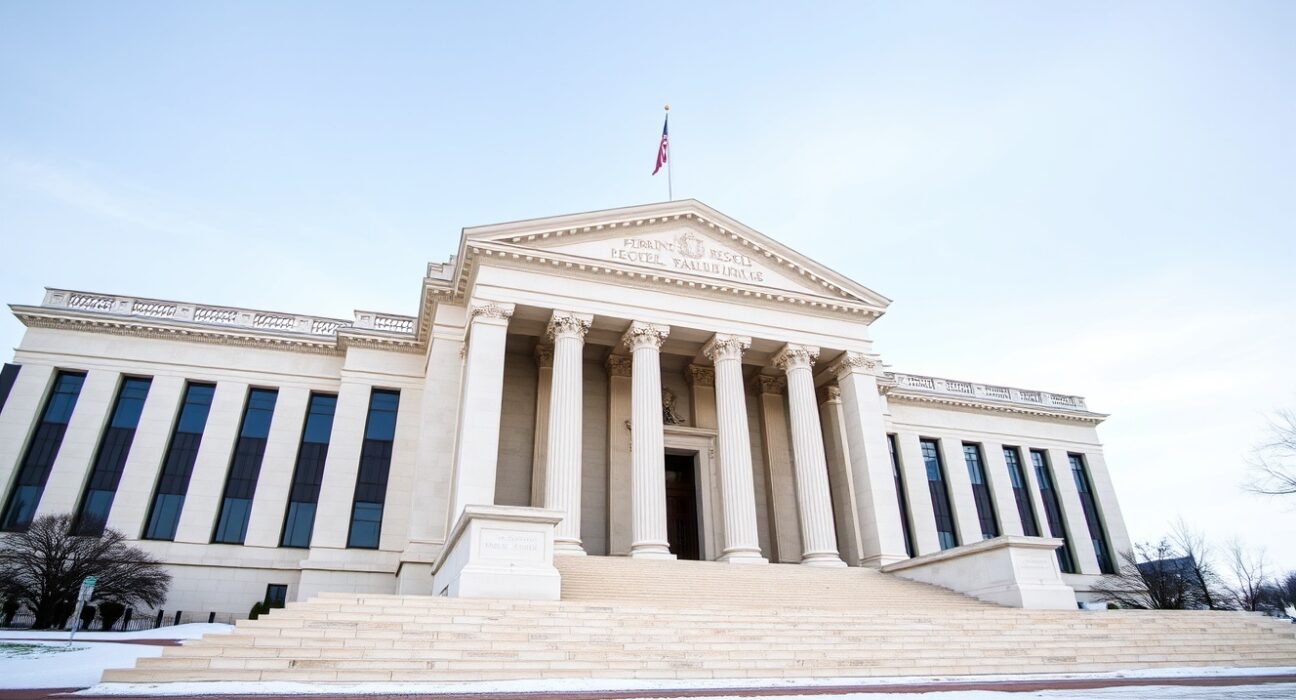
The Federal Reserve has once again decided to hold interest rates steady, a move widely anticipated by markets. However, beneath the surface of this seemingly calm decision, a louder and more contentious debate is brewing among policymakers. This growing divide signals a critical juncture for the U.S. economy and has profound implications for investors, including those in the cryptocurrency space.
Federal Reserve Holds Rates: The Official Stance
On [Date of meeting, e.g., May 7, 2025], the Federal Open Market Committee (FOMC) concluded its two-day meeting by announcing it would maintain the federal funds rate at its current range of 5.25% to 5.50%. This marks the [Number, e.g., seventh] consecutive meeting without a rate change. The decision aligns with the central bank’s patient approach, aiming to bring inflation down to its 2% target without triggering a severe recession.
The accompanying statement retained key language, noting that the Committee does not expect it will be appropriate to reduce the target range until it has gained greater confidence that inflation is moving sustainably toward 2%. Economic activity continues to expand at a solid pace, and job gains remain strong. However, the statement also acknowledged that inflation has eased over the past year but remains elevated.
The Rising Debate Within the Fed
Behind the unanimous vote lies a deepening schism. Recent meeting minutes and public speeches from various Fed officials reveal a growing divide between two factions: the ‘hawks’ and the ‘doves.’
Hawks vs. Doves: A Clash of Priorities
The hawkish camp argues that the fight against inflation is not yet won. They point to sticky core inflation readings and a resilient labor market as reasons to maintain or even consider further rate hikes. They fear that premature easing could reignite inflationary pressures, undoing months of hard-won progress. Key concerns include rising services inflation and wage growth that remains above levels consistent with the 2% target.
Conversely, the dovish faction emphasizes the lagged effects of the most aggressive tightening cycle in decades. They warn that holding rates too high for too long could unnecessarily damage the economy. They cite softening consumer spending, a cooling housing market, and increasing signs of stress in the commercial real estate sector. For them, the risk of overtightening now outweighs the risk of inflation staying slightly above target.
This internal debate is not just academic. It creates significant uncertainty for financial markets. Every public comment from a Fed official is now scrutinized for clues about the future policy path, leading to increased volatility in bond yields, stock prices, and risk assets like cryptocurrencies.
Impact on Financial Markets and the Crypto Sector
The decision to hold rates steady, coupled with the intensifying debate, has sent mixed signals across global markets.
- Stock Markets: Major indices like the S&P 500 and Nasdaq initially rallied on the rate hold but have since fluctuated as investors digest hawkish commentary. Sectors sensitive to interest rates, such as technology and real estate, are experiencing heightened volatility.
- Bond Market: The yield on the 10-year Treasury note has remained elevated, reflecting uncertainty about the timing and pace of future rate cuts. An inverted yield curve persists, a classic recession warning signal.
- Cryptocurrency Market: Bitcoin and other digital assets have shown a mixed response. On one hand, the absence of a rate hike removes immediate pressure. On the other, the prospect of rates remaining ‘higher for longer’ reduces liquidity in the broader financial system, which often dampens risk appetite. The correlation between Bitcoin and tech stocks remains notable, meaning crypto prices are still sensitive to shifts in Fed policy expectations.
Expert Analysis and Market Reactions
Economists and market strategists are closely watching the Fed’s next moves. ‘The Fed is effectively in a waiting game,’ explains Dr. Anya Sharma, a former Fed economist now at the Brookings Institution. ‘They need to see more data to confirm that inflation is truly vanquished. The debate we are seeing is healthy but creates a fog of uncertainty for markets.’
Meanwhile, prominent investors are positioning for different outcomes. Some are increasing cash holdings, while others are selectively buying beaten-down growth stocks and cryptocurrencies, betting on a pivot later this year. The CME FedWatch Tool shows a near-even split in market pricing for a rate cut at the September 2025 meeting, reflecting the deep uncertainty.
Historical Context: The Fed’s Delicate Balancing Act
This current period of debate is reminiscent of past tightening cycles. In 2019, the Fed pivoted from hiking to cutting rates after a similar period of internal division and market turmoil. The key difference today is the lingering after-effects of the pandemic-era inflation spike. The Fed is determined to avoid repeating the mistakes of the 1970s, when it prematurely eased policy, allowing inflation to become entrenched.
The current strategy of ‘holding steady’ is a direct result of this historical lesson. However, the economic landscape has changed. The economy is more complex, with global supply chains, a dominant services sector, and a massive $27 trillion Treasury market that is highly sensitive to Fed signals. The margin for error is razor-thin.
What This Means for the Average Consumer and Investor
For the average American, the Fed’s steady hand means mortgage rates and car loan rates remain high. Credit card APRs are also at elevated levels. While inflation has cooled, the cost of borrowing has not. This is squeezing household budgets, particularly for lower-income families.
For investors, the key takeaway is patience. The days of easy money and predictable policy are over. Navigating this environment requires a focus on fundamentals, diversification, and a long-term horizon. The loud debate within the Fed is a signal that the path forward is uncertain, and market volatility is likely to persist.
Conclusion
The Federal Reserve’s decision to hold rates steady is a pause, not a pivot. The debate raging behind the scenes underscores the profound challenges facing the central bank as it tries to navigate a ‘soft landing’ for the economy. For the crypto market and traditional investors alike, this means preparing for a period of heightened uncertainty. The focus keyword, ‘Federal Reserve holds rates,’ encapsulates a policy of watchful waiting, but the louder debate suggests that the next major move—whether a cut or a hike—will be a hard-fought decision with significant consequences. Staying informed and adaptable is the only reliable strategy.
FAQs
Q1: Why did the Federal Reserve hold rates steady again?
The Fed is waiting for more conclusive evidence that inflation is sustainably moving toward its 2% target before cutting rates. They want to avoid repeating the mistake of prematurely loosening policy, which could reignite inflation.
Q2: What is the main debate happening within the Fed right now?
The core debate is between ‘hawks,’ who fear inflation is not yet defeated and want to keep rates high, and ‘doves,’ who worry that holding rates too high for too long will unnecessarily damage the economy and cause a recession.
Q3: How does the Fed’s decision affect cryptocurrency prices?
Cryptocurrencies, particularly Bitcoin, have shown an increasing correlation with tech stocks and other risk assets. A ‘higher for longer’ rate environment can reduce overall market liquidity and risk appetite, which can put downward pressure on crypto prices. Conversely, expectations of future rate cuts can fuel rallies.
Q4: When is the next Federal Reserve meeting?
The FOMC meets approximately every six weeks. The next scheduled meeting is in [Month, e.g., June 2025]. Market participants will closely watch the meeting minutes and the subsequent press conference for clues about the future policy path.
Q5: What should investors do during this period of uncertainty?
Financial advisors generally recommend staying disciplined with a long-term investment plan. This includes diversifying across asset classes, focusing on quality investments, and maintaining adequate cash reserves. Avoid making impulsive decisions based on short-term market noise or Fed speculation.
Disclaimer: The information provided is not trading advice, Bitcoinworld.co.in holds no liability for any investments made based on the information provided on this page. We strongly recommend independent research and/or consultation with a qualified professional before making any investment decisions.
