

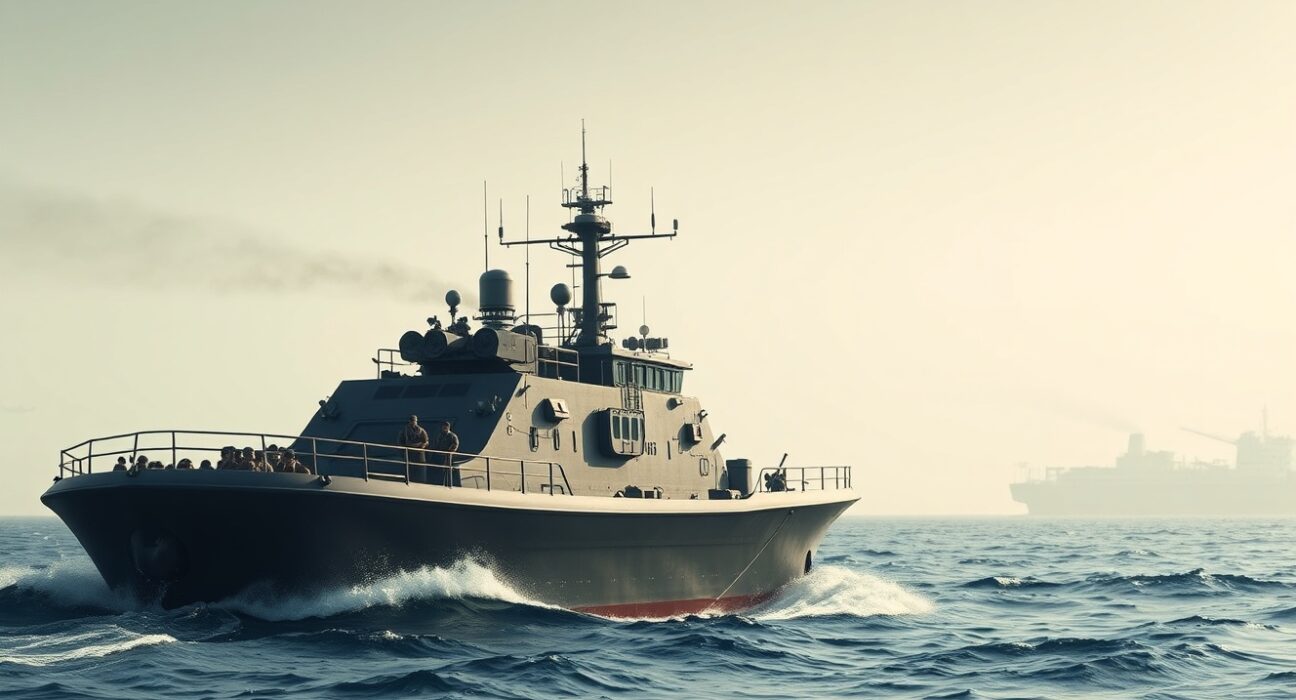
Iranian lawmaker Manouchehr Mottaki has warned that a maritime blockade against the Islamic Republic constitutes a direct declaration of war. In a recent interview with Iran International TV, Mottaki stated that Iran’s military forces could take decisive action to remove any such obstacle, potentially within days. This statement escalates an already volatile situation between Tehran and Washington.
Iran Maritime Blockade Sparks War of Words
The remarks from Mottaki, a former foreign minister and current member of the Iranian parliament’s National Security and Foreign Policy Committee, come directly after U.S. President Donald Trump announced he would not lift the blockade on Iranian ports until a new agreement is reached. Trump has also reportedly discussed extending the maritime restrictions with oil industry executives, signaling a hardened stance against Iranian oil exports.
Iran has shown no intention of making concessions. A military advisor to the country’s Supreme Leader, Ayatollah Ali Khamenei, has separately warned that Tehran will respond forcefully if the blockade continues. This dual-track rhetoric—from both civilian lawmakers and military officials—underscores the gravity of the situation.
What Does a Maritime Blockade Mean Legally?
Under international law, a maritime blockade is an act of war when enforced during peacetime. The United Nations Charter prohibits the use of force against the territorial integrity of a state. However, the U.S. has framed its actions as economic sanctions rather than a military blockade. Iran disputes this characterization, arguing that the effective closure of its ports to oil tankers constitutes a hostile act.
Key legal points to consider include:
- Sanctions vs. Blockade: Sanctions restrict trade; a blockade physically prevents ships from entering or leaving.
- Right of Self-Defense: Iran could claim self-defense under Article 51 of the UN Charter if it perceives the blockade as an armed attack.
- Precedent: Past maritime blockades, such as the Cuban Missile Crisis, were considered acts of war but were resolved diplomatically.
Escalating US Iran Tensions Over Port Restrictions
The current crisis is the latest flashpoint in a decades-long confrontation. Since the U.S. withdrawal from the Joint Comprehensive Plan of Action (JCPOA) in 2018, Washington has reimposed crippling sanctions on Iran’s oil sector. These sanctions have effectively blocked Iranian oil exports, which are the lifeblood of the country’s economy.
Trump’s recent discussions with oil executives suggest a strategy to tighten the noose further. By extending the blockade, the U.S. aims to cut off Iran’s primary revenue stream. However, this approach carries significant risks. Iran has repeatedly demonstrated its ability to disrupt shipping in the Strait of Hormuz, a critical chokepoint for global oil supplies.
Iran’s Military Options and Threats
Mottaki’s warning is not an isolated threat. Iran’s Islamic Revolutionary Guard Corps (IRGC) has a long history of asymmetric naval tactics. These include:
- Mine-laying: Iran could seed the Strait of Hormuz with naval mines, disrupting all shipping.
- Fast Attack Craft: Swarms of small, fast boats could harass or attack larger vessels.
- Anti-Ship Missiles: Iran possesses a large arsenal of shore-based anti-ship missiles capable of targeting tankers.
- Drone Swarms: Unmanned aerial and surface vehicles could be used for surveillance or attacks.
These capabilities mean that any blockade enforcement could quickly escalate into a direct military confrontation. The advisor to the Supreme Leader emphasized that Iran’s response would be immediate and proportional, but also devastating.
Global Oil Market Impact of Iranian Port Blockade
The implications of a sustained blockade extend far beyond the Persian Gulf. Iran is a major oil producer, and any disruption to its exports—or to shipping through the Strait of Hormuz—would send shockwaves through global energy markets.
Current market data indicates:
| Scenario | Oil Price Impact | Global Supply Risk |
|---|---|---|
| Blockade only on Iranian ports | Moderate increase ($5-10/barrel) | Low (Iran exports ~1.5 million bpd) |
| Strait of Hormuz disruption | Severe increase ($20-50/barrel) | High (20% of global oil passes through) |
| Full military conflict | Extreme (over $100/barrel) | Critical (potential supply chain collapse) |
Analysts warn that even the threat of a blockade is already driving up insurance rates for tankers in the region. This increases shipping costs for all Gulf oil exporters, not just Iran.
Historical Context of US Iran Maritime Disputes
The current standoff is not unprecedented. The United States and Iran have clashed over maritime rights for decades. Key historical events include:
- 1987-1988 Tanker War: During the Iran-Iraq War, both sides attacked oil tankers. The U.S. Navy intervened to protect Kuwaiti tankers, leading to direct skirmishes with Iranian forces.
- 2019 Abqaiq-Khurais Attack: Iran was blamed for drone and missile strikes on Saudi oil facilities, which temporarily cut global oil production by 5%.
- 2020 Soleimani Killing: The U.S. assassination of General Qasem Soleimani brought the two countries to the brink of war.
Each of these events saw a pattern of escalation followed by de-escalation. However, the current rhetoric suggests a lower tolerance for diplomatic solutions on both sides.
Expert Analysis: The Risk of Miscalculation
Geopolitical experts warn that the situation is dangerous because of the potential for miscalculation. “A maritime blockade is a gray-zone tactic,” explains Dr. Aniseh Bassiri Tabrizi, a senior research fellow at the Royal United Services Institute. “The U.S. sees it as economic pressure; Iran sees it as an act of war. Without clear communication channels, a small incident—like a collision or a warning shot—could spiral into a full-scale conflict.”
This analysis highlights the importance of de-escalation mechanisms. Currently, no direct communication line exists between the White House and the Iranian leadership. Backchannel negotiations, often facilitated by Oman or Qatar, have been the primary means of communication in recent years.
Conclusion
The Iranian lawmaker’s declaration that a maritime blockade is a declaration of war marks a significant escalation in US Iran tensions. With Washington refusing to lift port restrictions and Tehran threatening military action, the risk of a direct confrontation is higher than it has been in years. The global community watches closely, as any disruption to shipping in the Persian Gulf would have immediate and severe consequences for the world economy. The focus keyword, Iran maritime blockade, remains at the center of this geopolitical storm.
FAQs
Q1: What is the legal definition of a maritime blockade?
A: Under international law, a maritime blockade is the prevention of ships from entering or leaving a port or coastal area. During peacetime, it is considered an act of war unless authorized by the UN Security Council.
Q2: Why is the Strait of Hormuz important in this conflict?
A: The Strait of Hormuz is a narrow waterway between Iran and Oman through which about 20% of the world’s oil passes. Any military action there can disrupt global oil supplies and cause price spikes.
Q3: Has Iran threatened to close the Strait of Hormuz before?
A: Yes. Iran has repeatedly threatened to close the strait in response to sanctions or military pressure. It has conducted military exercises demonstrating its ability to do so.
Q4: What is the US position on the blockade?
A: The US views its actions as economic sanctions, not a military blockade. However, the effective closure of Iranian ports to oil tankers has the same practical effect.
Q5: How would a conflict affect oil prices?
A: A limited blockade could raise oil prices by $5-10 per barrel. A disruption to the Strait of Hormuz could push prices above $100 per barrel, potentially triggering a global recession.
Disclaimer: The information provided is not trading advice, Bitcoinworld.co.in holds no liability for any investments made based on the information provided on this page. We strongly recommend independent research and/or consultation with a qualified professional before making any investment decisions.
