

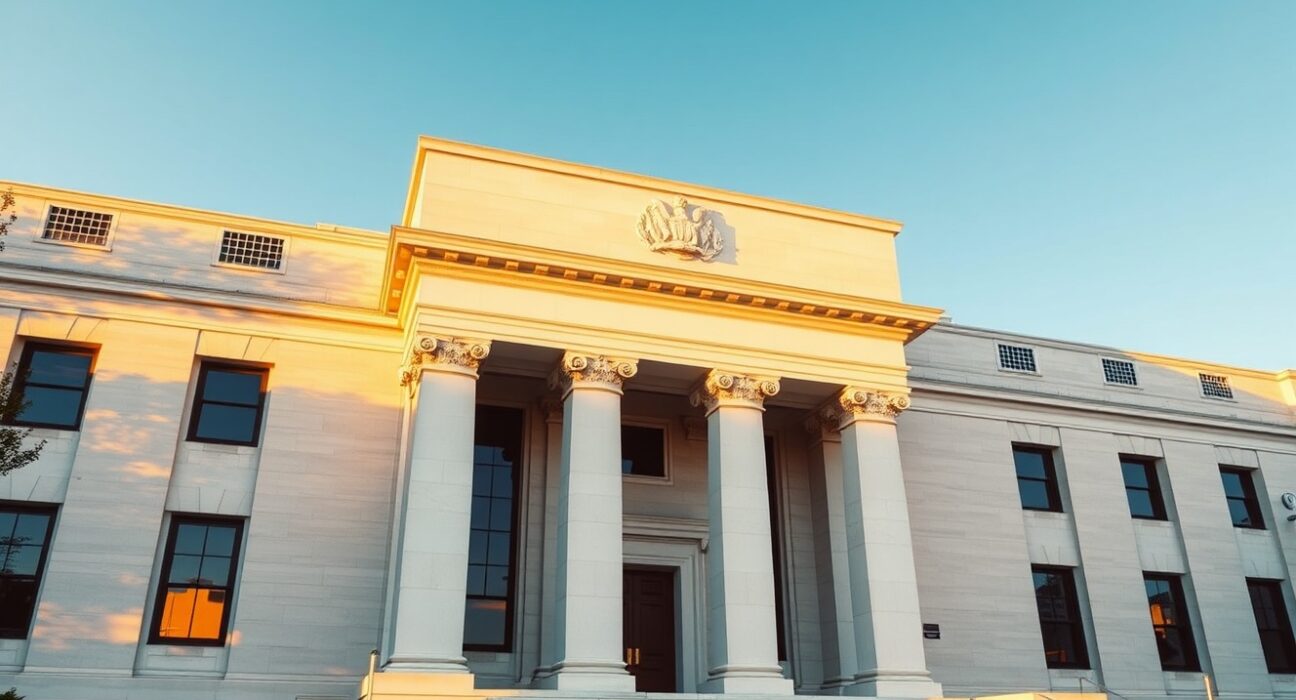
The Federal Reserve faces a significant hawkish split, with a growing number of policymakers advocating for a higher interest rate path than previously anticipated. Deutsche Bank’s latest analysis confirms this internal division, signaling a more aggressive monetary tightening cycle ahead. This development carries profound implications for financial markets, borrowing costs, and the broader economic outlook in 2025.
Understanding the Fed Hawkish Split and Higher-Rate Path
Deutsche Bank economists identify a clear division within the Federal Open Market Committee (FOMC). A hawkish faction pushes for higher rates to combat persistent inflation. Meanwhile, a more dovish group favors a pause or slower tightening to avoid economic damage. This split creates policy uncertainty.
The higher-rate path reflects a consensus shift. Recent economic data shows sticky inflation in services and a resilient labor market. These factors strengthen the hawkish argument. Deutsche Bank projects the federal funds rate could peak at a level exceeding 5.5% in 2025. This projection is higher than many previous estimates.
Key data points supporting this view include:
- Core PCE inflation remains above the Fed’s 2% target.
- Job growth continues to exceed expectations.
- Consumer spending shows resilience despite higher rates.
Deutsche Bank Analysis: A Deep Dive into FOMC Dynamics
Deutsche Bank’s research note highlights specific voting blocs within the FOMC. The hawkish bloc includes regional bank presidents who prioritize inflation control. The dovish bloc includes governors who emphasize employment risks. This division makes future rate decisions highly data-dependent.
The analysis also examines the dot plot projections. The median dot now shows fewer rate cuts in 2025 and 2026. This shift signals a higher terminal rate. Deutsche Bank warns that market expectations may still be too optimistic. Investors price in rate cuts that may not materialize.
A timeline of recent Fed communication illustrates the hawkish turn:
| Date | Event | Impact |
|---|---|---|
| December 2024 | Fed holds rates steady | Markets expect cuts in 2025 |
| January 2025 | Hawkish FOMC minutes released | Rate cut expectations reduce |
| February 2025 | Deutsche Bank publishes analysis | Higher-rate path confirmed |
Market Implications of a Higher Interest Rate Path
A higher-rate path directly impacts bond markets. Yields on the 10-year Treasury note rise in response. This increases borrowing costs for corporations and households. Mortgage rates remain elevated, cooling the housing market.
Equity markets face headwinds. Higher discount rates reduce the present value of future earnings. Growth stocks, particularly in the technology sector, are most vulnerable. Deutsche Bank recommends a defensive portfolio positioning.
Currency markets also react. The US dollar strengthens as interest rate differentials widen. This pressures emerging market currencies and commodities. Gold prices face downward pressure from a stronger dollar and higher yields.
Expert Perspective on Policy Divergence
Former Fed officials and academic economists offer varied views. Some argue the hawkish split is healthy for policy debate. Others warn it creates communication challenges. The Fed must maintain credibility while managing conflicting priorities.
Deutsche Bank’s chief US economist states: “The committee is not unified. This split will persist until inflation shows clear and sustained progress.” This statement underscores the uncertainty facing investors.
Real-World Impact on Borrowers and Savers
Consumers feel the effects directly. Credit card rates rise above 20% on average. Auto loan rates exceed 7% for new vehicles. Mortgage rates hover near 7%, reducing home affordability.
Savers benefit from higher yields. High-yield savings accounts offer rates above 4%. Certificates of deposit provide guaranteed returns. However, inflation erodes real purchasing power.
Small businesses face tighter credit conditions. Banks reduce lending activity amid economic uncertainty. This constrains expansion and hiring plans. The higher-rate path amplifies these challenges.
Historical Context and Future Projections
The current hawkish split echoes past tightening cycles. In 2018, the Fed raised rates into a slowing economy. Market volatility followed, forcing a policy reversal. Today’s environment shares similarities but also key differences.
Inflation is more persistent now than in 2018. The labor market is also tighter. These factors support a higher terminal rate. Deutsche Bank projects the Fed will maintain restrictive policy through 2025.
A comparison of current and historical cycles:
- 2015-2018 cycle: Gradual tightening, peak rate of 2.5%.
- 2022-2025 cycle: Aggressive tightening, peak rate potentially above 5.5%.
- Key difference: Inflation is higher and more persistent in the current cycle.
Conclusion
The Federal Reserve’s hawkish split and higher-rate path, as identified by Deutsche Bank, represent a critical development for financial markets and the economy. This policy divergence creates uncertainty but also provides clarity on the Fed’s commitment to controlling inflation. Investors, businesses, and consumers must adapt to a prolonged period of elevated borrowing costs. The higher-rate path is not a temporary phenomenon; it reflects a structural shift in monetary policy. Understanding these dynamics is essential for navigating the economic landscape of 2025.
FAQs
Q1: What does a hawkish split in the Fed mean?
A hawkish split means FOMC members disagree on the pace and direction of interest rates. Hawkish members favor higher rates to fight inflation. Dovish members prefer lower rates to support employment. This division creates policy uncertainty.
Q2: How high will the Fed raise interest rates in 2025?
Deutsche Bank projects the federal funds rate could peak above 5.5% in 2025. This projection is based on persistent inflation and a resilient labor market. The actual peak depends on incoming economic data.
Q3: How does a higher-rate path affect stock market investors?
Higher rates reduce the present value of future earnings. This pressures growth stocks and technology shares. Investors should consider defensive sectors like utilities and healthcare. Bond yields become more attractive relative to equities.
Q4: Will mortgage rates continue to rise?
Mortgage rates are likely to remain elevated as the Fed maintains restrictive policy. Rates near 7% may persist through 2025. Home affordability will remain challenging for buyers.
Q5: What should savers do in a high-rate environment?
Savers should lock in higher yields with certificates of deposit or high-yield savings accounts. Short-term bonds also offer attractive returns. Avoid long-term fixed rates if rates continue to rise.
Disclaimer: The information provided is not trading advice, Bitcoinworld.co.in holds no liability for any investments made based on the information provided on this page. We strongly recommend independent research and/or consultation with a qualified professional before making any investment decisions.
