

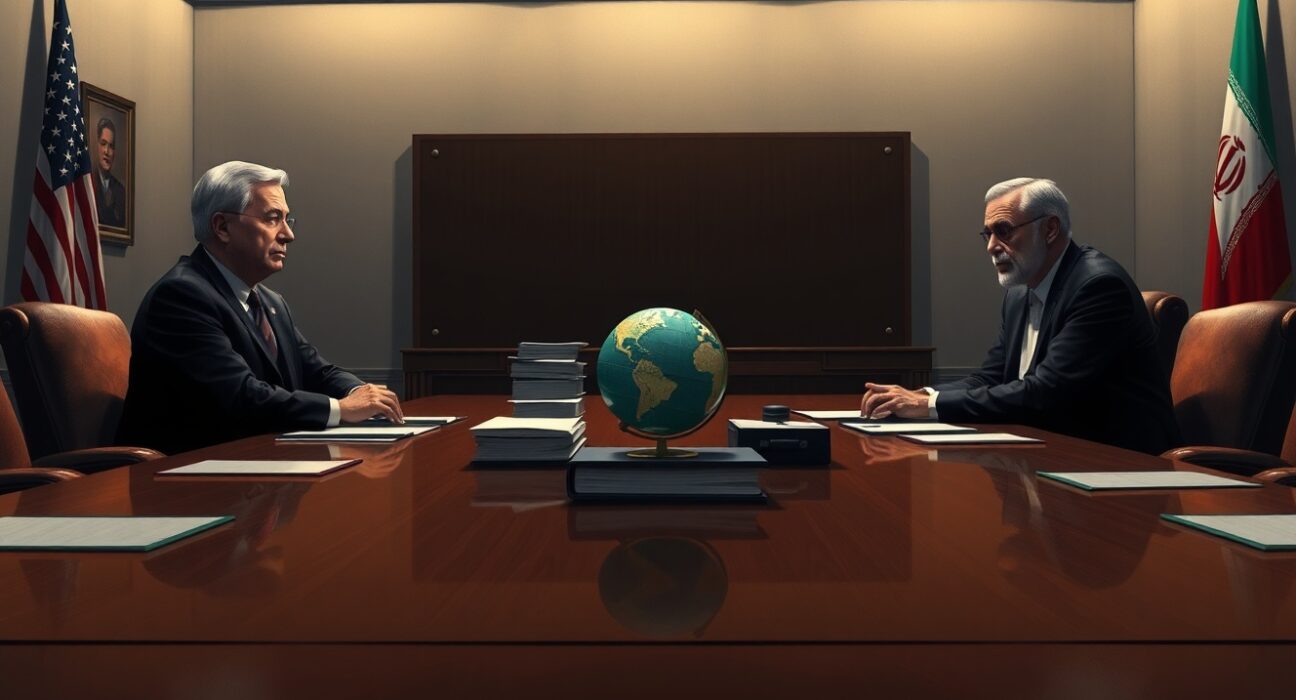
The United States has sent Iran a list of proposed amendments to a draft agreement, focusing on re-including the nuclear issue, an Axios reporter said, citing sources. One of the amendments, sent by U.S. envoy Witkoff on April 28, demands that Iran commit not to remove enriched uranium from a bombed nuclear facility or resume any activities there for the duration of the negotiations.
Background of the Nuclear Issue in Iran Deal
The nuclear issue has long been a central point of contention in the Iran deal, formally known as the Joint Comprehensive Plan of Action (JCPOA). Signed in 2015, the agreement limited Iran’s uranium enrichment in exchange for sanctions relief. However, the U.S. withdrew in 2018 under the Trump administration, citing concerns over Iran’s ballistic missile program and regional activities. Since then, Iran has expanded its nuclear program, enriching uranium to near weapons-grade levels.
In 2023, an explosion damaged the Natanz enrichment facility, a key site in Iran’s nuclear infrastructure. The U.S. now seeks to prevent Iran from removing enriched uranium from this facility or restarting operations there. This demand aims to freeze Iran’s nuclear progress while talks continue. The proposed amendments signal a renewed U.S. focus on the nuclear issue after months of stalled negotiations over other topics, such as sanctions and regional security.
Key Details of the Proposed Amendments
The amendments, delivered by U.S. envoy Steve Witkoff on April 28, 2025, include several specific demands. First, Iran must agree not to remove enriched uranium from the damaged Natanz facility. Second, Iran must halt all nuclear activities at the site for the duration of the talks. Third, the U.S. seeks verification measures to ensure compliance, including inspections by the International Atomic Energy Agency (IAEA).
- Enriched uranium freeze: Iran cannot move uranium stockpiles from Natanz.
- Activity halt: No resumption of enrichment or research at the facility.
- IAEA inspections: Regular monitoring to verify compliance.
- Negotiation duration: Restrictions apply until a final agreement is reached.
These measures aim to prevent Iran from using the damaged facility to accelerate its nuclear program. The U.S. argues that without such guarantees, Iran could exploit the negotiation period to advance its capabilities, undermining the deal’s purpose.
Reactions from Iran and International Community
Iran has not officially responded to the amendments, but analysts expect resistance. Tehran has consistently rejected limits on its nuclear program, viewing enrichment as a sovereign right. In 2024, Iran’s Supreme Leader Ayatollah Khamenei stated that the country would not accept any restrictions beyond the original JCPOA terms. The international community, including the European Union and Russia, has urged both sides to compromise. The EU’s foreign policy chief Josep Borrell called the amendments a “constructive step” but warned that they must not derail talks.
Experts note that the U.S. demand to re-include the nuclear issue may complicate negotiations. Iran has prioritized sanctions relief, while the U.S. focuses on nuclear restrictions. This gap could prolong talks, increasing the risk of escalation. A 2025 report from the Arms Control Association highlighted that Iran now has enough enriched uranium for multiple nuclear weapons, making the nuclear issue more urgent than ever.
Timeline of the Iran Nuclear Deal Negotiations
| Year | Event |
|---|---|
| 2015 | JCPOA signed between Iran and P5+1. |
| 2018 | U.S. withdraws; reimposes sanctions. |
| 2021 | Indirect talks begin in Vienna. |
| 2023 | Natanz facility damaged in explosion. |
| 2024 | Iran enriches uranium to 60% purity. |
| 2025 | U.S. proposes amendments to re-include nuclear issue. |
This timeline shows the evolution of the nuclear issue from the original deal to the current crisis. The 2023 explosion at Natanz marked a turning point, as it heightened fears of a military confrontation. The U.S. now seeks to use the amendment process to stabilize the situation.
Implications for Global Security
The nuclear issue in the Iran deal has broader implications for global security. A failure to reach an agreement could trigger a nuclear arms race in the Middle East. Saudi Arabia and the United Arab Emirates have already expressed interest in nuclear programs, citing Iran’s progress. The IAEA has warned that Iran’s stockpile of enriched uranium could be weaponized within weeks. The U.S. amendments aim to address this risk by imposing immediate restrictions.
Additionally, the nuclear issue affects oil markets. Iran’s potential return to global markets could lower oil prices, but instability in negotiations creates uncertainty. The International Energy Agency projects that a deal could add 1.5 million barrels per day to supply by 2026. However, without progress, sanctions will remain, keeping prices elevated.
Expert Analysis on the Nuclear Issue
Dr. Emily Landau, a senior fellow at the Institute for National Security Studies, described the U.S. amendments as a “necessary but risky” move. She explained that re-including the nuclear issue could force Iran to choose between accepting restrictions or walking away. “The nuclear issue is the core of the deal,” she said. “Without it, the agreement loses its purpose.” However, she warned that Iran might view the amendments as a pretext for regime change, complicating talks.
Other experts, such as Ali Vaez from the International Crisis Group, noted that the amendments reflect a shift in U.S. strategy. “The Biden administration initially focused on sanctions relief,” he said. “Now it is prioritizing the nuclear issue due to Iran’s advances.” This change may gain support from hardliners in Congress but could alienate Iran.
Conclusion
The US proposed amendments to re-include the nuclear issue in the Iran deal represent a critical effort to halt Iran’s nuclear progress. By demanding that Iran not remove enriched uranium from the damaged Natanz facility, the U.S. aims to freeze the situation while negotiations continue. The nuclear issue remains the central obstacle to a revived deal, with both sides holding firm positions. The outcome will shape global security, energy markets, and diplomatic relations for years to come. As talks proceed, the world watches to see if diplomacy can prevail over confrontation.
FAQs
Q1: What is the nuclear issue in the Iran deal?
The nuclear issue refers to Iran’s uranium enrichment program, which the U.S. and allies seek to limit under the JCPOA to prevent weaponization.
Q2: Why did the U.S. propose amendments to the Iran deal?
The U.S. proposed amendments to re-include the nuclear issue after Iran expanded its enrichment activities following the 2018 U.S. withdrawal.
Q3: What does the amendment demand from Iran?
The amendment demands that Iran not remove enriched uranium from the damaged Natanz facility and halt all nuclear activities there during negotiations.
Q4: How has Iran responded to the proposed amendments?
Iran has not officially responded, but analysts expect resistance due to its long-standing position on sovereign rights to enrichment.
Q5: What are the global implications of the nuclear issue?
Failure to resolve the nuclear issue could trigger a regional arms race, destabilize oil markets, and increase the risk of military conflict.
Disclaimer: The information provided is not trading advice, Bitcoinworld.co.in holds no liability for any investments made based on the information provided on this page. We strongly recommend independent research and/or consultation with a qualified professional before making any investment decisions.
