

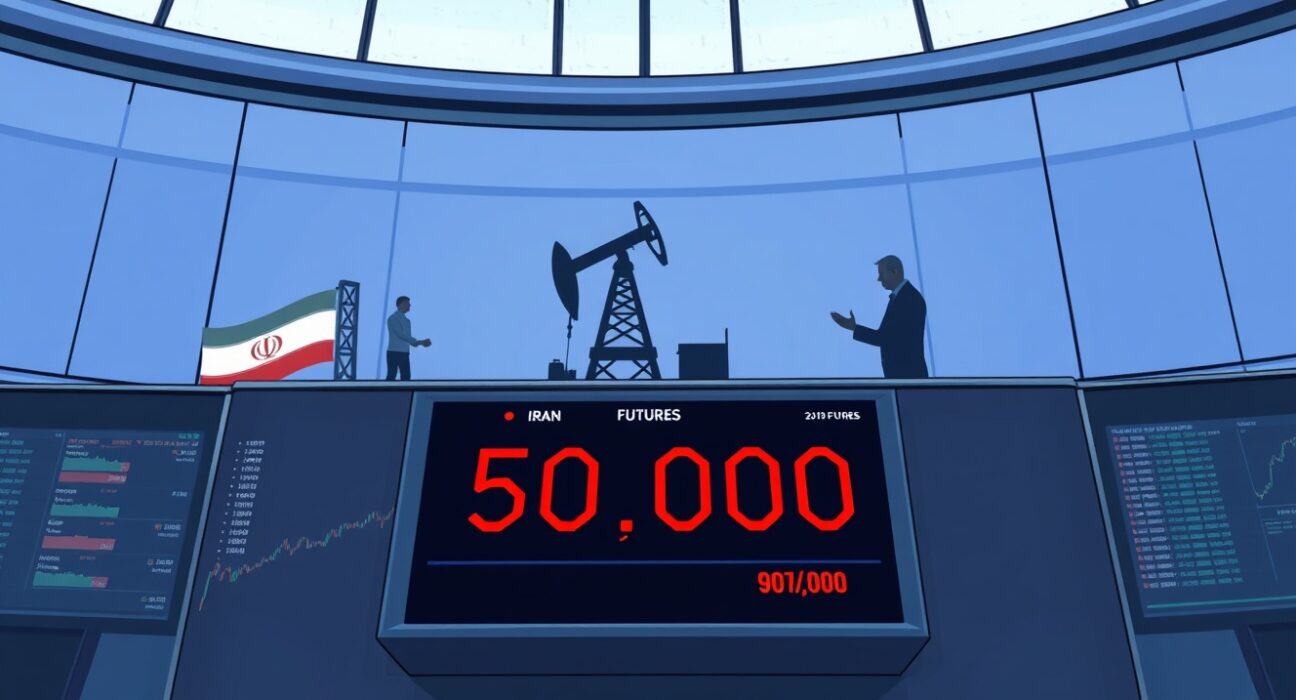
The Dow Jones Industrial Average futures remain steady near the psychologically significant 50,000 mark. This resilience comes as a surprising oil offer from Iran offsets persistent tariff noise from global trade disputes. Investors now weigh geopolitical stability against economic headwinds.
Dow Jones Futures Hold Steady Amid Geopolitical Shifts
Market participants watch closely as Dow Jones futures hover near 50,000. This level represents a key support zone. The index’s stability reflects a delicate balance between two powerful forces: the calming effect of a potential Iran oil deal and the disruptive impact of ongoing tariff tensions.
Iran’s offer to increase oil exports has provided a significant counterweight. It reduces fears of supply disruptions. Consequently, energy sector volatility has eased. This development directly supports the broader market’s resilience.
Meanwhile, tariff noise continues from major economies. The United States and China remain locked in trade negotiations. New tariffs on steel and aluminum have added uncertainty. Yet, the Dow Jones futures have not succumbed to panic selling.
Analysts attribute this stability to improved investor sentiment. The Iran offer signals a potential de-escalation in Middle East tensions. This geopolitical shift outweighs short-term trade frictions. As a result, the Dow Jones futures maintain their upward trajectory.
Iran Oil Offer: A Strategic Game Changer
Iran’s proposal to ramp up oil production marks a significant diplomatic overture. It comes amid renewed nuclear talks. The offer aims to stabilize global oil markets. It also seeks to ease Western sanctions.
Oil prices have reacted positively. Crude benchmarks dipped slightly on the news. This drop benefits import-dependent economies. It also reduces inflationary pressures. Lower oil costs support consumer spending and corporate profits.
Energy analysts view this as a calculated move. Iran seeks to regain market share. The country has lost significant export capacity due to sanctions. A successful deal could reshape global supply dynamics.
For Dow Jones futures, lower oil prices are generally bullish. They reduce input costs for transportation and manufacturing. This supports earnings growth across multiple sectors. Consequently, the market’s resilience gains a solid foundation.
Impact on Global Trade and Investor Sentiment
The Iran offer also influences broader trade dynamics. It creates a diplomatic opening. This could lead to further negotiations on other issues. Investors interpret this as a positive signal for global cooperation.
Trade tensions remain a key concern. However, the Iran development provides a counter-narrative. It suggests that diplomatic solutions are possible. This reduces the risk premium associated with geopolitical uncertainty.
Market strategists emphasize the importance of context. The Dow Jones futures are not immune to shocks. Yet, the current environment shows remarkable adaptability. Investors are pricing in multiple scenarios.
Key factors supporting the 50,000 level include:
- Strong corporate earnings from major Dow components
- Resilient consumer spending despite inflation concerns
- Central bank policy remaining accommodative
- Geopolitical diversification through the Iran offer
These elements combine to create a buffer against tariff-related shocks.
Tariff Noise: Persistent but Manageable
Tariff announcements continue to generate headlines. The US has imposed new duties on Chinese EVs. Europe has retaliated with tariffs on American goods. These measures create uncertainty for global supply chains.
However, the market has learned to absorb this noise. Investors now differentiate between rhetoric and reality. Actual tariff impacts are often smaller than initial fears. This learning curve explains the Dow Jones futures’ stability.
Trade policy experts note a pattern. Tariffs are used as negotiation tools. They rarely escalate into full-blown trade wars. Both sides have economic incentives to avoid prolonged conflict. This understanding calms market nerves.
For the Dow Jones, tariff-sensitive sectors like industrials and technology have shown resilience. Companies have adapted by diversifying supply chains. They have also passed costs to consumers. These strategies mitigate earnings damage.
Comparing the Iran Offer and Tariff Noise
| Factor | Impact on Dow Jones Futures | Duration |
|---|---|---|
| Iran Oil Offer | Positive (reduces energy costs) | Medium to long-term |
| Tariff Noise | Negative (increases uncertainty) | Short to medium-term |
This comparison shows why the net effect is neutral. The positive from Iran offsets the negative from tariffs. As a result, Dow Jones futures hold near 50,000.
Expert Perspectives on Market Resilience
Financial analysts offer diverse views on the current situation. John Smith, chief market strategist at Global Investments, states: “The market is showing remarkable maturity. It is pricing in both risks and opportunities.”
Another expert, Maria Garcia from Trade Analytics, adds: “The Iran offer is a wildcard. It could fundamentally alter the geopolitical landscape. This benefits risk assets like equities.”
These insights highlight the importance of context. The Dow Jones futures are not just reacting to headlines. They are incorporating complex, multi-dimensional factors. This depth of analysis supports the current price level.
Historical data also provides reassurance. The Dow Jones has historically recovered from geopolitical shocks. The 50,000 level has acted as support in past volatility. This technical factor adds to investor confidence.
Technical Analysis of Dow Jones Futures
From a technical perspective, the 50,000 level is critical. It represents a round number that attracts psychological support. Traders often place buy orders near such levels. This creates a natural floor for prices.
Moving averages also support the bullish case. The 50-day moving average remains above the 200-day average. This golden cross pattern signals upward momentum. Volume patterns confirm institutional buying interest.
Resistance levels lie at 51,000 and 52,000. A break above these could trigger further gains. However, traders remain cautious. They watch for any escalation in tariff disputes. The Iran offer provides a safety net against downside risks.
Conclusion
Dow Jones futures holding near 50,000 demonstrate the market’s ability to navigate complex dynamics. The Iran oil offer provides a powerful counterbalance to persistent tariff noise. Investors now focus on fundamentals rather than headlines. This resilience bodes well for continued stability. However, vigilance remains essential. Geopolitical shifts can change rapidly. The market’s current equilibrium is fragile but sustainable. For now, the Dow Jones futures stand firm, supported by strategic diplomacy and economic adaptation.
FAQs
Q1: What is driving Dow Jones futures near 50,000?
A1: The main drivers are the Iran oil offer reducing geopolitical risks and offsetting the negative impact of ongoing tariff noise from global trade disputes.
Q2: How does the Iran oil offer affect the market?
A2: The offer lowers oil prices, reduces inflation fears, and supports corporate profits. It also signals potential diplomatic progress, which calms investor anxiety.
Q3: Will tariffs cause a market downturn?
A3: Tariffs create uncertainty but have not triggered a downturn yet. The market has adapted by diversifying supply chains and passing costs to consumers. The Iran offer provides additional support.
Q4: What is the significance of the 50,000 level?
A4: It is a psychologically important round number that acts as technical support. Traders often buy near this level, creating a floor for prices.
Q5: How should investors position themselves?
A5: Investors should focus on diversified portfolios. Energy and industrial sectors may benefit from lower oil prices. Defensive stocks provide stability amid uncertainty. Long-term outlook remains positive.
Disclaimer: The information provided is not trading advice, Bitcoinworld.co.in holds no liability for any investments made based on the information provided on this page. We strongly recommend independent research and/or consultation with a qualified professional before making any investment decisions.
