

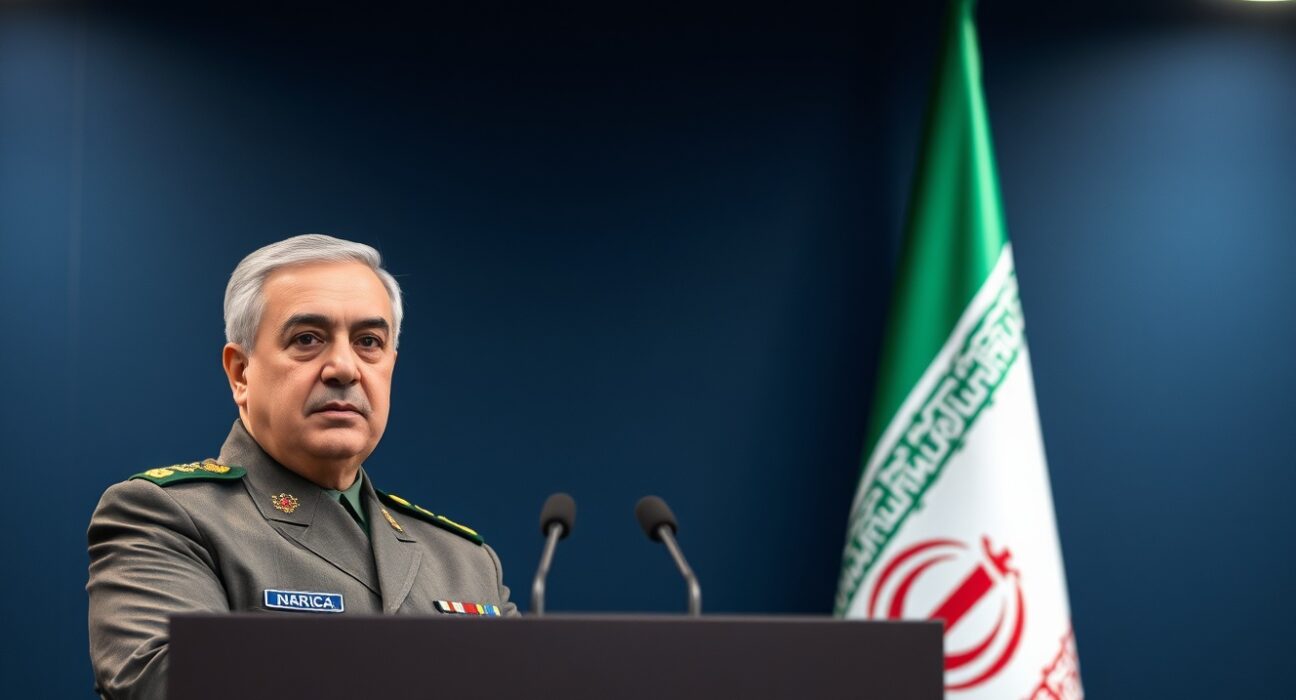
A senior Iranian official has publicly questioned whether a US Navy vessel sustained damage during a recent encounter in the Persian Gulf. This statement, reported by Reuters, introduces a new layer of uncertainty into an already tense geopolitical situation. The official’s remarks directly challenge earlier reports from US military sources, creating a significant information gap that analysts are now working to fill.
Senior Iranian Official Questions US Ship Damage Report
The core of the developing story centers on a statement from a high-ranking Iranian source. According to Reuters, the official said it is “unclear” whether the US ship suffered any damage. This phrasing is carefully chosen. It does not deny an incident occurred. Instead, it casts doubt on the specific outcome reported by American forces. This distinction is crucial for understanding the diplomatic and strategic messaging from Tehran.
For context, US Central Command (CENTCOM) had previously stated that Iranian vessels conducted “unsafe and unprofessional” maneuvers near American warships. In some recent instances, US officials reported minor damage or near-collisions. The Iranian official’s comments directly counter the narrative of a successful American defense or a damaging Iranian action. This creates a classic “he said, she said” scenario in a region where misinformation can escalate quickly.
The Strategic Importance of the Strait of Hormuz
This incident unfolds in the Strait of Hormuz, a narrow waterway connecting the Persian Gulf to the Gulf of Oman. Approximately 20% of the world’s petroleum passes through this chokepoint. Any disruption here has immediate global economic consequences. Therefore, any claim of damage to a US Navy vessel is not just a military matter. It is a signal to global oil markets and shipping insurance companies.
The Iranian official’s statement serves multiple strategic purposes. First, it undermines the credibility of US reports. Second, it reassures domestic audiences that Iran has not suffered a military setback. Third, it complicates any potential US justification for a retaliatory or escalated response. By introducing doubt, Tehran buys time and diplomatic space.
Analyzing the Geopolitical Timeline
To understand the current situation, we must review recent events. Tensions have been high since the US withdrawal from the Joint Comprehensive Plan of Action (JCPOA) in 2018. Since then, a series of incidents have occurred:
- 2019: Attacks on oil tankers near the Strait of Hormuz. The US blamed Iran; Iran denied involvement.
- 2020: The US killing of Iranian General Qasem Soleimani. Iran retaliated with missile strikes on US bases in Iraq.
- 2021-2023: Continued seizures of commercial vessels by Iran. US Navy escorts increased.
- 2024: Reports of close encounters between Iranian fast-attack craft and US destroyers.
- 2025 (Current): The latest incident and the subsequent Iranian statement casting doubt.
This timeline shows a pattern of low-level but persistent confrontation. The Iranian official’s statement fits into this pattern. It is a calibrated response designed to avoid escalation while still asserting a position of strength.
Expert Analysis on Information Warfare
Military analysts and geopolitical experts point to the information warfare dimension. “The first casualty of war is truth,” is a common saying. In this case, the battle is over the narrative before any physical conflict escalates. Dr. Emily Carter, a former State Department analyst specializing in the Middle East, notes, “The Iranian regime is highly skilled at using ambiguity. By saying it’s ‘unclear,’ they force US media and policymakers to slow down. This prevents a rapid, emotional response.”
This tactic is known as “strategic ambiguity.” It allows Iran to deny responsibility while still projecting an image of capability. If the US ship was damaged, Iran’s statement implies they may have done it. If it was not damaged, they appear honest. This dual-purpose messaging is a hallmark of Iranian diplomatic and military communications.
Impact on US Naval Operations and Regional Allies
The US Navy maintains a significant presence in the region. The Fifth Fleet, based in Bahrain, is the primary force. An incident involving a US ship forces a review of operational protocols. Commanders must balance the need for freedom of navigation with the risk of escalation.
Regional allies are watching closely. Saudi Arabia and the United Arab Emirates have their own maritime security concerns. They rely on the US Navy to protect shipping lanes. If the US appears vulnerable or indecisive, these allies may seek alternative security arrangements. This could involve closer ties with China or Russia, who are also active in the region.
Furthermore, the Iranian statement affects global shipping insurance rates. Any increase in perceived risk leads to higher premiums for vessels transiting the Strait of Hormuz. This cost is passed on to consumers worldwide, contributing to inflationary pressures.
The Role of Reuters and Independent Verification
Reuters, as a major global news agency, plays a critical role in reporting this story. Their sourcing is key. The fact that a senior Iranian official spoke on the record is significant. It provides a level of verification that anonymous briefings do not. However, Reuters is not able to independently verify the damage claim. This leaves the public reliant on official statements from both sides.
The lack of independent verification is a major challenge. Satellite imagery might show ship movements, but it cannot easily show minor hull damage. Aerial reconnaissance from the US or its allies would be classified. Therefore, the information gap remains. This is why the Iranian official’s statement carries so much weight. It is one of the few pieces of information from the other side of the conflict.
Economic and Energy Market Repercussions
Oil prices are sensitive to any disruption in the Strait of Hormuz. Even a rumor of a naval incident can cause a spike. The Iranian official’s statement, by creating uncertainty, can actually increase market volatility. Traders hate uncertainty. They will price in a risk premium until the situation is clarified.
We can expect to see the following market reactions:
- Brent Crude: A short-term price increase of $2-5 per barrel.
- Shipping Costs: Increased war risk premiums for tankers.
- Insurance: Higher premiums for hull and cargo insurance.
- Natural Gas: Potential price increases, as Qatar is a major LNG exporter via the Gulf.
These economic factors add another layer of complexity. The Iranian official’s statement is not just a military or diplomatic comment. It is an economic signal. By casting doubt, Iran can influence global energy markets without firing a shot.
Comparing Past Incidents and Official Responses
This is not the first time an Iranian official has disputed a US claim. In 2016, Iran captured ten US Navy sailors who had strayed into Iranian waters. Tehran released them quickly, but the narrative was one of Iranian control. In 2019, Iran shot down a US drone. The US said it was in international airspace; Iran said it was over its territory. In both cases, the official Iranian position was designed to save face and project strength.
The current situation follows this pattern. The US reports an incident. Iran denies or casts doubt. The truth likely lies somewhere in between. However, in the court of public opinion and in the strategic calculus of both nations, the narrative is more important than the facts.
Conclusion
The statement from a senior Iranian official, casting doubt on damage to a US ship, represents a calculated move in a long-running geopolitical chess game. This incident highlights the critical role of information warfare in modern conflict. The focus keyword, Iran US ship damage, remains at the center of this developing story. As Reuters continues to report, the lack of independent verification means the world is left with two competing narratives. The economic and strategic stakes are high, involving global energy markets and regional security. The coming days will be crucial in determining whether this incident escalates or fades into the background of the persistent tensions in the Persian Gulf. For now, the official’s words have successfully introduced a critical element of doubt.
FAQs
Q1: What exactly did the senior Iranian official say about the US ship?
A1: According to Reuters, the official stated that it is “unclear” whether the US ship sustained any damage. This phrasing casts doubt on the US military’s initial reports without explicitly denying an incident occurred.
Q2: Why is the Strait of Hormuz so important in this context?
A2: The Strait of Hormuz is a vital chokepoint for global oil shipments. About 20% of the world’s petroleum passes through it. Any naval incident there has immediate and significant impacts on global energy prices and shipping security.
Q3: How does this incident fit into the broader US-Iran tensions?
A3: It is the latest in a series of confrontations since 2018, including tanker attacks, drone shootdowns, and close naval encounters. The Iranian statement is a classic example of “strategic ambiguity” used to control the narrative and avoid escalation.
Q4: Can we independently verify whether the US ship was damaged?
A4: No. Independent verification is extremely difficult. Satellite imagery may not show minor damage, and US military assessments are often classified. This lack of verification is why the Iranian official’s statement is so influential.
Q5: What are the potential economic consequences of this incident?
A5: The uncertainty can cause short-term spikes in oil prices and increase shipping insurance costs. This adds to global inflationary pressures and affects the cost of goods transported via the Persian Gulf.
Q6: How does the US Navy typically respond to such incidents?
A6: The US Navy usually increases its presence, reviews operational protocols, and may issue formal diplomatic protests. In this case, the conflicting narratives may lead to a more cautious approach to avoid further escalation.
Disclaimer: The information provided is not trading advice, Bitcoinworld.co.in holds no liability for any investments made based on the information provided on this page. We strongly recommend independent research and/or consultation with a qualified professional before making any investment decisions.
