

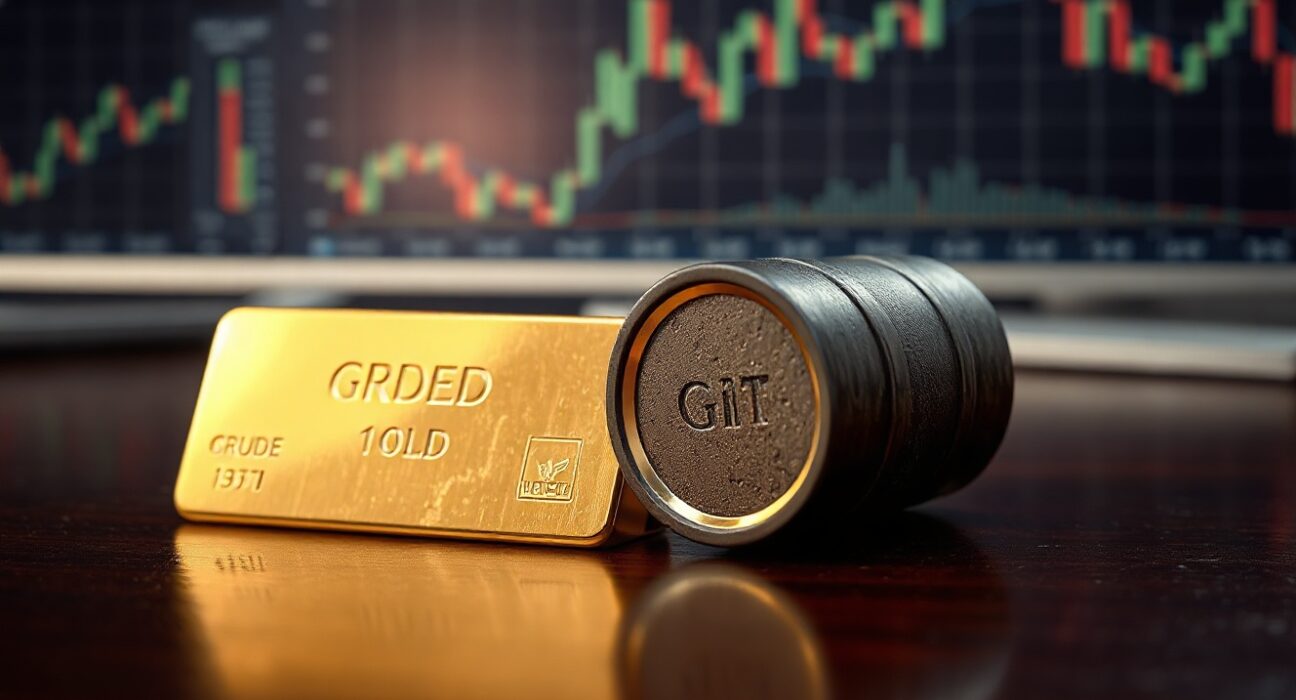
Gold prices edged lower on Tuesday, pulling back from two-week highs, as a sharp rebound in crude oil—fueled by escalating tensions near the Strait of Hormuz—shifted investor focus toward energy markets and away from traditional safe havens. The retreat in bullion came despite persistent geopolitical uncertainty, highlighting a nuanced repositioning among traders weighing inflation risks against safe-haven demand.
Market Movements: Gold Eases, Oil Surges
Spot gold fell approximately 0.4% in early trading, settling near $2,730 per ounce after failing to sustain momentum above the $2,750 resistance level. The pullback followed a three-day rally that had pushed the yellow metal to its highest point since mid-October. Meanwhile, Brent crude futures climbed more than 2.5%, crossing $78 per barrel, after reports of increased naval patrols and a brief seizure of a commercial vessel near the Hormuz Strait reignited supply disruption fears.
The Strait of Hormuz, a narrow waterway between Oman and Iran, handles roughly one-fifth of the world’s oil consumption. Any perceived threat to passage through the chokepoint historically triggers immediate price spikes in crude markets. Tuesday’s move was no exception, with energy traders pricing in a risk premium of $3 to $5 per barrel.
Why Gold Is Losing Its Shine—For Now
The inverse relationship between gold and oil on Tuesday may seem counterintuitive, given that both are often bought during crises. However, the divergence reflects a tactical shift: rising oil prices stoke inflation expectations, which in turn strengthen the case for central banks to maintain higher interest rates. Higher rates increase the opportunity cost of holding non-yielding assets like gold.
“Gold’s retreat is less about fading geopolitical fear and more about the market recalibrating its inflation outlook,” said a senior commodities strategist at a London-based brokerage. “If oil stays elevated, the Federal Reserve may find it harder to cut rates next year. That caps gold’s upside in the near term.”
Adding to the pressure, the U.S. dollar index edged higher on Tuesday, further dampening demand for dollar-denominated bullion. Gold and the dollar typically move in opposite directions.
What This Means for Investors
For portfolio managers, the current dynamic presents a classic hedging dilemma. Gold remains a long-term store of value during systemic crises, but its short-term performance is increasingly tied to real yields and currency moves rather than headline risk alone. Oil, by contrast, offers a more direct hedge against supply-side shocks but carries higher volatility and political exposure.
Retail investors should note that the correlation between gold and oil has weakened over the past decade. While both can rally during broad risk-off episodes, divergences like Tuesday’s are becoming more common as markets become more granular in pricing specific risks.
Geopolitical Context: Hormuz in Focus
The latest spike in Hormuz tensions follows a series of incidents over the past month, including the seizure of a tanker near the Omani coast and increased drone activity around the strait. While no major disruption to shipping has occurred, the cumulative effect has been a steady ratcheting of insurance premiums for vessels transiting the waterway.
Iran has denied involvement in Tuesday’s reported vessel incident, but the U.S. Navy’s Fifth Fleet confirmed it was monitoring the situation. Analysts caution that while a full blockade remains unlikely, even a temporary disruption could push oil prices above $85 per barrel, with knock-on effects for global inflation and central bank policy.
Conclusion
Tuesday’s market action underscores the complexity of trading in a multi-crisis environment. Gold’s retreat from two-week highs is a tactical pullback rather than a reversal of its broader bullish trend, but it serves as a reminder that safe-haven assets are not immune to cross-currents from energy markets and monetary policy expectations. Investors should watch for further developments in the Hormuz region and upcoming Fed commentary for clearer directional cues.
FAQs
Q1: Why did gold prices fall even though geopolitical tensions are high?
Gold fell primarily because rising oil prices stoked inflation fears, which could keep interest rates higher for longer. Higher rates make gold less attractive compared to yield-bearing assets. Additionally, a stronger U.S. dollar on Tuesday added downward pressure.
Q2: How does the Strait of Hormuz affect global oil prices?
The Strait of Hormuz is a critical chokepoint through which about 20% of the world’s oil passes. Any threat to shipping there—whether from military conflict, seizures, or blockades—immediately raises supply risk premiums, pushing crude prices higher.
Q3: Should I buy gold or oil as a hedge right now?
Both can serve as hedges, but they protect against different risks. Gold is better for long-term portfolio diversification and protection against currency debasement. Oil is more suited for short-term bets on supply disruptions but carries higher volatility. Consult a financial advisor to match your risk tolerance and investment horizon.
Disclaimer: The information provided is not trading advice, Bitcoinworld.co.in holds no liability for any investments made based on the information provided on this page. We strongly recommend independent research and/or consultation with a qualified professional before making any investment decisions.
