

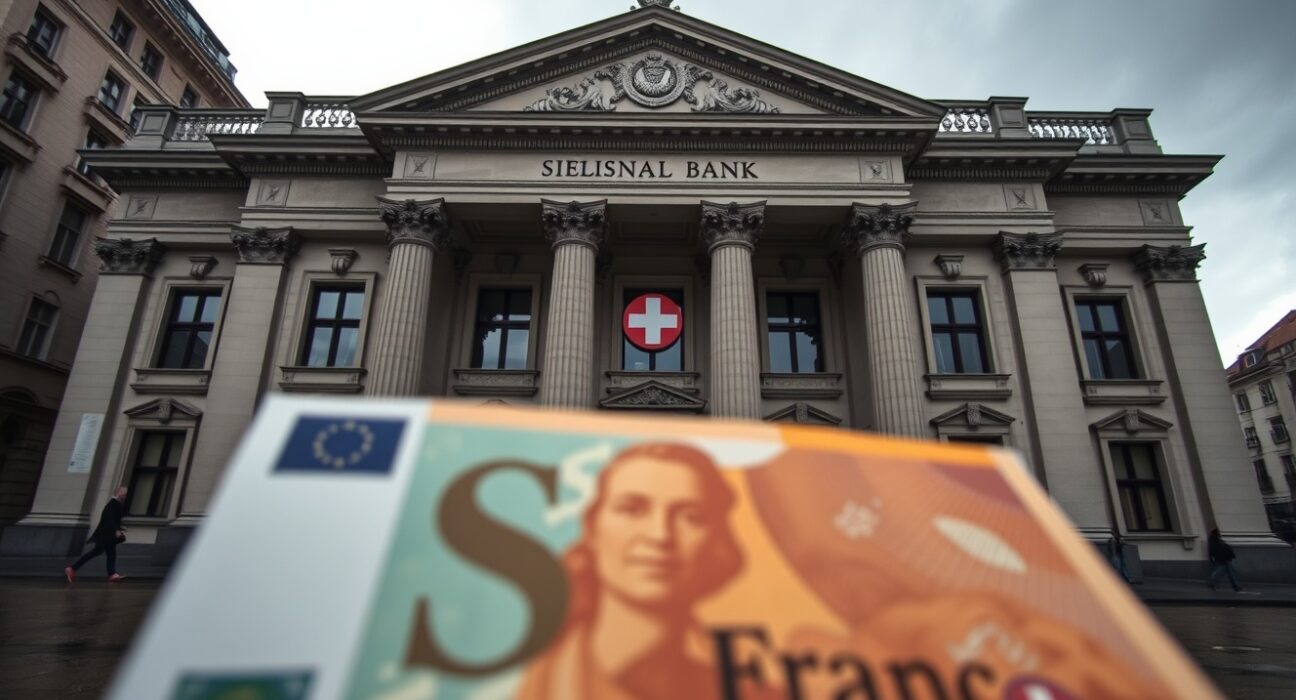
The Swiss franc’s traditional status as a safe-haven currency is being constrained by the policy stance of the Swiss National Bank, according to a new analysis from MUFG Bank. The assessment highlights how the SNB’s monetary approach is creating headwinds for the CHF, even as global uncertainty typically bolsters demand for low-risk assets.
SNB Policy Weighs on Franc’s Defensive Appeal
MUFG strategists point to the SNB’s ongoing interventions and interest rate differentials as key factors limiting the franc’s upside. Unlike the Federal Reserve or the European Central Bank, the SNB has maintained a relatively accommodative posture, which reduces the currency’s yield advantage. In a world where carry trades are increasingly favored, the franc’s low yield makes it less attractive to investors seeking returns, even during risk-off periods.
The analysis notes that the SNB remains willing to intervene in foreign exchange markets to prevent excessive franc strength, a policy that has historically capped sharp rallies. This commitment to currency management, while stabilizing for the Swiss economy, undermines the franc’s traditional role as a pure safe haven. Investors cannot rely on unfettered appreciation during crises, as the SNB has repeatedly demonstrated its readiness to sell francs to curb gains.
Rate Differentials and Market Dynamics
The gap between Swiss interest rates and those of other major economies continues to widen. With the SNB keeping its policy rate low relative to the ECB and the Fed, the franc is often used as a funding currency in carry trades. This structural selling pressure offsets safe-haven inflows, creating a ceiling for the CHF even when geopolitical tensions rise.
MUFG’s report also highlights that the franc’s safe-haven premium has diminished in recent years as the SNB has become more predictable in its intervention strategy. Markets now price in a higher probability of SNB action during franc rallies, which dampens speculative long positions. The result is a currency that trades more on yield differentials and less on fear-driven flows.
What This Means for Traders and Investors
For forex traders, the implication is clear: the franc is unlikely to stage the kind of dramatic safe-haven surges seen in past decades. Instead, the CHF is likely to remain range-bound against the euro and the dollar, with the SNB’s policy ceiling acting as a cap. Investors seeking pure safe-haven exposure may need to look toward gold or other currencies less subject to central bank intervention.
The analysis comes at a time when global markets are navigating uncertainty around trade policy and growth. While the franc still offers stability, the SNB’s active management means it no longer provides the same uncorrelated crisis hedge it once did.
Conclusion
MUFG’s assessment underscores a structural shift in the Swiss franc’s market behavior. The SNB’s policy stance, combined with persistent rate differentials, is redefining the CHF’s safe-haven status. For the foreseeable future, the franc may offer stability, but not the explosive upside that safe-haven flows once provided. Traders should adjust their expectations accordingly, recognizing that the SNB remains the dominant force in shaping the franc’s trajectory.
FAQs
Q1: Why is the Swiss franc considered a safe-haven currency?
Switzerland’s political neutrality, strong fiscal position, and low inflation have historically made the franc a reliable store of value during global crises. Investors flock to it when risk appetite declines.
Q2: How does the SNB limit the franc’s safe-haven appeal?
The Swiss National Bank actively intervenes in currency markets to prevent excessive franc appreciation, which can hurt Swiss exporters. This intervention creates a ceiling on CHF gains, reducing its attractiveness as a pure safe haven.
Q3: What is the outlook for the Swiss franc according to MUFG?
MUFG expects the franc to remain capped by SNB policy and interest rate differentials. The currency is likely to trade in ranges against the euro and dollar, with limited safe-haven upside compared to historical patterns.
Disclaimer: The information provided is not trading advice, Bitcoinworld.co.in holds no liability for any investments made based on the information provided on this page. We strongly recommend independent research and/or consultation with a qualified professional before making any investment decisions.
