

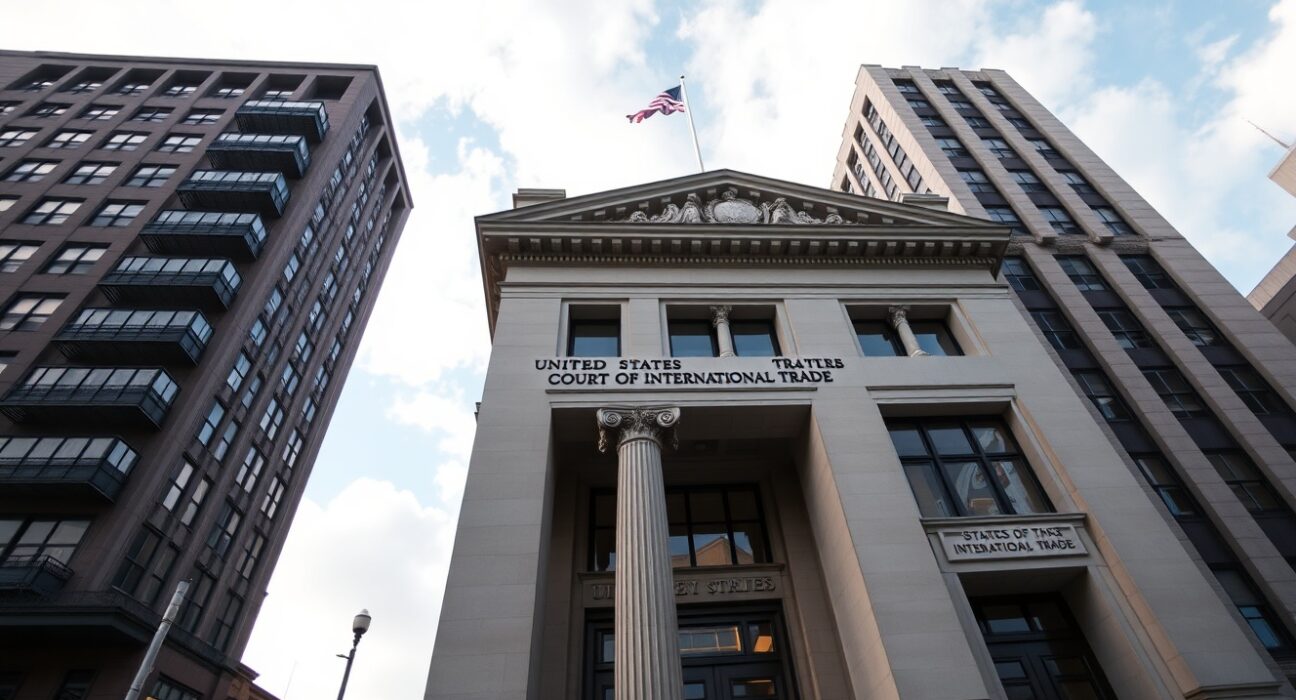
The Trump administration on Monday asked a U.S. court to pause a ruling that had challenged its 10% global tariff, a procedural move designed to keep the policy in place while the government pursues a formal appeal. The request for a stay was filed with the U.S. Court of International Trade (CIT), which had ruled against the tariff measure on May 8. While the CIT’s decision did not fully halt the collection of the duties, it created legal uncertainty for the administration’s trade agenda.
Background of the tariff dispute
The 10% global tariff, first implemented in February, was a central component of the administration’s broader trade policy. The government enacted the measure under Section 122 of the Trade Act of 1974, a provision that allows temporary import restrictions to address balance-of-payments deficits. This legal pathway was chosen after the U.S. Supreme Court invalidated most of the administration’s earlier 2025 tariff measures, leaving the White House with fewer legal tools to impose broad-based duties.
The CIT’s May 8 ruling did not completely invalidate the tariff, but it placed limits on its application, particularly affecting three importers who had sued the government. The administration’s appeal, filed the same day as the ruling, argues that the lower court erred in its interpretation of Section 122 and the scope of executive authority in trade matters.
What a stay would mean
If the CIT grants the stay request, the 10% global tariff would be temporarily reimposed on the three plaintiff importers while the appeal proceeds. More broadly, a stay would signal that the court is willing to maintain the status quo during the legal process, reducing immediate disruption to trade flows and customs enforcement.
However, the tariff measure has a built-in expiration date. Unless extended by Congress, the 10% global tariff is set to lapse in July. This creates a tight timeline for the legal battle: the administration must secure a favorable ruling or legislative extension before the policy expires on its own.
Why this matters for businesses and importers
The outcome of this case carries significant implications for companies that rely on imported goods. A stay would provide temporary predictability, allowing businesses to continue operating under the existing tariff structure. But the looming July expiration means that even a legal victory for the administration may be short-lived without congressional action. Importers and trade analysts are watching closely, as the case could also set a precedent for how future administrations use Section 122 authority.
Conclusion
The Trump administration’s request for a stay is the latest chapter in an ongoing legal and political battle over tariff policy. With the CIT ruling already under appeal and the tariff itself facing a statutory expiration in July, the coming weeks will be critical in determining whether the 10% global duties remain in place or are dismantled through judicial or legislative action. The case underscores the broader tension between executive trade authority and judicial oversight, a dynamic that will likely continue to shape U.S. trade policy.
FAQs
Q1: What is a stay in legal terms?
A stay is a court order that temporarily pauses a ruling or legal proceeding. In this case, the Trump administration is asking the court to suspend the effect of its May 8 decision while the appeal is being heard, allowing the 10% global tariff to remain in place for the affected importers.
Q2: Why is the tariff set to expire in July?
The administration implemented the 10% global tariff under Section 122 of the Trade Act of 1974, which allows temporary import restrictions but includes a statutory expiration date unless Congress votes to extend the measure. Without legislative action, the tariff will automatically lapse in July.
Q3: How does this affect importers not involved in the lawsuit?
For now, the CIT ruling directly affects only the three importers who filed the lawsuit. However, the broader legal interpretation of Section 122 could influence future tariff policies and the administration’s ability to impose similar duties on other goods. Importers across sectors are monitoring the case for its potential precedent-setting value.
Disclaimer: The information provided is not trading advice, Bitcoinworld.co.in holds no liability for any investments made based on the information provided on this page. We strongly recommend independent research and/or consultation with a qualified professional before making any investment decisions.
