

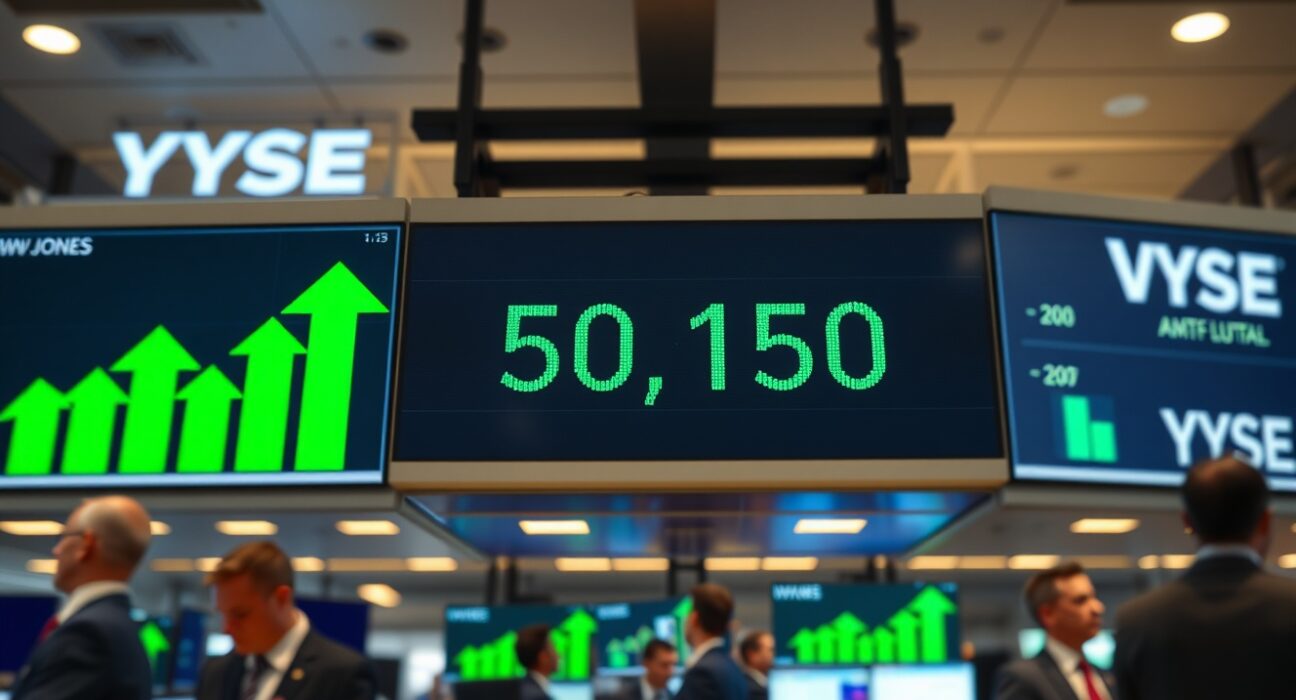
Dow Jones Industrial Average futures rebounded sharply in early trading Tuesday, climbing back above the 50,000 mark after a volatile session that had pushed the index lower. The move signals a tentative recovery in investor sentiment following recent macroeconomic uncertainty.
Futures Rally on Mixed Signals
Futures contracts tied to the Dow Jones Industrial Average rose by more than 300 points in pre-market activity, recovering from Monday’s sell-off that had briefly dragged the index below the psychologically significant 50,000 level. The rebound was supported by bargain buying in sectors including technology and industrials, though trading volumes remained moderate as investors awaited further clarity on interest rate policy and corporate earnings.
The recovery comes amid a backdrop of mixed economic data. While manufacturing indicators have shown signs of slowing, consumer spending has remained resilient, and the labor market continues to show strength. Analysts caution that the rebound may be technical in nature rather than a fundamental shift in market outlook.
Context and Market Implications
The 50,000 level has served as a key psychological threshold for the Dow since it first crossed the mark in early 2024. Repeated tests of this level suggest that the market is in a consolidation phase, with investors weighing the impact of persistent inflation and the Federal Reserve’s next moves on interest rates.
Market participants are now closely watching upcoming earnings reports from major financial institutions and consumer goods companies, which are expected to provide further direction. The futures rebound, while positive, does not guarantee a sustained rally, and volatility is likely to remain elevated in the near term.
What This Means for Investors
For long-term investors, the bounce above 50,000 offers some reassurance that the market is not entering a deeper correction. However, the speed of the recovery also raises questions about whether the market has fully priced in potential headwinds, including geopolitical risks and tightening credit conditions.
Short-term traders are advised to remain cautious, as futures markets can be prone to rapid reversals. The current rebound appears driven more by sentiment and technical factors than by a clear catalyst, making it vulnerable to shifts in macro data or Fed commentary.
Conclusion
The Dow Jones futures rebound above 50,000 reflects a market attempting to find its footing after a period of uncertainty. While the move is welcome, it is too early to declare an end to the recent volatility. Investors should watch for confirmation from broader market participation and upcoming economic reports before drawing firm conclusions about the direction of the next trend.
FAQs
Q1: Why is the 50,000 level important for the Dow Jones?
The 50,000 mark is a major psychological threshold. Crossing above or below it often triggers increased trading activity and can influence investor sentiment, as round numbers tend to act as support or resistance levels in financial markets.
Q2: Does a futures rebound guarantee the stock market will open higher?
No. Futures trading occurs outside regular market hours and reflects investor expectations, but actual market open can differ due to late-breaking news, large institutional trades, or changes in sentiment before the bell.
Q3: What factors are driving the current market volatility?
Key factors include uncertainty over Federal Reserve interest rate policy, mixed economic data on inflation and employment, geopolitical tensions, and corporate earnings results that have been uneven across sectors.
Disclaimer: The information provided is not trading advice, Bitcoinworld.co.in holds no liability for any investments made based on the information provided on this page. We strongly recommend independent research and/or consultation with a qualified professional before making any investment decisions.
