

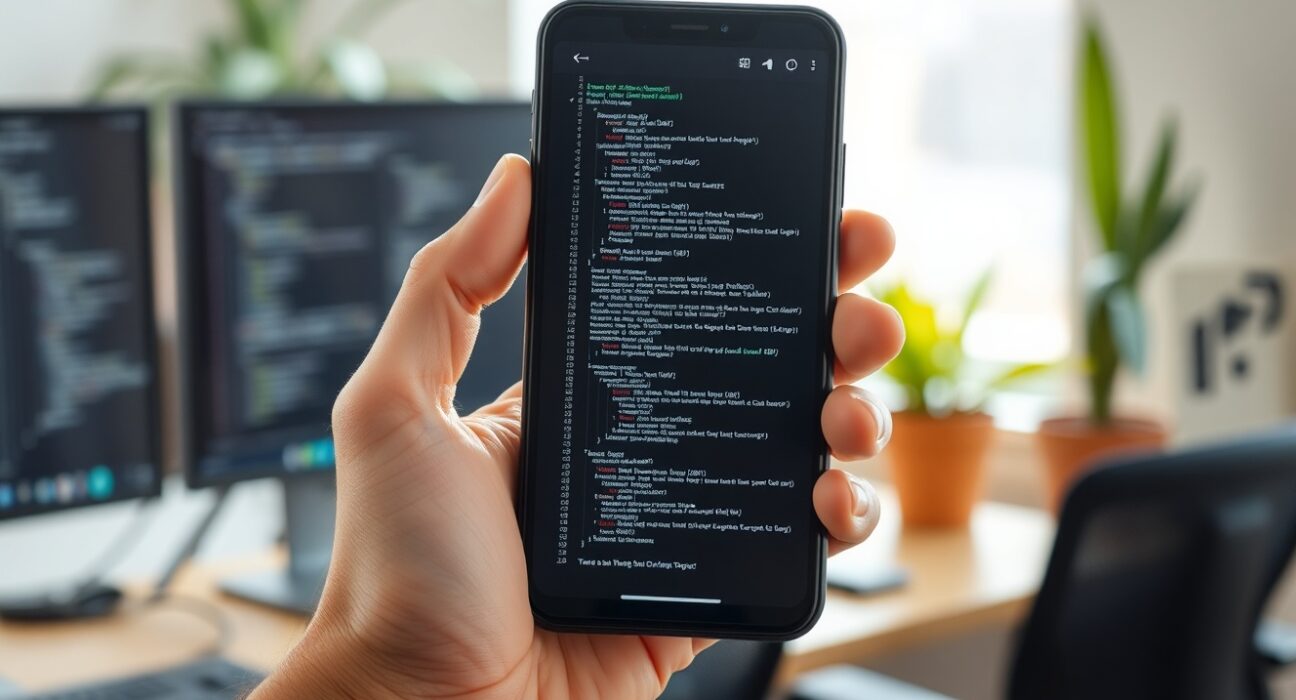
OpenAI has integrated its Codex coding tool into the ChatGPT mobile app, allowing developers to monitor and manage their development workflows remotely. The update, announced Thursday and now available in preview on iOS and Android, marks a significant expansion of the AI-powered coding assistant’s reach beyond desktop environments.
Mobile capabilities and remote workflow management
The new mobile integration enables users to view live Codex environments across any device where the tool is running. According to OpenAI, the feature goes beyond simple remote task control. Users can work across multiple threads, review outputs, approve commands, switch models, or initiate new tasks directly from their phones.
This follows last month’s introduction of background operation capabilities for Codex on desktop, allowing the tool to autonomously handle various tasks without direct user supervision. Earlier this month, OpenAI also released a Chrome extension that enables Codex to operate within live browser sessions.
Competitive landscape intensifies
The timing of these releases highlights the intensifying competition between OpenAI and Anthropic in the AI coding assistant market. In February, Anthropic launched a similar feature called Remote Control, which allows users to monitor Claude Code’s work from a distance.
Both companies are racing to establish their respective tools as the dominant platform for AI-assisted software development. While OpenAI’s Codex has been available for approximately a year, Anthropic’s Claude Code has seen growing adoption among businesses and technology professionals over the past several months. Both tools continue to maintain substantial user bases.
Why this matters for developers and businesses
The mobile expansion of AI coding tools reflects a broader industry shift toward remote and asynchronous development workflows. For individual developers, the ability to monitor and manage coding tasks from a phone can improve productivity and flexibility. For businesses, the choice between Codex and Claude Code may increasingly depend on ecosystem integration, pricing, and specific workflow requirements.
The rapid pace of feature releases from both companies suggests that the market for AI-powered development tools remains highly competitive, with each firm seeking to differentiate through platform accessibility and autonomous capabilities.
Conclusion
OpenAI’s mobile integration of Codex represents a logical next step in the evolution of AI-assisted development tools, bringing powerful coding capabilities to a device most developers carry daily. As both OpenAI and Anthropic continue to release competing features, the real winner may be the developer community, which gains increasingly flexible and powerful tools for remote software development.
FAQs
Q1: What is Codex and how does it work?
Codex is OpenAI’s AI-powered coding tool that can generate, review, and manage code. It integrates with development environments and can autonomously handle coding tasks, now accessible via ChatGPT’s mobile app for remote monitoring and control.
Q2: How does the new mobile feature differ from desktop Codex?
The mobile version focuses on remote monitoring and management of Codex environments. While desktop allows for direct coding and background autonomous operation, the mobile app lets users review outputs, approve commands, and manage workflows across multiple threads from their phone.
Q3: Is the mobile Codex feature available to all users?
OpenAI stated the update is currently in preview and available to all ChatGPT plans on iOS and Android. Full availability may roll out gradually.
Disclaimer: The information provided is not trading advice, Bitcoinworld.co.in holds no liability for any investments made based on the information provided on this page. We strongly recommend independent research and/or consultation with a qualified professional before making any investment decisions.
