

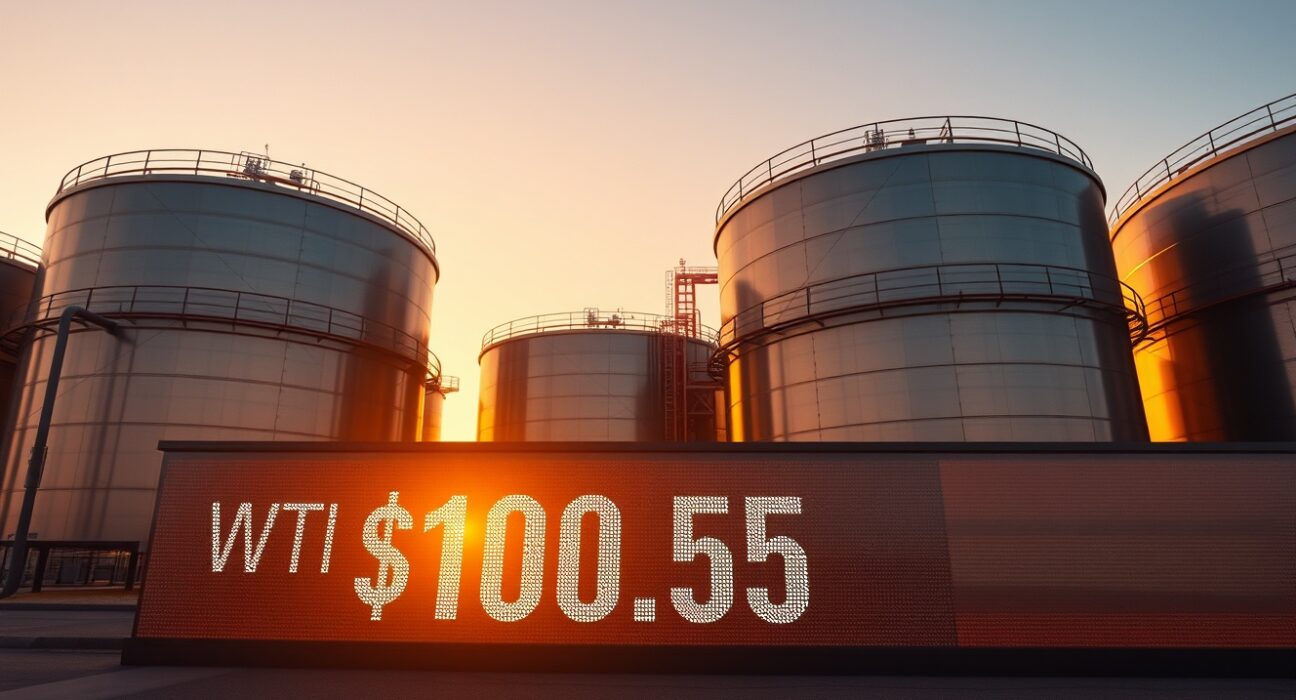
West Texas Intermediate (WTI) crude oil futures surged past the $100 per barrel mark on Monday, following former President Donald Trump’s announcement that China has agreed to purchase significant volumes of US crude oil. The move marks a dramatic escalation in oil market volatility and signals a potential reshaping of global energy trade flows.
Trump’s Announcement and Market Reaction
Speaking at a press conference in New York, Trump stated that China would increase its purchases of American oil as part of ongoing trade negotiations. “China is going to buy a lot of our oil,” Trump said. “It’s good for our producers, good for jobs, and good for our energy dominance.” The remarks triggered an immediate rally in crude oil futures, with WTI climbing as high as $101.35 before settling near $100.80. Brent crude, the global benchmark, also rose above $105 per barrel.
The announcement comes amid heightened geopolitical tensions and ongoing trade disputes between the world’s two largest economies. Analysts noted that the market interpreted the news as a signal of potential détente in trade relations, though skepticism remains about the details and timing of any such agreement.
Why $100 Matters
The $100 level is both a psychological and technical threshold for crude oil markets. Historically, sustained breaks above $100 have led to increased volatility, higher gasoline prices for consumers, and pressure on central banks to address inflationary concerns. For US oil producers, however, higher prices improve profitability and could spur increased domestic drilling activity.
“The $100 mark is a line in the sand for the market,” said Sarah Chen, senior energy analyst at Global Energy Insights. “It changes the conversation around supply, demand, and geopolitical risk. If China actually follows through on purchases, it could fundamentally alter the supply-demand balance.”
Impact on Consumers and Inflation
Higher crude oil prices typically translate to higher gasoline and heating oil costs for American households. The national average gasoline price could rise by 10 to 15 cents per gallon in the coming weeks if WTI remains above $100. This adds to existing inflationary pressures, which have already strained household budgets and influenced Federal Reserve policy decisions.
Economists warn that sustained high oil prices could slow economic growth, particularly in energy-intensive sectors such as transportation and manufacturing. The impact may be partially offset by increased revenue for US oil producers and related industries.
Geopolitical and Trade Context
The announcement comes against a backdrop of ongoing US-China trade tensions, including tariffs on hundreds of billions of dollars in goods. Energy trade has been a key negotiating point, with the US seeking to export more liquefied natural gas (LNG) and crude oil to China. Previous trade deals have included commitments from China to increase energy purchases, though implementation has been inconsistent.
China is already one of the largest importers of crude oil globally, and increasing US purchases would reduce its reliance on Middle Eastern and Russian supplies. This shift could have significant geopolitical implications, strengthening US energy influence and potentially reducing China’s dependence on rival suppliers.
Market Outlook and Forecast
Analysts remain divided on whether the rally above $100 is sustainable. Short-term factors supporting higher prices include declining US crude inventories, OPEC+ production cuts, and geopolitical risks in the Middle East and Eastern Europe. However, concerns about global economic growth, particularly in China and Europe, could cap further upside.
Technical analysis suggests that WTI faces resistance at $102 and $105, with support near $97. A sustained break above $100 could target $110 in the coming weeks if bullish catalysts continue. Conversely, failure to hold above $100 could lead to a retracement toward $95.
“The market is pricing in a lot of optimism from this announcement,” said Michael Torres, head of commodities at Horizon Capital. “But traders need to see actual cargoes loading before they fully commit to the upside. Until then, expect volatility.”
Conclusion
WTI crude oil’s break above $100 following Trump’s announcement of Chinese oil purchases represents a significant market event with far-reaching implications for energy markets, trade policy, and the broader economy. While the rally reflects optimism about potential US-China trade cooperation, the sustainability of higher prices depends on concrete actions and broader supply-demand fundamentals. Investors and consumers alike should prepare for continued volatility in the weeks ahead.
FAQs
Q1: Why did WTI crude oil break above $100?
A: WTI rose above $100 after former President Donald Trump announced that China has agreed to purchase US crude oil as part of trade negotiations. The news boosted market optimism about increased demand for American oil.
Q2: How does higher oil prices affect consumers?
A: Higher crude oil prices typically lead to increased gasoline, diesel, and heating oil costs for consumers. This can raise household expenses and contribute to broader inflationary pressures.
Q3: Will oil prices stay above $100?
A: Market analysts are divided. Sustained prices above $100 depend on factors including actual Chinese purchases, global supply levels, economic growth, and geopolitical developments. Short-term volatility is expected.
Disclaimer: The information provided is not trading advice, Bitcoinworld.co.in holds no liability for any investments made based on the information provided on this page. We strongly recommend independent research and/or consultation with a qualified professional before making any investment decisions.
