

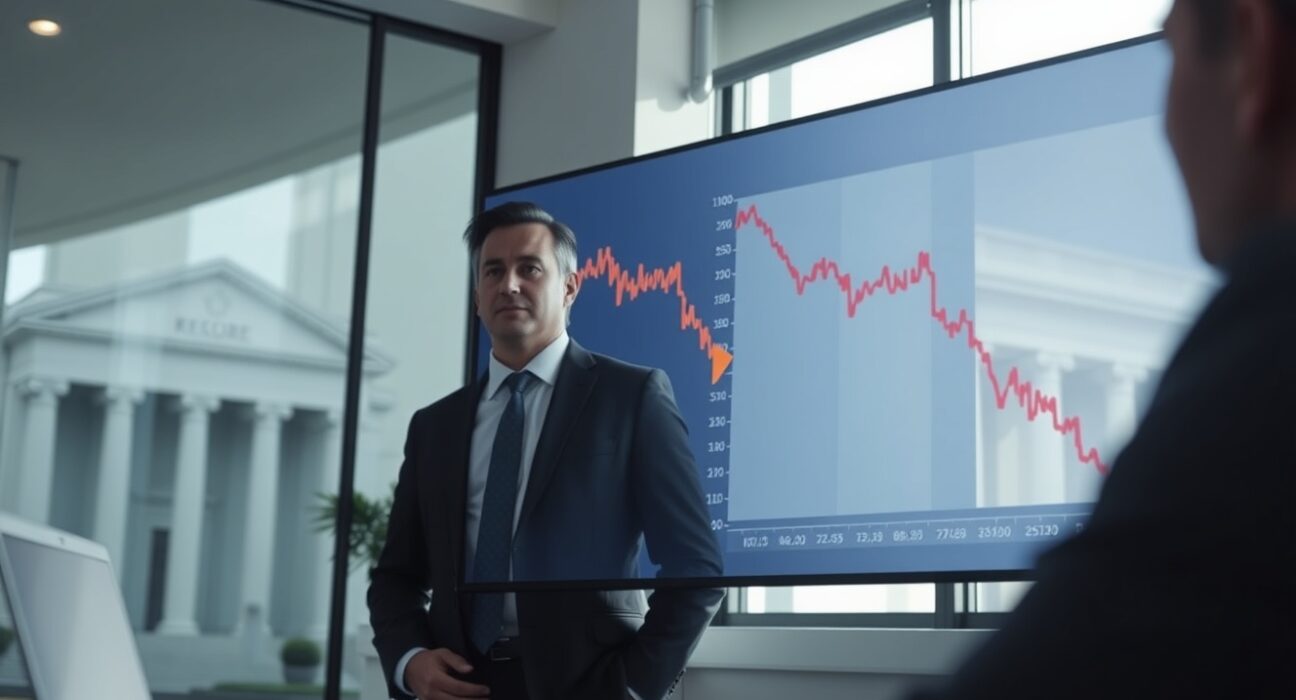
Grayscale Investments, a leading digital asset manager, has cautioned that a delay in interest rate cuts by the U.S. Federal Reserve could extend bearish conditions for Bitcoin. In a recent report, the firm highlighted that persistent inflationary pressures in the U.S. economy make it likely the central bank will maintain its high-interest-rate policy for the foreseeable future, potentially slowing Bitcoin’s upward momentum.
The Fed’s Stance and Its Impact on Bitcoin
Bitcoin, like gold, is a non-interest-bearing asset. When interest rates remain elevated, investors often favor yield-bearing instruments such as bonds or savings accounts, reducing the appeal of assets that do not generate passive income. Grayscale’s analysis suggests that as long as the Fed holds rates steady, Bitcoin could face sustained headwinds.
The report comes amid renewed inflation data that has tempered expectations for a near-term pivot in monetary policy. While the market had previously priced in rate cuts starting in mid-2024, recent economic indicators have pushed those forecasts further out, creating a cautious environment for risk assets.
Regulatory Developments as a Partial Offset
Despite the macroeconomic drag, Grayscale noted that positive regulatory developments could provide a counterbalance. The firm pointed to the CLARITY Act, a proposed piece of U.S. legislation aimed at establishing clearer guidelines for digital asset classification and market structure. If passed, such a law could reduce regulatory uncertainty, attracting institutional capital back into the crypto space.
However, Grayscale emphasized that regulatory improvements alone may not fully offset the pressure from tighter monetary policy. The interplay between macroeconomic conditions and regulatory clarity will likely determine Bitcoin’s near-term trajectory.
Stablecoin Issuers Stand to Benefit
While Bitcoin faces potential weakness, Grayscale highlighted a contrasting trend for stablecoin issuers. The report noted that for every 25 basis point increase in short-term interest rates, Circle, the issuer of USDC, sees its annual revenue grow by approximately $190 million. This is because stablecoin issuers earn interest on the reserves backing their tokens, meaning higher rates directly boost their profitability.
This dynamic creates an interesting divergence within the digital asset ecosystem: while speculative assets like Bitcoin may struggle, the infrastructure supporting the crypto economy—particularly stablecoins—could thrive in a high-rate environment.
Conclusion
Grayscale’s analysis underscores the complex relationship between macroeconomic policy and digital asset markets. For Bitcoin investors, the path forward hinges on both the Fed’s next moves and the pace of regulatory reform. Meanwhile, stablecoin issuers are positioned to benefit from the same conditions that weigh on Bitcoin, illustrating the nuanced landscape of the current crypto cycle.
FAQs
Q1: Why does a delay in rate cuts affect Bitcoin negatively?
Bitcoin is a non-interest-bearing asset, meaning it does not generate yield. When interest rates are high, investors often prefer yield-bearing assets like bonds, reducing demand for Bitcoin and putting downward pressure on its price.
Q2: What is the CLARITY Act?
The CLARITY Act is a proposed U.S. bill aimed at providing clearer regulatory guidelines for digital assets, including definitions for securities and commodities. It seeks to reduce legal uncertainty for crypto businesses and investors.
Q3: How do higher interest rates benefit stablecoin issuers like Circle?
Stablecoin issuers hold reserves in cash and short-term government securities. When interest rates rise, the yield on these reserves increases, directly boosting the issuer’s revenue. Circle, for example, earns roughly $190 million more annually for every 25 basis point rate hike.
Disclaimer: The information provided is not trading advice, Bitcoinworld.co.in holds no liability for any investments made based on the information provided on this page. We strongly recommend independent research and/or consultation with a qualified professional before making any investment decisions.
