

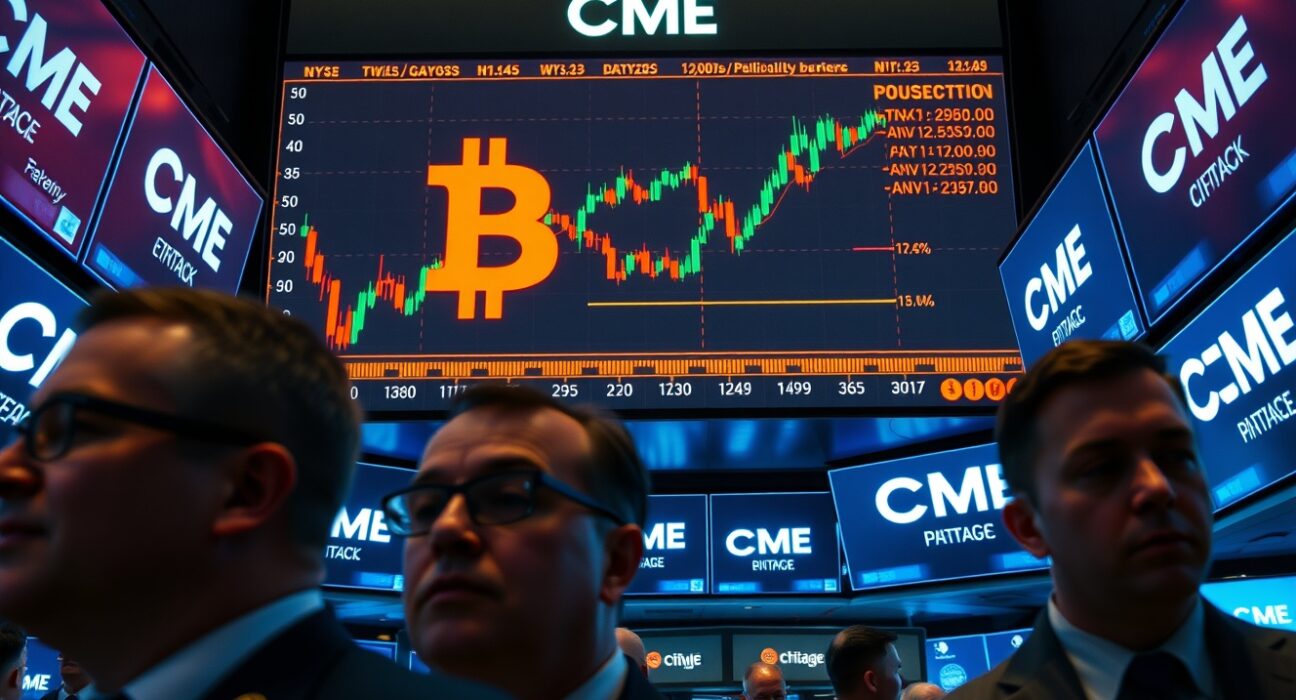
The Chicago Mercantile Exchange (CME) has confirmed it will launch BVI, a new futures contract designed to track Bitcoin’s implied volatility, on June 1, 2026. The product has received certification from the U.S. Commodity Futures Trading Commission (CFTC), marking a significant step in the maturation of crypto derivatives markets.
What Is BVI and How Does It Work?
BVI functions similarly to the VIX, the widely followed ‘fear index’ for U.S. equities. Rather than betting on the price direction of Bitcoin, BVI allows institutional investors to trade or hedge volatility itself. The contract is based on the CME CF Bitcoin Volatility Index Settlement (BVXS), which measures the market’s expectation of future price swings in Bitcoin over a 30-day period.
The initial monthly contracts listed will be for June and July 2026. Each contract’s notional value is calculated by multiplying the index figure by $500. For example, if the BVXS index stands at 80, one contract would represent $40,000 in notional exposure.
Why This Matters for the Crypto Market
The launch of a regulated, centrally cleared volatility product for Bitcoin addresses a long-standing gap in the digital asset ecosystem. Until now, traders seeking to hedge against sharp price swings had limited tools beyond options strategies or complex over-the-counter derivatives. BVI offers a standardized, exchange-traded instrument that can be used for portfolio risk management without taking a directional view on price.
CME’s move also signals growing institutional demand for sophisticated risk management tools in crypto. The exchange already offers Bitcoin and Ether futures, as well as micro futures and options. Adding a volatility futures product rounds out its suite, giving traders a way to express views on market turbulence directly.
Regulatory Context and CFTC Certification
The CFTC’s certification of BVI is noteworthy. It indicates that the product meets the agency’s standards for market integrity and risk management. Unlike some crypto derivatives that have faced regulatory scrutiny, BVI is being launched through a regulated designated contract market (DCM), providing transparency and oversight.
This certification may also pave the way for similar products tied to other digital assets. Market participants will be watching closely to see whether the CME expands the BVI framework to Ether or other cryptocurrencies in the future.
Implications for Traders and Investors
For institutional portfolio managers, BVI offers a cleaner way to hedge tail risk in Bitcoin holdings. During periods of high uncertainty—such as regulatory announcements, macroeconomic shifts, or market dislocations—volatility tends to spike. Having a direct volatility hedge can help stabilize portfolio performance without needing to sell underlying positions.
For retail traders, the impact may be indirect but meaningful. A more mature derivatives market typically leads to tighter spreads, better price discovery, and reduced basis risk in the broader Bitcoin ecosystem. However, BVI is expected to be primarily an institutional product given its notional size and margin requirements.
Conclusion
The CME’s introduction of Bitcoin volatility futures represents a natural evolution in the digital asset derivatives landscape. By providing a regulated, transparent mechanism to trade implied volatility, the exchange is giving market participants a powerful new tool for risk management. As the June 1 launch date approaches, attention will turn to initial trading volumes and the depth of liquidity in the early months. The product’s success could influence how other exchanges approach volatility products for digital assets.
FAQs
Q1: What is the difference between BVI and regular Bitcoin futures?
Regular Bitcoin futures allow traders to speculate on or hedge the price of Bitcoin at a future date. BVI, by contrast, tracks implied volatility—the market’s expectation of future price swings—without requiring a directional price bet. It is more analogous to trading the VIX than trading S&P 500 futures.
Q2: Who is the target audience for BVI futures?
The product is designed primarily for institutional investors, including hedge funds, asset managers, and proprietary trading firms. The $500 multiplier and monthly contract structure make it less suited for retail traders, though some brokers may offer access.
Q3: Is BVI regulated by the CFTC?
Yes. The product has received certification from the CFTC, meaning it meets the agency’s standards for listing on a designated contract market. The CME is a regulated exchange, and BVI will be subject to the same oversight as other CME futures products.
Disclaimer: The information provided is not trading advice, Bitcoinworld.co.in holds no liability for any investments made based on the information provided on this page. We strongly recommend independent research and/or consultation with a qualified professional before making any investment decisions.
